- Tuesday, 12 May 2026
Kathmandu: The government has stated that Nepal’s relations with neighbouring and friendly countries would advance based on mutual benefits, respect and multilateral cooperation.
The policies and programmes of the government unveiled by President Ramchandra Paudel on Monday mentioned that a balanced diplomacy would be adopted based on the UN Charter, Non-Alignment and Principles of Panchasheel by keeping Nepal’s sovereignty, geographical integrity and national interests at the centre.
“A brand Nepal Campaign will be run by globally promoting Nepali goods, culture and tourism through Nepali missions abroad,” read the policies and programmes.
The government has set a plan to develop Nepal as an international hub for information technology and innovation as well as education and health service by transforming traditional diplomacy into economic diplomacy.
Similarly, foreign assistance, investment and development cooperation would be mobilized in favour of Nepal’s sovereignty and long-term national interests.
Passport and consular services to be provided by Nepali Missions abroad and would be digitalized, and the central response unit would be established at the Foreign Ministry and operated round the clock at the Foreign Ministry and a rapid rescue team at Nepali Missions for the security and protection of the rights of Nepalis living abroad, it is said.
Likewise, ‘Diaspora Expert Network’ and ‘Knowledge Bank’ would be established to link capital, skills, experience and technology of Nepali living abroad with national development as well as legal security, easy financial arrangement and return system would be guaranteed to attract investment of Non-Resident Nepalis, added the government’s policies and programmes.
The government has announced to strengthen policy and legal arrangements related to citizenship, investment, financial access and democratic rights to strengthen the participation of Non-Resident Nepalis.
—
Budget crunch postpones rhino count for next year
Chitwan: The count of the rare one-horned rhinoceros, which was stopped last year due to lack of budget, will not be held this year as well. The rhino census, which takes place every four years, is being halted this year too due to budget constraints.
The rhino count is done by employing genetic method. It will be conducted only next year as the authorities have forwarded the process to carry out the tiger census this year.
The census is conducted by the Department of National Parks and Wildlife Conservation. A meeting of the technical committee related to the survey of wildlife has decided to formulate the necessary ‘protocol’ to count rhinos by genetic method.
Haribhadra Acharya, coordinator of the committee and The Department’s senior ecologist, informed that discussions have already started to prepare the protocol for the purpose. When counting by genetic method, the enumerators are mobilized to collect rhino dung (manure) and identify the number and sex through DNA testing in the laboratory.
The genetic structure of one rhino and another’s dung is different. According to Acharya, after identifying those places, dung is collected again and again by installing CCTV cameras.
He said that the protocol will be mentioned on how to do all these things. Primarily, rhinoceros are counted by this method in Chitwan National Park. Since it is a large area, the protocol will determine how much dung will be collected from the area.
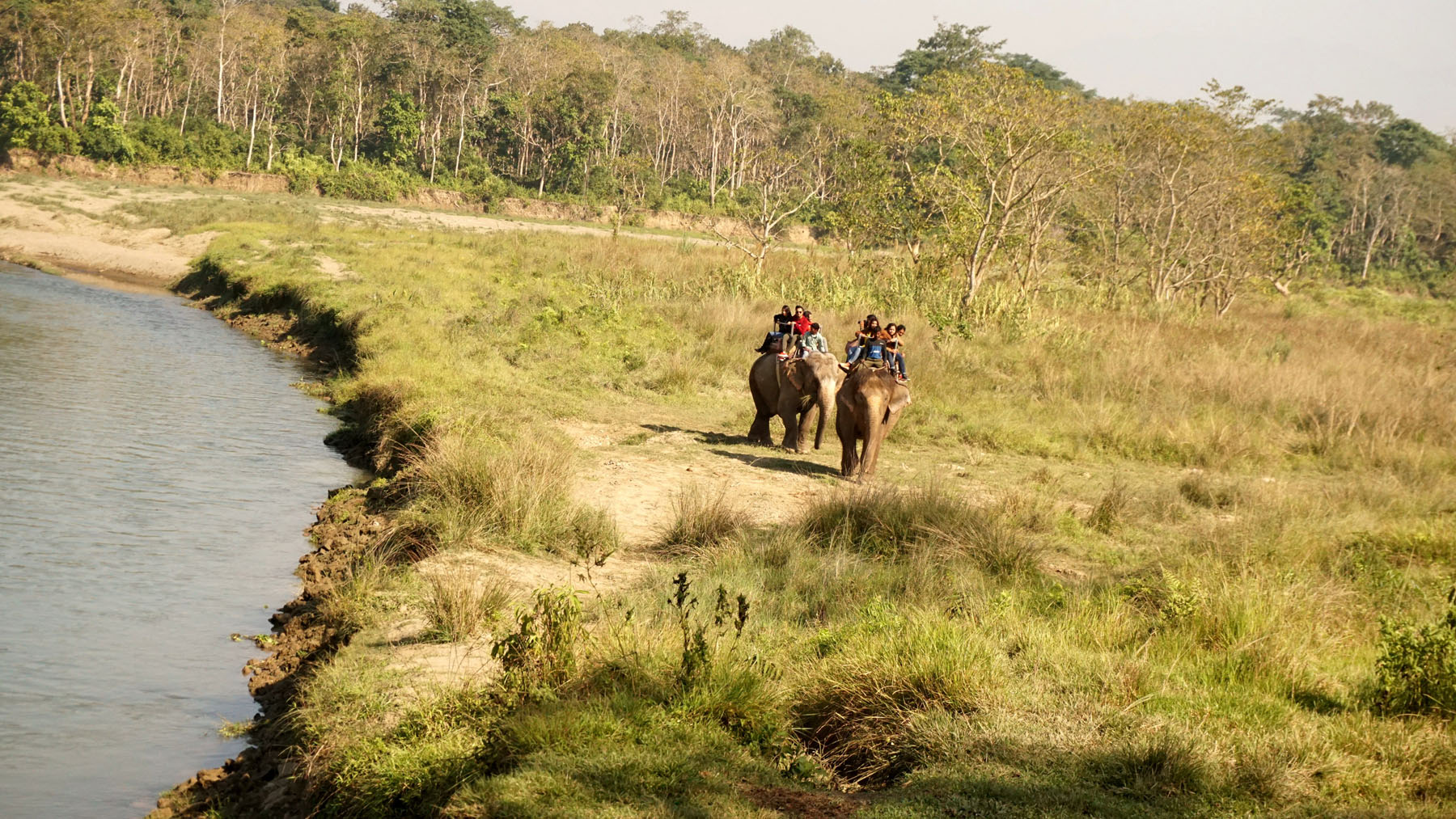
The habitat of the rhinoceros consists of riparian forest areas, river banks, grasslands, and swamps. Rhinoceros are found in four parks of Nepal. This method will be used only in Chitwan National Park as counting can be done by looking directly at Bardiya, Shukla and Parsa.
In Nepal, only snow leopards are being counted by this method. It is less expensive and safer than previous methods. In the past, direct calculation method was used by separating blocks. This method is costly and risky. According to Acharya, about Rs 30 million was spent on the rhino census in 2021.
In 2021, 752 rhinos were counted in national parks and conservation areas across the country. In the 1960s, the rhino population dropped to around 100. There were an estimated 800 rhinos in Nepal in the 1950s. The number of rhinos in Chitwan National Park alone had increased to 694, in Bardiya National Park from 29 to 38, and in Shuklaphanta to 18 in 2021.
—
15- Rehearsal at Parliament Building in preparation for President’s address
Kathmandu: A rehearsal has taken place at Singha Durbar in anticipation of President Ramchandra Paudel’s address to the joint session of both houses of the Federal Parliament this afternoon.
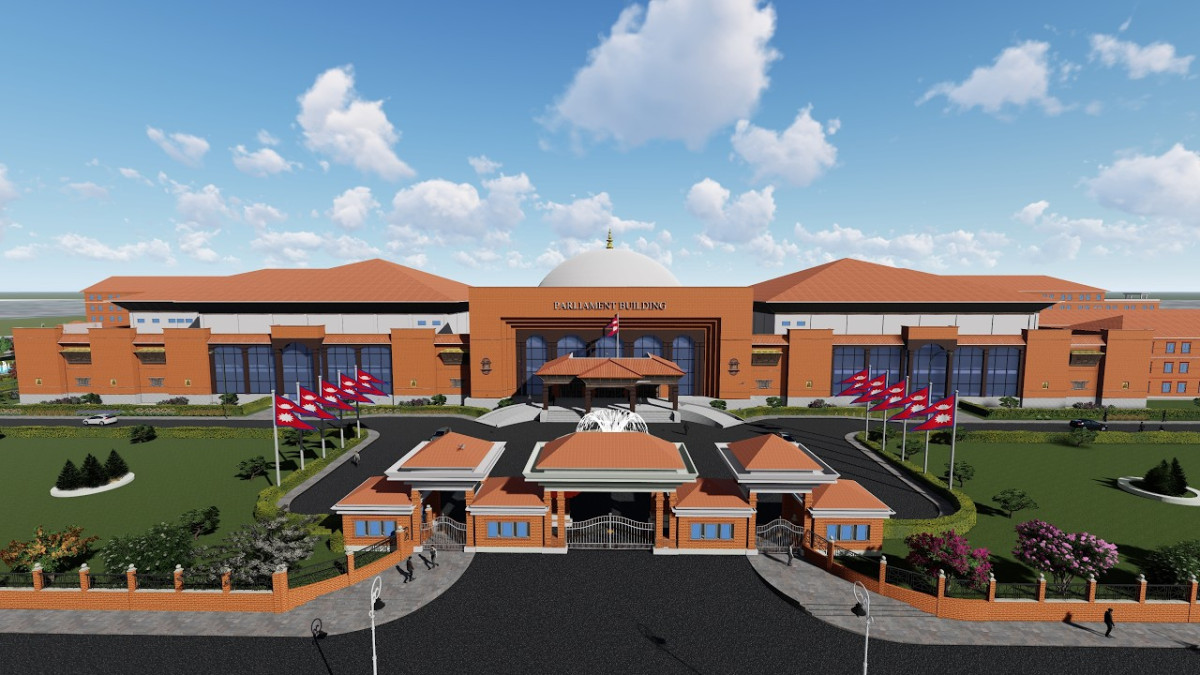
Deputy Speaker Rubi Kumari and General Secretary of the Secretariat Padma Prasad Pandey rehearsed the reception at the premises of the Federal Parliament building.
In this context, a Risalla Sawari (horse carriage) and a contingent from the Nepali Army rehearsed the ceremonial presentation of the gourd of honour. To pay honour to the President, the Parliament building complex has been adorned and the national flag has been hoisted.
The budget session of the federal parliament commences today. In accordance with Article 95 of the Constitution of Nepal, President Paudel will deliver the government’s policies and programmes for the upcoming fiscal year during the joint session of the House.
For the purpose, a joint meeting of the Federal Parliament has been scheduled for 4:00 PM. Members of the Federal Parliament have been requested to arrive at the House of Representatives Chamber (Multipurpose Chamber) by 3:45 PM for the Joint Assembly meeting.
The Council of Ministers convened this morning at Singh Durbar and approved the policies and programmes to be presented by President Paudel today.
During the meeting, there is a potential agenda to submit eight distinct ordinances issued by the President upon the recommendation of the Council of Ministers.
—
16- Second session of House of Representatives begins
Kathmandu: The second session of the House of Representatives (HoR) under the Federal Parliament has started.
Following the commencement of the meeting, parliamentarians of the opposition parties stood up from their seats aimed at showing objection, Speaker Dol Prasad Aryal asked them not to disrupt the meeting as they had been promised time to speak in case of emergencies.
After that, the meeting resumed after the Nepali Congress, CPN (UML) and Shram Sanskriti Party MPs took their seats.
In the meeting, the President’s letter regarding the convening of the session was read out.
After this, MPs from the opposition parties are given time to speak for three minutes each.
—
17- Rs 13.45 million royalty collected from permission to Dhaulagiri expedition
Gandaki: The government has collected royalty worth Rs 13.45 million from the Dhaulagiri Peak expedition in this season.
A total of 30 people, including 12 women and 18 men were granted permission to climb the peak, said Tourism Department’s Director Nisha Thapa Raut.
The peak located in Dhaulagiri rural municipality-4 in Myagdi stands at 8,167 meters.
The contribution for Gandaki Province to the tourism sector is considered significant, as it is home to major peaks including Dhaulagiri, Manaslu (8,163 m) and Annapurna (8,091 m), as well as other peaks such as Machhapuchchhre and Mardi.
Dhaulagiri expedition is considered challenging due to the peak’s unpredictable weather, said Nepal Mountaineering Association Gandaki Province former President Sheshkant Sharma. Last year, a total of 36 climbers received permission to climb the peak.
The mountain is generally the choice for those seeking risky yet adventurous expeditions.
Kurt Diemberger from Austria and his expedition team including Nima Dorje and Ngawang Dorje of Nepal successfully scaled the peak on May 13, 1960.
That is why May 13 each year is observed as the Dhaulagiri Expedition Day.
This year as well, Trekking Agencies’ Association of Nepal (TAAN) Gandaki Province and other various tourism-related organisations have planned programmes for the 66th anniversary of the Dhaulagiri expedition.
TAAN Gandaki has scheduled a special event at Mudi Village of Myagdi during the celebration.
—
18- NRB’s budget review report presented to Finance Minister
Kathmandu: Nepal Rastra Bank (NRB) today submitted a full-term budget review report of the budget for the upcoming fiscal year 2083-84 BS (2026/2027) to the government.
NRB Governor Dr Biswo Nath Poudel today called on Finance Minister Dr Swarnim Wagle and presented him the document.
In accordance with the Nepal Rastra Bank Act, 2058 BS, the central bank shall submit a report to the government about the country’s economic and financial situation for the purpose of formulating the government’s annual budget.
—
19- NA Chair Dahal urges lawmakers to prioritise collective goals
Kathmandu: Chairperson of the National Assembly (NA), Narayan Prasad Dahal, has urged the lawmakers to rise above the political misunderstandings and prejudices so as to achieve shared goals of public interests, prosperity and good governance.
In his address to an inauguration of the 21st session of the upper house today, he urged the NA members to engage in parliamentary deliberations by keeping the necessity and interests of the nation at the centre.
“The 21st session serves as the budget session which will go through in-depth discussions on the government’s policies and programmes, Appropriation Bill and the budget,” the NA Chair said, adding that it is of their responsibility to deal with the Federal Civil Service Bill, School Education Bill, Nepal Police Bill and others with priority and to endorse them.
As he said, timely operations of the House business and the effective implementation of its schedules will increase the parliament’s efficiency.
He also apprised the session that sign language has been introduced in the live broadcast of the parliamentary meetings from this session onward.
—
20- HoR meeting: Opposition lawmakers draw government’s attention on various issues
Kathmandu: In today’s meeting of the House of Representatives (HoR), the leaders of the opposition parties have called the government’s attention to the management of landless squatters’ settlements and other relevant issues, including ordinances.
During the meeting, the leaders voiced their concerns regarding the ordinance, which was introduced while parliament was suspended, thus violating established practices and traditions based on the recommendation of the future chief justice.
Nishkal Rai from the Nepali Congress expressed his dissent against the government’s decision to evict the landless residents from their settlement without providing alternative arrangements, while also sharing his differing views on the drafting of the new rules for the House of Representatives.
Padma Kumari Aryal of the CPN (UML) called for the respect of parliamentary dignity and the rule of law, urging the withdrawal of the ordinances.
Yuvraj Dulal from the Nepal Communist Party (NCP) remarked that the removal of the landless settlement with only 24 hours’ notice is a disregard for human dignity.
Harkaraj Rai, the chairman of the Shram Sanskriti Party, criticized the government for its silence when India established a checkpoint in Lipulekh and extended the route to Mansarovar.
Rastriya Prajatantra Party HoR member Khusbu Oli argued that the government failed to be sensitive to handle the landless squatters’ issues.
—
21- HoR meeting: Eight ordinances presented
Kathmandu: Eight separate ordinances have been presented in the meeting of the House of Representatives (HoR) today.
On behalf of Prime Minister Balendra Shah, Minister for Law, Justice and Parliamentary Affairs, Sobita Gautam, presented the ordinances issued in the meantime, namely the Public Procurement (Second Amendment) Ordinance, 2083, the Special Arrangement for the Removal from Office of Public Officials Ordinance, 2083, and the Constitutional Council (Duties, Powers and Procedures) First Amendment Ordinance, 2083.
Minister Gautam also presented the Ordinance to Amend Some Nepal Acts, 2083.
Likewise, Finance Minister Dr Swarnim Wagle presented the Prevention of Money Laundering (Third Amendment) Ordinance, 2083.
Similarly, Minister for Health and Population Nisha Mehata presented the Ordinance, 2083, Amending Certain Nepal Acts Related to the Health Science Academy and the Minister of Education, Science and Technology Sasmit Pokharel presented the Ordinance, 2083, Amending Certain Nepal Acts Related to the University.
Minister for Land Management, Cooperatives and Poverty Alleviation, Pratibha Rawal, presented the Cooperative (First Amendment) Ordinance, 2083 in the meeting.
—
22- HoR Regulations Draft submitted
Kathmandu: The Draft Regulations for the House of Representatives (HoR) has been presented in today’s HoR meeting. The coordinator of the drafting committee, Ganesh Parajuli, has tabled the report in today’s session.
A committee consisting of 15 members was formed on April 5 for this purpose.
During today’s HoR meeting, the announcement from the President’s office regarding the reassignment of responsibilities within the Council of Ministers was read out.
Additionally, seven members have been appointed to preside over the meeting in the absence of the Speaker. In the meantime, the removal of obstacles as per Rule 260 of the House of Representatives Rules, 2079 BS has been endorsed.
Furthermore, the decision to modify the list of members for various Assembly committees has been approved while the Parliament session is not in progress. Another session of the House of Representatives is scheduled for today at 5:00 pm.
The joint meeting of both Houses of the Federal Parliament is set to take place today at 4:00 PM, where President Ramchandra Paudel will address the assembly and present the policies and programmes of the Government of Nepal for the upcoming fiscal year.
—
23- NA session: political leaders draw government’s attention to addressing civic aspirations
Kathmandu: Leaders of political parties represented in the National Assembly (NA) have drawn the government’s attention to addressing civic aspirations being confined to the jurisdictions of the Constitution and existing laws.
Expressing their views in the 21st session of the NA which commenced today, they demanded the government withdraw the recent rise in the prices of petroleum products, control market inflation and announce a relief package for the citizens. They want the government take all these measures promptly.
NC parliamentary party leader Kamala Pant said her party would support the positive steps of the government, stating that none is above the Constitution and laws.
She urged the government to seriously address civic aspirations by fully respecting democratic norms, culture, rules and the parliamentary supremacy.
Nepali Communist Party parliamentary leader Jhakku Prasad Subedi advised the government to formulate policies, programmes and budget for the upcoming fiscal year in a way that address public aspirations.
CPN (UML) parliamentary leader Prem Prasad Dangal was of the view that issuing ordinances while there was still a room for enacting laws could weaken the prestige of parliament.
Parliamentary leader of the Democratic Socialist Party, Nepal, Mahantha Thakur, said they had reservations regarding certain provisions of the Constitution, hoping that such concerns would be addressed during the amendment process.
Parliamentary party leader of the Rastriya Janamoracha, Tul Prasad Bishwakarma, was of the view that the government’s recent actions regarding the management of landless squatters and the issuance of ordinances had raised questions about the government itself.
—
24- Eight ordinances tabled in the NA
Kathmandu: Eight different ordinances have been presented in the today’s meeting of the National Assembly’s (NA) which had earlier been brought by the incumbent government.
Minister for Law, Justice and Parliamentary Affairs Sobita Gautam, on the behalf of Prime Minister Balendra Shah, tabled the Public Procurement (Second Amendment) Ordinance-2083, the Ordinance on Special Provisions Relating to the Removal of Public Officials-2083 and the Constitutional Council (Functions, Duties, Powers and Procedures) (First Amendment-2083).
The meeting of the Upper House also witnessed the introduction of Ordinance to Amend Certain Nepal Acts, 2083 by Minister Gautam.
Likewise, Minister for Finance, Dr Swarnim Wagle, presented the Prevention of Money Laundering (Third Amendment)-2083 in the Assembly’s meeting.
Similarly, Minister for Land Management, Cooperatives and Poverty Alleviation Pratibha Rawal submitted the Cooperative (First Amendment) Ordinance-2083.
Additionally, Minister for Health and Population Nisha Mehata presented the Ordinance Enacted to Amend Some Nepal Acts Related to Health Science Academies- 2083.
During the meeting, Minister for Education, Science and Technology Sasmit Pokharel tabled the Ordinance Enacted to Amend Some Nepal Acts relating to Universities-2083.
The next meeting of the NA is scheduled for today afternoon itself at 5:15 pm.
—
25- Increased disaster risk predicted despite below-average rainfall during this monsoon
Kathmandu: Below-average rainfall has been predicted during this year’s monsoon. However, the risk of monsoon-related disasters remains high due to rising temperatures and intense monsoon activity.
According to a draft of the Monsoon Preparedness and Response National Action Plan 2083 BS unveiled today, over 1.9 million people are likely to be affected by this year’s monsoon. The document was released by the National Disaster Risk Reduction and Management Authority.
The draft suggests an increased risk of glacial lake outburst floods, while the Tarai and southern plains are likely to face floods, landslides, inundation, soil erosion, and flash floods. Rising daily temperatures and heat waves are expected to particularly affect the southern Tarai region.
The document states that 1,997,731 people across 457,145 households nationwide are likely to be affected by the monsoon. Among them, 52 percent are women and 48 percent are men.
Among the vulnerable population, 164,060 are children under five years of age, while the number of senior citizens exceeds 401,500. Similarly, around 48,000 people are persons with disabilities, and a significant number of women are in the reproductive age group.
As per the provincial analysis, the risk of monsoon-related disasters is relatively high in some districts of Koshi, Madhesh, Lumbini, and Sudurpaschim provinces.
The federal, provincial, and local governments have been urged to strengthen disaster preparedness and improve rescue and response management effectively.
According to the provincial analysis, the risk of monsoon-related disasters is relatively high in Koshi, Madhes Lumbini and some districts of the Far-Western Province. To make disaster preparedness and rescue management effective, the provincial and local levels have been asked to prepare on the basis of risk analysis.
The undersecretary of the authority, Ram Bahadur KC, said that he has instructed the concerned bodies to strengthen the early warning system, identification of safe places, preparation of relief materials and rescue mechanisms to reduce the damage caused by monsoon disasters.
The Department of Hydrology and Meteorology has predicted that Nepal will receive less than normal rainfall during the monsoon period and the temperature will increase relatively.
According to the authority, there is a possibility of 55 to 65 percent less than normal rainfall in the southern part of Karnali Province, most of Lumbini Province, the eastern part of Madhes Province and the southern part of Koshi Province this year.
The authority said there is a 45-55 percent chance of above normal rainfall in most parts of the far-western region, the western part of Madhesh province and the central part of Koshi province.
In the northern part of Karnali and Koshi provinces, the probability of light rain is 35 to 45 percent. In most of the remaining areas, there is a 35-45 percent chance of below-normal rainfall.
The department said that towards the maximum temperature, there is a possibility of 55 to 65 percent more than normal in different parts of Far-Western, Karnali, Lumbini, Gandaki, Bagmati, Madhesh and Koshi provinces.
According to the department, the minimum temperature is likely to be above normal across the country. Minimum temperatures are likely to be above normal by 55 to 65 per cent, especially in some areas of Far-Western, Karnali, Bagmati, Madhesh and Koshi provinces.
—
26- President Paudel unveiling government’s policies and programmes
Kathmandu: President Ramchandra Paudel is unveiling the policies and programmes of the government for the upcoming fiscal year 2083/84 BS.
Presently, President Paudel is reading out the policies and programmes document in the joint meeting of the Federal Parliament.
Earlier, Prime Minister Balendra Shah handed over a copy of the policies and programmes document to President Paudel.
Speaker of the House of Representatives Dol Prasad Aryal and National Assembly Chairman Narayan Prasad Dahal welcomed President Paudel at the Federal Parliament premises.
—
27- Govt. to formulate women entrepreneurship strategy
Kathmandu: The government has laid emphasis on market management for the women entrepreneurs. Unveiling the policies and programmes of the government for the upcoming fiscal year 2083/84 BS in today’s joint meeting of the Federal Parliament, President Ramchandra Paudel stated that the government would formulate the women entrepreneurship strategy.
—
28- Govt Policies and Programmes: Discussion paper to be prepared for statute amendment
Kathmandu: The government has incorporated the amendment to the constitution in the upcoming fiscal year 2083/84 BS and shall prepare a discussion paper for the amendment process.
President Ramchandra Paudel announced this issue in the joint session of the federal parliament while releasing the policies and programmes of the government.
The incumbent government had formed a taskforce under the coordination Asim Shah, the Political Advisor to PM Balendra Shah, to prepare a discussion paper on the constitution amendment.
The taskforce is currently collecting suggestions from various political parties and professionals across different sectors.
—
29- Representatives from UN Missions pay courtesy call on Minister Pokharel
Kathmandu: A delegation from the UN Missions in Nepal, led by UN Resident Coordinator to Nepal, Lila Peters Yahia, paid a courtesy call on Minister for Education, Science and Technology, Sasmit Pokharel.
During the meeting held at the Ministry in Singha Durbar today, they discussed matters of mutual interest, according to Minister Pokharel’s Secretariat.
Similarly, discussions were held on cooperation and collaboration with the UN Missions for Nepal’s education sector.
On the occasion, UNICEF Deputy Representative to Nepal, Jee Hyun Rah, as well as representatives of the World Food Programme, the United Nations Population Fund (UNFPA), the International Organisation for Migration, among other were present.
The Education Minister extended gratitude to the continued support and cooperation given by the UN Missions for Nepal’s education sector.
Likewise, they discussed the state of mental health of Nepali students studying abroad.
The meeting was focused on various issues including the performance of the UNFPA in the field of digital learning, the comprehensive sexuality education programme and support provided by IOM in the field of safe migration as well as areas of cooperation that could be provided in the future.
Education Minister Pokharel expressed the view that the Ministry is willing to cooperate with UN agencies in inclusive education, professional development of teachers and digital learning in the coming days.
Likewise, Resident Coordinator Lila Peters Yahia expressed commitment to continuous cooperation and coordination of the UN Mission in the education sector.
—
30- Govt to expand NRN participation in capital market
Kathmandu: The government has announced its policy to develop the country’s capital market into a secure, competitive and internationally aligned financial system in the upcoming fiscal year 2083/84 BS.
President Ramchandra Paudel announced this policy while unveiling the policies and programmes of the government for the upcoming fiscal year in today’s joint meeting of the Federal Parliament.
According to the policies and programmes, the government seeks to restructure securities regulations, NEPSE and the clearing system, and expand the participation of institutional investors, pension funds, insurance companies, mutual funds and Non-Resident Nepalis (NRNs) in the country’s capital market.
Furthermore, the policies and programmes also highlight plans to promote long-term capital formation through the development of the debt market, bond market, infrastructure bonds and the use of risk management instruments.
—
31- SC orders not to implement decision of dismissing student organisations
Kathmandu: The Supreme Court (SC) on Monday issued an interlocutory order not to immediately implement the decision to dismiss the student organisations at the universities.
A single bench of Justice Shreekanta Paudel issued this order. The SC has called both sides for discussions on this matter on May 18.
The SC has asked to submit a written response as well as a copy of the writ petition through the Office of the Attorney General within 15 days of receiving the notice by excluding travel time.
Leaders of the student organisations including the Chairperson of the All Nepal National Free Students’ Union, Deepak Dhami, had filed the writ petition against the decision to dismantle the student organisations, making the Office of the Prime Minister and Council of Ministers a defendant.
—
32- Govt pledges refunds for cooperative victims thru loan recovery scheme
Rastriya Samachar Samiti
Kathmandu: The government has announced that loans issued by problematic cooperatives will be recovered and the collected funds will be paid back to depositors in the upcoming fiscal year 2083/84 BS.
The plan has been incorporated in the government’s annual policies and programmes for the upcoming fiscal year presented by President Ramchandra Paudel at the joint meeting of the Federal Parliament today.
Unveiling the policies and programmes, President Paudel stated that the government would address long-standing problems faced by victims of fraudulent and troubled cooperatives who have not yet received their deposits back.
Under this policy, the government will establish an Integrated Depositors Protection Fund aimed at returning savings to members of the crisis-hit cooperatives.
The government plans to recover outstanding cooperative loans and mobilize the collected amount into the fund to compensate depositors duped by fraudulent cooperatives.
A revolving fund has already been set up to facilitate the return of savings from problematic cooperatives. It has also allocated Rs 250 million as seed capital for the current fiscal year, as mentioned in the policies and programmes document.
The newly released policies and programmes document also outlined the government’s plans to further strengthen the National Cooperatives Regulatory Authority for effective regulation and management of the cooperative institutions.
Furthermore, the government has pledged to fully comply with international anti-money laundering standards by implementing a risk-based regulatory, supervision and prosecution system.
—
33- HoR, NA extend gratitude to President for addressing the joint meeting of Federal Parliament
Rastriya Samachar Samiti
Kathmandu: The House of Representatives (HoR) and the National Assembly approved their separate resolutions of gratitude to President Ramchandra Paudel for the President’s address in today’s joint meeting of the Federal Parliament to unveil the policies and programmes of the government for the upcoming fiscal year 2083/84 BS.
The second meeting of the HoR held today unanimously approved the motion tabled by the HoR Speaker Dol Prasad Aryal.
Likewise, the meeting of the NA held today approved the motion tabled by the NA Chairman Narayan Prasad Dahal to thank the President for the address.
Prime Minister Balendra Shah is scheduled to respond to lawmakers’ questions on the policies and programmes of government for the upcoming fiscal year 2083/84 BS on May 13.
Regarding participation in discussions over policies and programmes, the parties represented in parliament should submit the names of lawmakers before the commencement of the next meeting, and lawmakers sharing their protest notes should submit their names before 2:00 pm on Tuesday.
The next meeting of the HoR is scheduled for 1:00 pm on Tuesday, while the NA will meet at 12:15 pm on Wednesday.
—
34- NC President Thapa appoints 19 leaders as CWC members
Lalitpur: Nepali Congress (NC) President Gagan Kumar Thapa on Monday appointed 19 general convention representatives as the party’s central working committee (CWC) members.
According to the NC Central Office’s Acting Chief Secretary Krishna Prasad Dulal, President Thapa took this decision in accordance with Clause 21 (10) of the Party Statute, 2017.
The new appointees include Mahendra Yadav, Jeevan Pariyar, Umesh Shrestha, Ramesh Rijal, Sujata Koirala, Dilendra Prasad Badu, Dr Chandra Kant Bhandari, Ajaya Kumar Chaurasiya, Laxmi Pariyar, Angelu Sherpa, Dinesh Kumar Yadav, Rajiv Koirala, Rajiv Dhungana, Govinda Raj Pokharel, Sushila Mishra Bhatta, Nagina Yadav, Dinesh Koirala, Jiban Rana and Sita Thapaliya.
—
35- Govt. decides to scrap trade union for result-oriented service delivery, good governance
Kathmandu: The government said it has adopted a policy to scrap trade unions in civil service with the objective of making service delivery result-oriented by developing the civil service and other government services fair, accountable and professional, and to ensure good governance.
The policies and programmes unveiled by President Ramchandra Paudel at the joint meeting of the Federal Parliament on Monday mentioned that a system for controlling the conflict of interest and an indicator-based performance evaluation system would be implemented in government service.
“A provision of cooling off period in government service will be in place, and the civil servants will be barred from joining political parties or engaging in political activities,” reads the policies and programmes.
The government has a policy to develop the civil service as a result-oriented and citizen-friendly institution through an incentive system based on work performance. The government announced to strengthen the e-governance system through an integrated digital platform to ensure good governance and make public service delivery smooth, transparent and citizen-friendly.
Similarly, a minimum of 100 government services would be provided through the integrated ‘Nagarik App’, as well as the deadline for every service would be determined and officials failing to meet this would be held accountable, reads the government’s policies and programmes.
An arrangement would be made where one stop service centre would be expanded in all offices and to operate essential services seven days a week.
Likewise, the Commission for Investigation of Abuse of Authority would be strengthened institutionally and the investigation, prosecution and action system would be made effective; the National Vigilance Centre would be restructured as ‘Corruption Alleviation Unit’ and property details of high-ranking officials would be made public annually.
The government has a plan to make public procurement, revenue and administrative processes transparent, technology-friendly and competitive; and stern actions will be taken to prevent corruption by identifying the most vulnerable to bribery offices through the digital audit system.
—
36- Govt Policies and Programme: Digital content and AI-based learning system to be developed
Kathmandu: The government has announced that it will develop digital content and an artificial intelligence (AI)-based learning system starting from the upcoming fiscal year 2083/84 BS.
The announcement was made at the joint meeting of the Federal Parliament on Monday where President Ramchandra Paudel presented the government’s annual policies and programmes for the upcoming fiscal year.
As outlined in the annual policies and programmes, the government would expand e-learning platforms, virtual classrooms and open digital content across the country.
As part of the initiative, high-speed internet, digital educational content and AI-supported learning technologies will be introduced in 10,000 community schools.
Likewise, the government reaffirmed its commitment to ensuring free education up to the secondary level.
The policy emphasizes improving the quality of education, making it more practical and employment-oriented. Measures will be taken to ensure effective distribution of textbooks, midday meals and school uniforms, it was announced.
The policy also states that school curricula at all levels will be revised and updated in a timely manner.
Likewise, special attention will be given to ensure equal access to quality education for children from impoverished, marginalized, Dalit, indigenous, disabled and backward regions. The government has pledged to strengthen health, nutrition, scholarships, residential facilities and a safe learning environment for these students.
The policy that emphasizes education as a foundation for equity and prosperity has outlined a plan to increase long-term investment in public education while strengthening regulations of private educational institutions to ensure service-oriented and quality-focused learning.
Similarly, higher education will be linked to the labor market and universities will undergo academic and administrative restructuring.
The government also plans to implement integrated reform plans in school mapping, teachers’ vacancy adjustment and improving the library and laboratory.
The policy further highlights support for children with autism and neurodiversity through therapy services, assistive technologies, specially trained teachers and inclusive education systems.
Similarly, all scholarship programs will be made merit-based, with payments transferred directly to the beneficiaries’ bank accounts through digital systems.
Furthermore, teacher recruitment, promotion and evaluation systems will be made transparent and merit-based while ensuring teachers’ professional development, management and fair remuneration.
In addition, outstanding teacher incentive programmes will be launched and the curriculum, evaluation, and certification systems will be reviewed and reformed to make school education more learning-centered, stated the policies.
The policies and programmes also mentioned that a National Volunteer Programme will be launched to mobilize youths in digital literacy, community services, innovation and local development.
—
37- SC orders not to implement decision of dismissing trade unions
Kathmandu: The Supreme Court (SC) has issued an interlocutory order not to immediately implement the decision to dismiss the trade unions.
Acting Chief Justice Sapana Pradhan Malla and Justices Kumar Regmi and Hari Prasad Phunyal issued such an interlocutory order on Monday.
However, Justices Binod Sharma and Sharanga Subedi on the constitutional bench put forth different opinions and did not agree on granting such an order in regard to trade unions in government-run institutions.
The court has called both parties for the discussion on May 20. The SC has asked to submit a written response as well as a copy of the writ petition through the Office of the Attorney General within seven days of receiving the notice by excluding travel time.
The Nepal Civil Service Employees’ Organisation through its Central Working Committee Chairperson, Bhawani Dahal and others, filed a writ petition at the SC against the government’s move making the Office of the President as a defendant.
—
39- ‘Investment Express’ policy announced
Kathmandu: The government has announced the implementation of a new ‘Investment Express’ policy aimed at accelerating and completing key business-related procedures from company registration to construction permits within 30 days.
The announcement was made at the joint meeting of the federal parliament on Monday where President Ramchandra Paudel presented the government’s annual policies and programmes for the upcoming fiscal year 2083/84 BS.
According to the policies and programmes, investors making investments above a government-defined threshold will be eligible for a special ‘Nepal Investment Visa.’
The policy also seeks to amend foreign investment laws to expand automatic approval channels for foreign investors.
The policy highlights the government’s plan to broaden Special Economic Zones (SEZs) and establish ‘Industrial Villages’ equipped with shared infrastructure facilities.
Addressing the ceremony, President Paudel stated that Nepal would lay emphasis on the development of production-oriented and innovation-based industrial hubs, including Green Garment Villages, Information Technology Parks and Agricultural Production Centers.
These industrial zones will also be linked to industrial tourism initiatives, the President asserted.
To promote entrepreneurship, the government pledged to provide services such as company registration, tax exemption and seed funding support within a single day through the ‘Startup Nepal Portal.’
The new policy also embraces the concepts of a ‘borderless economy’ and ‘weightless trade’ as core national economic strategies.
As mentioned in the newly unveiled policies and programmes, the government prioritizes IT-enabled service exports, hydropower, tourism, high-value agriculture and green industrialization as the foundation of economic transformation.
The policy outlines government plans to gradually reduce Nepal’s dependence on sending workers abroad and instead build an economy based on knowledge, digital services, remote jobs and value-added services.
Furthermore, policy promises legal recognition for international payment gateways to simplify foreign currency earnings and tax management.
Measures to strengthen export competitiveness, diversify markets, implement integrated trade strategies and execute an industrial logistics master plan have also been outlined.
—
40- Govt.’s policies and programmes: Share investment option to forward hydropower projects
Kathmandu: The government has proposed share investment as an option to the long-term solution to problem witnessed in the construction of hydropower projects and the power grid.
The government’s policies and programmes unveiled on Monday gave top priority to the energy and water resources sector. A target has been set to generate 30,000 MW of electricity within the next 10 years.
The government incorporated the issues of revising laws related to energy, forest land and environment and implementing a one-door system.
The provision to provide options for share investment instead of compensation to citizens of the project-affected areas is also in place.
Programmes like ensuring the private sector’s participation in power production, transmission, distribution and trade, increasing internal consumption by promoting industries based on energy, and making cross-border power trade agreements as a medium of attracting long-term investment have been given high priority.
Similarly, expanding off-grid solar, air and small hydropower systems in the place where there is no national grid facility, tax exemption, concessional electricity rate, implementing capital incentives and investment-friendly policy to promote strategic green industries like green hydrogen, green ammonia and chemical fertilizer have been incorporated in the policies and programmes.
The government has adopted a policy of guaranteeing irrigation facilities in the areas of Madhes/Tarai where there is no irrigation facility through groundwater and in the hilly and mountainous areas through lift technology.
Likewise, there is a policy of implementing a policy of making meteorological forecasting system.
—
41- Diplomatic efforts to be taken to attract int’l air service providers
Kathmandu: A diplomatic effort would be taken to attract more international air service providers at the Gautam Buddha and Pokhara International airports.
Unveiling the government’s policies and programmes at the joint meeting of the Federal Parliament on Monday, President Ramchandra Paudel mentioned that a reliable and competitive air service would be expanded by ensuring aviation infrastructures, fully operating international airports and their modernization.
Structural reforms of the civil aviation sector would be made, participation of private sector would be expanded and international safety standards would be implemented, read the policies and programmes.
Stating that the tourist visa service would be completely integrated into online system, the government shared that waiting time of passengers would be reduced by installing e-gate system at international airports.
—
42- SEE results announced
Kathmandu: The National Examinations Board (NEB) today announced the results of the Secondary Education Examination (SEE) of 2082 BS.
The NEB published the results in 29 days after the examinations. Secretary at the Ministry of Education Chunamani Paudel shared that 65.98 per cent of the examinees made to the SEE this year.
Paudel said that 284,160 students were graded and 146,507 others were non-graded in the examinations. A total of 430,667 students took the examinations this year. As per the results announced by the NEB, 48,392 students received 3.6 to 4 GPA, while 80,372 students got 3.2 to 3.6 GPA. Likewise, 94,222 students obtained 2.8 to 3.2 GPA in the SEE results.
—