- Thursday, 14 May 2026
Kathmandu, May 14: Lawmakers have urged the government to include the issues of commercialization of agriculture, tourism promotion, employment and prosperity in the policies and programmes unveiled by the government for coming fiscal year.
The lawmakers said so while presenting their amendment proposal on policies and programmes in today’s meeting of the House of Representatives. A total of 35 HoR members had presented amendment proposals on policies and programmes.
Suhang Nembang expressed his support in the proposal of creating enthusiasm and trust in policies and programmes, adding national sentiments like constitution amendment should be connected with policies and programmes.
Similarly, Kshitij Thebe mentioned though it was positive to include the matter of good governance in the government’s policies and programmes, urging to include effective programmes of tourism promotion.
Presenting the amendment proposal, lawmaker Ganesh Singh Thagunna, shared that the policies and programmes have not incorporated the issue of initiating diplomatic initiative with India to bring Kalapani, Lipulek and Limpiyadhura under Nepal’s control in a real sense.
Likewise, Dr Arjun Kumar Karki asked to incorporate the programmes of upgrading Nepal to developing country by increasing foreign cooperation and collaboration giving importance to economic diplomacy while Yubraj Dulal underscored that the proposal of using forest areas for increasing national productivity has not been incorporated in the policies and programmes.
The document has not mentioned about the issue of country’s transformation, opined Ain Bahadur Mahar.
Similarly, Padma Kumari Aryal underlined that though the policies and programmes for coming fiscal year had tried to give continuity to positive programmes of past governments, it was not sufficient.
Kriparam Rana proposed the government to add the issues of justice and commercialization of agriculture in policies and programmes while Bhumika Subba Limbu requested to incorporate knowledge, tradition and culture of indigenous nationalities in mainstream of the development.
Likewise, Yagya Bahadur Bogati argued that the policies and programmes has no newness and is beyond the expectation of youth.
Gangadevi Shrestha demanded the including in the government’s policies and programmes the topic of removing old vehicles that increase pollution.
Dr Pushparaj Kandel suggested increasing the salary of civil servants, stating that there is no coordination between the structural changes in state administration and planned economic development.
Yashoda Kumari Baral urged the government to prioritise ensuring easy access to drinking water, health, and education in all districts of Karnali.
Tukabhadra Hamal suggested improving accountability and adjusting policies and programmes to show tangible results.
Kul Bhakta Shakya stated that the right of the working class to engage in collective bargaining should not be denied.
Pramesh Kumar Hamal said it is necessary to clarify the issues of a socialist-oriented economic system, social justice, and transformation as stated in the constitution.
Matrika Prasad Yadav emphasised that measures should be taken for the prompt operation of sick industries, while Parashuram Tamang accused that there were no policies or programmes to address the economic and political problems of the working class and oppressed groups.
Balawati Sharma demanded arrangements for free treatment of uterine problems and breast cancer for women over 20 years old.
Parvati BK urged the government to prioritise the rights and issues of women from Dalit and remote areas while Nirasha Chaudhary (Thagoura) demanded relief to the agricultural sector and to promote the market for the agricultural produce.
—
WB to assist Nepal in educational development
Kathmandu, May 14: The World Bank (WB) has said that it will provide the possible assistance to Nepal for educational development.
Country Director of the World Bank, David Sislen, conveyed this during a meeting with Minister for Education, Science and Technology, Sasmit Pokhrel, at the Ministry of Education today.
On the occasion, discussions were held between them on improving the education sector, expanding infrastructure, and promoting a technology-friendly education system. The World Bank has expressed a particular interest in further investment and collaboration in school and educational infrastructure development.
The Ministry has stated that discussions were held also on making partnerships more effective to expand access to long-term reforms and quality education.
Minister Pokharel, while providing information about the government’s priorities, stated that the development of educational infrastructure, strengthening of ‘foundation learning’, and the expansion of ‘digitisation’ and technology in education have been promoted as the government’s main ‘agenda’.
—
14- NA meeting: Lawmakers draw government’s attention on various issues
Kathmandu, May 14: Lawmakers of the National Assembly have drawn the attention of the government on the issues of increasing national productions, employment to youths in the country, solution to problems of landless squatters and good governance.
Taking part in deliberations on the policies and programmes unveiled by the government for coming fiscal year, Chandra Bahadur KC stressed the need of ending the continuous trend of Nepali work force of migrating abroad.
He argued that the policies and programmes has not been effective for giving priority to increase national productions and creating employment in the country, adding the policies and programmes is not clear about the issue of direct foreign investment.
Similarly, Jayanti Devi Rai mentioned that although the policies and programmes have some positive sides, it failed to incorporate the issues as per people’s expectations.
Stating that the document has lacked a clear policy regarding achieving sustainable development, she underlined that the arrangement of reducing tax burden on entrepreneurs and middle-class is positive.
Rai pointed out the need of a clear policy on increasing investment in education and health sectors, commenting that the issue of three-pillar economic policy has not been incorporated in the policies and programmes.
Likewise, Ram Kumari Jhakri expressed the view that the policies and programmes for coming fiscal year is seems like just a continuation of old topics, underscoring that a budget should be brought with a clear roadmap of good governance and economic prosperity.
She laid emphasis on the need of making irrigation system effective and appropriate management of land by amending laws related to Land Use.
—
15- NA lawmakers stress on promotion of investment, agriculture and tourism
Kathmandu, May 14: Taking part in the deliberations on the government’s policies and programmes for the upcoming fiscal year in the meeting of the National Assembly today, the lawmakers drew the government’s attention to issues such as agriculture, tourism, prevention of youth migration, and creating an investment-friendly environment.
Mahantha Thakur stated that it is necessary to create an environment that encourages non-resident Nepalis to invest in the homeland. He said that the country’s economic development can be accelerated through investment-friendly policies and a stable environment.
Dharmendra Paswan alleged that the government’s policies and programmes for the next fiscal year did not broadly cover agricultural development in the Madhes Province. He commented that while the policies and programmes were positive for the middle class, they did not give adequate priority to the potential of agriculture and tourism in the Madhes.
Urmila Aryal said that if the growth rate of agriculture could be raised to five percent, the country’s economic prosperity would be possible. She emphasised the promotion of indigenous seeds, the reopening of the Birgunj Sugar Factory, and the upgrading of the Dairy Development Corporation. She also urged the government to allocate sufficient budget to resolve the drinking water crisis in the Madhesh Province.
Sonam Geljen Sherpa stated that diplomatic efforts are necessary with India and China to promote tourism through the construction of necessary infrastructure for tourism promotion and to make the operation of Pokhara and Bhairahawa international airports effective.
Sunil Bahadur Thapa said that there is a need to create self-employment opportunities to encourage youths to stay in the country amidst continuous migration abroad. He emphasised the need to become self-reliant in the agricultural sector.
—
17- Koshi Province Cabinet decides to start Province Assembly’s budget session on May 20
Biratnagar, May 14: The ninth session of the Koshi Provincial Assembly, which will be the budget session, is scheduled to begin from May 20. In today’s cabinet meeting of the
A Cabinet Meeting of the Koshi Provincial Government today decided to start the budget session in Biratnagar from 3pm on May 20, according to Indramani Parajuli, the government spokesman and Minister for Internal Affairs and Law.
He said that the Cabinet Meeting decided to send the ‘Statistics Regulations, 2082’ to the Physical Infrastructure Committee of the Council of Ministers, send the ‘Koshi Province Planning Commission Formation and Operation Order, 2082’ to the Law and Justice Committee, and appoint Manita Ghimire from Dharan, Sunsari, to the vacant member position of the commission.
Similarly, government spokesperson Parajuli stated that Deputy Secretary Ramkrishna Adhikari, who was transferred from the federal government, has been installed as the Secretary of the Chief Minister and Council of Ministers’ Office and that the ‘Internal Control System Guidelines, 2083’ has been sent to the Law, Justice and Provincial Affairs Committee.
—
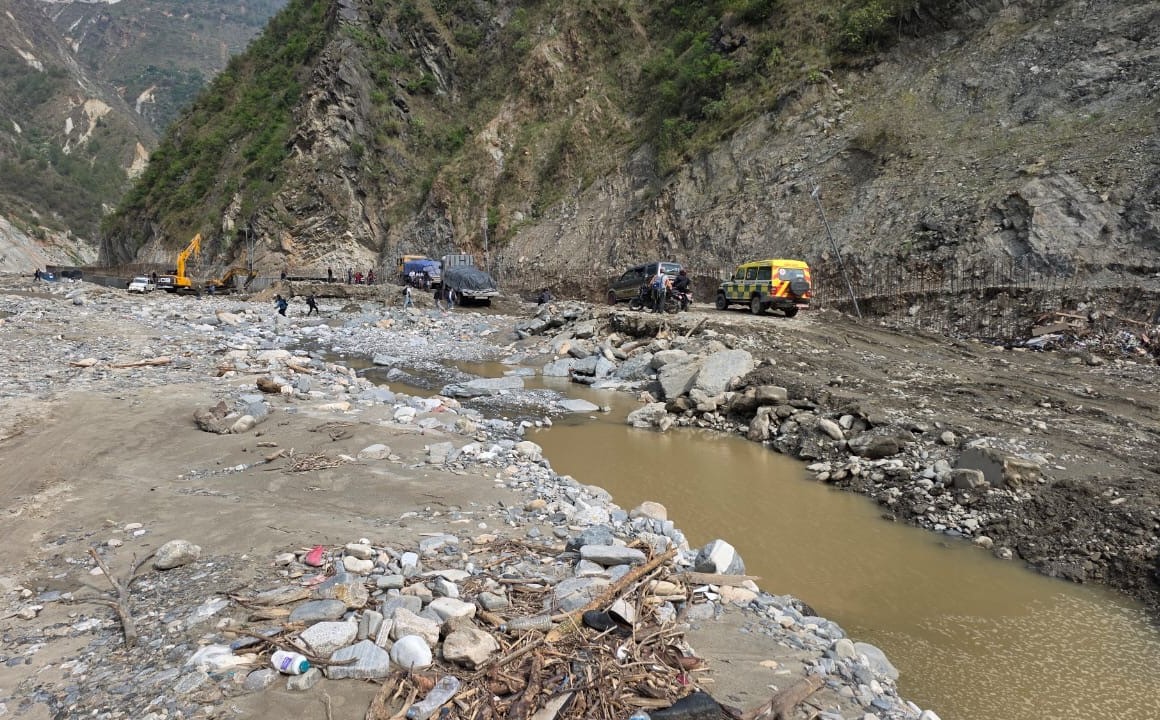
18- ICIMOD’s analysis shows four HKH countries recorded over 10 major disasters in 2025
Kathmandu, May 14: Four of the eight countries in the Hindu Kush Himalaya (HKH) region experienced more than 10 major disasters in 2025, according to data from ICIMOD analysis, highlighting the region’s growing exposure to hazard-related risks.
Asia accounted for a large share of disasters globally in 2025, a trend reflected in the HKH, which spans parts of South and East Asia. Analysis of EM-Data shows that countries in the HKH region experienced economic losses of more than USD $6 billion in 2024 alone from these events, with most damage linked to water-related hazards such as floods, landslides and storms, the ICIMOD stated in a press release today.
The situation continued into 2025. Intense monsoon rainfall triggered repeated flooding and landslides across several HKH countries, including Bangladesh, India, Nepal, and Pakistan. Other hazards, such as glacial lake outburst floods, were also reported in select locations. Across the region, about 1.2 million people were displaced or directly affected by disasters during the year.
Globally, disaster-related economic losses in 2025 were estimated at more than USD $169 billion. In comparison, losses recorded across the HKH highlight how extreme events translate into disproportionate impacts in a region characterised by complex terrain and high exposure.
Data also shows that Myanmar, Pakistan, and China experienced a series of monsoon-induced floods in 2025, causing widespread damage to infrastructure and livelihoods.
Researchers link the increasing impact of disasters in the HKH to the growing prevalence of multi-hazard events. Multi-hazards occur when more than one type of hazard, such as floods, landslides, or droughts, happen at the same time or when one hazard triggers another. Past examples in the region include the Kedarnath floods in Uttarakhand in 2013, and the South Lhonak glacial lake outburst flood in Sikkim in 2023, India, as well as the Melamchi flood in Nepal in 2021.
“Recent years show how floods, landslides, and other hazards are increasingly overlapping in mountain regions, amplifying damages to homes, infrastructure, and essential services,” said Pema Gyamtsho, Director General at ICIMOD, commenting on the regional trend.
Long-term data covering the period from 1975 to 2024 shows a decline in death rates and the number of people affected by disasters in the HKH after 2013. Analysts caution that data gaps may influence this trend, but improvements in preparedness and early warning systems may also be contributing factors.
“The numbers are still worrying, but the post-2013 trend suggests fewer lives are being affected year on year, which may reflect better climate services and preparedness in parts of the region,” said Manish Shrestha, a hydrologist at ICIMOD. “Sustained investment in preparedness and planning remains critical as risks continue to rise.”
Early warning systems have been credited with reducing losses in some flood-prone areas. In eastern Nepal, alerts issued from a flood early warning system along the Khando River in 2024 helped inform and evacuate around 60,000 people living downstream.
Analysts note that reducing future disaster losses in the HKH will also depend on risk‑informed investments, where development and infrastructure planning take multi‑hazard risks into account. Without integrating hazard and vulnerability data into investment decisions, exposed communities risk locking in higher losses as climate‑driven extremes intensify.
Experts warn that multi‑hazard risks are likely to intensify in the coming years as climate change alters weather patterns and increases the frequency and severity of extreme events, leaving exposed communities across the HKH vulnerable to escalating losses.
—
19- Tripartite collaboration for decent work, inclusive development stressed
Lalitpur, May 14: The stakeholders have pointed out the need of tripartite cooperation for decent work and inclusive development.
The stakeholders expressed this view in a tripartite meeting jointly organised by the government, employers, the Joint Trade Union Coordination Committee (JTUCC) and the International Labour Organisation (ILO) in Lalitpur today.
Carrying out progress review of Nepal’s Decent Work Country Programme (DWCP) from 2023-2027, the meeting discussed the upcoming strategy.
On the occasion, Secretary at the Ministry of Labour, Employment and Social Security, Dr Dipak Kafle, stressed on further strengthening tripartite collaboration for decent work, social justice and inclusive economic development.
Expressing the view that labour issues could be addressed through collaboration, ILO Country Director for Nepal, Numan Ozcan, laid emphasis on fact data while working in this sector.
Similarly, Vice-President of Federation of Nepalese Chambers of Commerce and Industry and President of Employers’ Council, Prabal Jung Pandey, said cordial relation between government, employers and workers is indispensable for country’s economic development and productivity growth.
Shedding light on the activities that Federation has been carrying out at the partnership of ILO for labour welfare and women empowerment, Pandey said women entrepreneurship support classes were run to support women entrepreneurs.
He also briefed about multipurpose care centres operated at different places in Karnali and Sudurpaschim provinces.
The FNCCI, in collaboration with the government and ILO, has been working in the sector of decent work and inclusive development, which aims to bring targeted groups like women and youths in mainstream of economy.
—
20- HoR meeting: Lawmakers stress reinforcing system, citizen-friendly service
Kathmandu, May 14: The members of the House of Representatives (HoR) continued putting forth their views in the HoR meeting on Thursday. They underscored the need of effective enforcement of constitution, reinforcement of federalism and guarantee of citizen-friendly service.
In the deliberation held on the annual policies and programmes the Government had presented last Monday for the upcoming fiscal year 2083/84, the lawmakers suggested the government that it prepared a plan on how it could transform national economy and society along with special attention to good governance.
The reform and simplification in public service delivery and control of corruption must be government’s utmost priorities, the lawmakers reminded, adding that the policies and programmes were however positive in terms of its focus on digital infrastructure, encouragement of adoption of information technology as a national industry and clear role of project chiefs for their accountability.
A Nepali Communist Party (NCP) lawmaker Mahendra Bahadur Shahi viewed promotion of energy, tourism and agriculture could pave way for national prosperity through socioeconomic transformation. So, these areas warrant adequate attention, he reminded.
NCP lawmaker Prem Bahadur Bayak sought the government’s attention towards timely management of chemical fertilizer and seeds to the farmers in view of forthcoming monsoon season, and incentives to the people with disabilities. Equally important issue is the transitional justice, which policies and programmes should heed.
Jog Kumar Barbariya Yadav from the same party suggested the government it revised the policies and programmes in a way to address people’s expectations and reinforced federal democratic republic.
Lawmaker of the NCP, Gopal Sharma, said the government needs to accept the comments on how it missed public expectations in policies and programmes and revise the document accordingly.
Ramesh Kumar Malla of the same party blamed that the policies and programmes ignored the plan to mitigate climate change impact.
A UML lawmaker Guru Prasad Baral urged the government to create an investment-friendly environment in order to attract domestic and foreign investment and address the need of industrial security force.
According to HoR member Sajida Khatun Siddiqui, an action plan was needed to enforce citizen’s right to education, for which basic education could be made compulsory, while secondary education provided for free.
Amendment to budget is essential to address issues of disadvantaged, poor and helpless community and to further revise the policy on inclusion, according to UML lawmaker Ringala Yadav.
Lawmaker Mohammad Istiyak Ray demanded the upcoming budget must end the shortage of fertilizers, an annual agro scarcity.
Nepali Congress lawmaker Sandip Rana viewed conservation of natural resources and the promotion of tourism were some of significant to-do-works.
Lawmaker Narendra Kumar Kerung sought a government plan on forwarding construction of the reservoir-based hydropower projects including Tamor.
It was lawmaker Yogesh Gauchan Thakali suggesting the government to bring a solid plan for the implementation of Information Technology Decade.
Chandeshwor Mandal of the Rastriya Swatantra Party (RSP) reminded the policies and programmes should keep in centre the economic development of the poor, disadvantaged and marginalized people.
—
21- Process begins for top appointments at Dasharath Chand University
Kathmandu, May 14: The government has forwarded a process for top appointments at Martyr Dasharath Chand University of Health Sciences. Following the formation of a three-member committee to recommend candidates for the Vice-Chancellor and Registrar at, the formal process of appointment kicked off.
This decision on it was made at the University Senate presided over by Minister for Education, Science and Technology, Sashmit Pokharel on Wednesday. The recommendation committee was formed under the coordination of Prof Dr Jayaraj Awasthi, who is also the founding Vice-Chancellor of the Sudurpaschim University.
The other members of the committee are Prof Dr Lochana Shrestha and Prof Dr Dinesh Lamsal.
The committee formation is line with the Martyr Dasharath Chand University of Health Sciences Act, 2082 BS. The meeting held on Wednesday also made appointments of six new senators. The new senators (including two women) represent the sectors such as science and technology, education, law, management, humanities and sociology.
22- Prof Bajracharya assigned as TU Vice Chancellor
Kathmandu, May 14: Dean at Institute of Engineering, Prof Dr Sushil Bahadur Bajracharya, has been assigned the Vice Chancellor of Tribhuvan University. The post of Vice Chancellor was lying vacant at TU for some weeks.
Prime Minister and Chancellor, Balendra Shah, took a decision to this effect on Thursday. Prof Bajracharya is assigned the role of Vice Chancellor to handle day to day affairs. He will however be discharging the duty of Dean as well.
Upon the bestowal of responsibility, Prof Bajrachaya assumed office at Vice Chancellor’s Office, Kirtipur on Thursday itself.
Dr Dipak Aryal, then Vice Chancellor at TU, had tendered resignation on the eve of issuance of a special ordinance to relive the public officials appointed by the previous government.
—
23- NCP lawmaker Pun advocates structural reform to boost economy
Kathmandu, May 14: A lawmaker of the Nepali Communist Party (NCP), Barshaman Pun, has underlined the urgency of structural reforms in economy, arguing that mere economic growth was not enough to break socio-economic barriers of national development.
In the House of Representatives deliberation held on Thursday on the government’s annual policies and programmes, Pun called for comprehensive policy reforms in order to ensure equitable benefits to all sectors in society and equal access to public services. A clear strategy is imperative to determine classes, communities and areas that require additional attention for economic advancement.
He saw lack of clarity and direction in the policies and programmes for that end. So, the government must make proper address for structural adjustment and effective execution of policies.
Lawmaker Pun who was also the former Finance Minister urged the government to accelerate national pride projects such as Budhi Gandaki and ensure scientific revenue-sharing among the three tiers of government. The government should also implement the policies to address challenges facing agricultural sector, he said, adding that production, processing, supply and marketing are equally important.
The former Finance Minister demanded establishment of a powerful Dalit Development Authority and the continuous encouragement to Dalit and marginalized communities for linking their skills to entrepreneurship.
His suggestions included development of the postal highway to prop up agriculture-based rural industry and the central highway as a fruit-based industrial corridor. These initiatives would help spur economic growth in these regions, according to Pun.
—
24- NC to update active membership to hear voice of lower rung: President Thapa
Gandaki, May 14: Nepali Congress President Gagan Kumar Thapa has said his party was updating active membership as part of a drive to hear and address the problems of party members who are working devotedly at the beginning layer of party organization.
President Thapa said it while inaugurating a provincial orientation the party organized in Pokhara on Thursday. The membership update links all party members with the centre and it further helps party organization advance in line with spirit of general members.
Efforts are on to unite and strengthen the party organization, President Thapa said, urging every member and office bearer at provincial and local levels to carry out responsibilities effectively. “Party bridges state and citizens. The people elected representatives has further responsibility to coordinate with the party and the work in respective constituencies,” Thapa reminded.
He urged the government to act as per constitution, laws and procedures. NC keeps on watching government activities closely whether it abides by rules and procedures, the President shared.
On the occasion, NC Vice President Bishwa Prakash Sharma stressed unity within and among parties for social transformation. “NC supports government in reinforcing federal democratic system. So, the government too should move forward by adhering to democratic values and norms, he viewed.
Party leader and Chief Minister of Gandaki Province, Surendra Raj Pandey, requested party leadership to unite the party emotionally.
General Secretary Gururaj Ghimire said it was time to bolster NC from the very lower level.
NC Spokesperson Devraj Chalise said the people elected representatives from the party should deliver in a way to win people’s hearts.
—
25- HoR meeting: Chair Rai urges govt to consult opposition
Kathmandu, May 14: Chairman of the Shram Sanskriti Party, Harka Raj Rai, urged the ruling parties to consult opposition while formulating policies and programmes and the budget.
Putting forth his views on behalf of the party during the deliberation on policies and programmes in the House of Representatives meeting on Thursday, Chairman Rai reminded that the ruling and opposition parties are two sides of same coins in terms of running state affairs and building nation.
The policies, as he argued, should be a foundation framework of development activities. Rai suggested rigorous discussion on the policies and programmes before its endorsement.
—
26- NA endorses govt policies and programmes
Kathmandu, May 14: The National Assembly, upper House of the federal parliament, passed the government’s policies and programmes for the upcoming fiscal year, 2083/84 BS.
The endorsement of the policies and programmes followed Finance Minister Dr Swarnim Wagle’s responses to the queries raised during the deliberation.
NA Chairman Narayan Prasad Dahal asked the lawmakers whether they would withdraw their proposals on amendment to the policies and programmes. As the lawmakers’ proposal of amendment was denied by a majority votes (voice), the Speaker announced the passage of policies and programmes.
The CPN UML had however announced it would not participate in the voting.
President Ramchandra Paudel had presented the government policies and programmes in the joint session of the federal parliament last Monday.
—
27- Make plan selection and spending system transparent through digital dashboard
Kathmandu, May 14: Lawmaker from the Rastriya Swatantra Party (RSP), Bipin Kumar Acharya, pitched for introducing a voting system ensuring the franchise rights of Nepalis scattered around the world in the upcoming election as a national pride project.
He said so while taking part in today’s deliberations on the annual policies and programmes of the government for the fiscal year 2083/84 at the House of Representatives (HoR) meeting.
Acharya also advocated for adopting a policy of allocating the capital budget solely based on the mathematical weightage of infrastructure requirement indicators, ending political influence and discretionary powers.
‘The selection and expenditure system of every project should be integrated into a public digital dashboard to ensure transparency. A policy arrangement should be placed to implement a ‘time card’ system so that citizens receive all government services within the stipulated time,’ parliamentarian Acharya recommended.
He suggested establishing a performance-based accountability mechanism keeping vigil at the employees delaying service delivery or shirking responsibility.
Lawmaker Acharya drew the government’s attention to include in policies and programmes the investment plan for the professional development and capacity enhancement of MPs, who carry the responsibility of making the country’s and people’s future bright.
‘The first investment should be to provide MPs with the facility of a personal secretary, ‘ Acharya stated.
MP Acharya emphasized that the accounting of questions raised in the Parliament should be transparently accessible to both MPs and citizens.
MP Acharya stressed that the policies and programmes should prioritize institutionalizing the necessary structural and policy arrangements for the concept of ‘right to recall,’ allowing citizens to recall representatives who cannot perform according to public expectations before their term ends.
—
28- Finance Minister Dr Wagle responded to queries at NA
Kathmandu, May 14: In today’s meeting of the National Assembly, Finance Minister Dr. Swarnim Wagle responded to queries raised in regard to the government’s policies and programmes for the fiscal year 2083/84.
Following deliberations over the policies and programmes, Minister Wagle expressed the government’s commitment to advancing the economy built in the past, inclusive development, and overall social development.
Finance Minister Wagle informed that the upcoming budget would be presented based on the 100-point governance reform actions and inputs received at the House on policies and programmes.
The agenda includes presenting amendments to the policies and programmes for decision and passing the policies and programmes today itself.
—
29- Principles and priorities of Appropriation Bill to be discussed in NA
Kathmandu, May 14: The principles and priorities (excluding tax proposal) of the Appropriation Bill presented by Finance Minister Dr. Swarnim Wagle are set to be discussed in the National Assembly on May 18-19.
The proposal tabled by the Finance Minister would be discussed in today’s meeting, informed NA Chairperson Narayan Prasad Dahal. The meeting is set in a way that Finance Minister Wagle would respond to the queries, he said.
Next meeting of the Upper House would take place at 1.15 pm on May 18.
—
30- Incumbent Council of Ministers reshuffled with changes in portfolio
Kathmandu, May 14: President Ramchandra Paudel has reshuffled the Council of Ministers by changing appointments made in the Council and their portfolios as per the government’s amended Performance Regulations.
President Paudel on the recommendation of Prime Minister Balendra Shah-led government formed on 13 Chaitra 2082 BS in accordance with the Article 76 (9) of the Constitution today reconstituted the current Council of Ministers by appointing, reshuffling, and dividing the responsibilities, the President’s Office informed.
According to the work division, Prime Minister Shah has taken charge of the Ministry of Defense, Home, and Science, Technology, and Innovation.
Similarly, Dr. Swarnim Wagle has been appointed the Finance Minister, Shishir Khanal as the Minister for Foreign Affairs, Biraj Bhakta Shrestha the Minister for Energy, Water Resources, and Irrigation, Sunil Lamsal the Minister for Infrastructure Development, Sobita Gautam the Minister for Law, Justice, and Parliamentary Affairs, and Sita Badi the Minister for Women, Children, Gender and Sexual Minorities, and Social Security, stated the press release issued by the President’s Office.
Spokesperson at the President’s Office, Ritesh Kumar Shakya, stated in a press release that Pratibha Rawal has been appointed the Minister for Land Management, Cooperatives, Federal Affairs and General Administration, Nisha Mehta the Minister for Health and Food Hygiene, Sasmit Pokharel the Minister for Education and Sports, Khadak Raj Paudel the Minister for Culture, Tourism and Civil Aviation, Dr. Bikram Timilsina the Minister for Information and Communication, Geeta Chaudhary the Minister for Agriculture, Forest and Environment, Gauri Kumari the Minister for Industry, Commerce and Supplies, and Ramji Yadav the Minister for Youth, Labour and Employment.
—
31- HoR meeting: NC lawmaker KC reminds democratic values
Kathmandu, May 14: A Nepali Congress (NC) lawmaker Arjun Narsingh KC has said fundamental values of democracy must not be compromised.
In the House of Representatives meeting that discussed government’s policies and programmes for the fiscal year, 2083 /84 on Thursday, lawmaker KC reminded the struggles the Nepalis waged for democracy.
According to him, Prime Minister Balendra Shah should not avoid parliament discussion on policies and programmes. The parliament meeting must be conducted in line with constitution, rules, traditional practices and precedent as well.
“It is positive that the policies and programmes mentioned development of Nepal as a world centre for spiritual tourism. So, it must be truly implemented,” he said.
He said the points that are not enforceable should be amended on time.
Transparency is prerequisite for economic good governance, KC said, welcoming the High-Level Commission on Asset Investigations. He also spoke on the need for advancing investigation of Nepalis’ money stashed abroad.
—
32- HoR meeting: UML urges govt to be accountable to parliament
Kathmandu May 14: The CPN (UML) has urged the government to be accountable to the parliament.
In the Thursday meeting of the House of Representatives (HoR) that dwelt on government’s policies and programmes, UML lawmaker Rajendra Kumar Rai insisted that Prime Minister Balendra Shah participate in the discussion and furnish responses to lawmakers’ queries.
Rai argued it was inappropriate for the new lawmakers to instruct the experienced ones. The HoR member suggested that government that it legalized the cultivation of marijuana in a way to boost the national economy.
—
33- Probe panel formed on issues raised about former Home Minister Gurung
Kathmandu, May 14: The government has formed a committee to investigate the issues raised about former Home Minister Sudhan Gurung.
The meeting of the Council of Ministers held on May 11 had decided to form a probe panel led by former High Court Judge Achyut Prasad Bhandari. Other members of the probe panel are Comptroller General Shobhakant Paudel and Joint Attorney Achyut Mani Neupane.
According to Prime Minister Balendra Shah’s Press and Research Expert, Dipa Dahal, the committee has been tasked with probing into the concerns raised publicly about Gurung, and to furnish a report along with recommendations to the government within two weeks.
—
35- Finance Minister Dr Wagle responds to lawmakers’ queries in HoR
Kathmandu, May 14: In today’s second meeting of the House of Representatives, Finance Minister Dr. Swarnim Wagle responded to queries raised during deliberations on the government’s policies and programmes for the upcoming fiscal year on behalf of Prime Minister Balendra Shah.
After deliberations over policies and programmes concluded, Minister Wagle pledged to work to strengthen the foundation of economy built in the past, inclusive development, as well as overall social development.
He informed that the government will present the upcoming budget taking into considerations the government’s 100-point reform agenda and the House deliberations.
In the first meeting of the HoR, opposition parties had disrupted the session, demanding Prime Minister Shah himself respond, resulting in a 15-minute adjournment.
Even though opposition lawmakers continued their protest standing from their seats in the second meeting, Speaker Dol Prasad Aryal allowed Finance Minister Wagle to respond to the queries.
—
36- SC issues interim order against withdrawal of World Link tax case
Kathmandu, May 14: The Supreme Court has issued an interim order to not implement the decision of former Attorney General Sabita Bhandari on withdrawal of a case involving the World Link.
A division bench of Justices Binod Sharma and Shree Kant Paudel issued the interim order on Thursday.
Former Attorney General Bhandari had decided to withdraw a case of tax evasion involving World Link Communications. The company was filed a case accusing of causing a loss of Rs 3 billion in revenue to State. The SC now asked the concerned agencies to not enforce the decision of case withdrawal, for it was related to evasion of huge amount of tax.
—