- Friday, 19 June 2026
Kathmandu, June 17: Nepal and Germany have reaffirmed their commitment to strengthening development partnership. As part of the partnership, Germany has pledged to provide 37.6 million Euro for the technical and financial cooperation to be effective for 2026–2027.
The commitment was made during the Nepal–Germany Development Cooperation Negotiations held in Kathmandu on June 16–17, where the two countries agreed to prioritize cooperation in the sectors of energy, sustainable economic development and health over the next two years.
The Nepali delegation was led by chief of the International Economic Relations Division under the Ministry of Finance, Dr Dhani Ram Sharma, while the German delegation was led by head of the South Asia Division at the German Federal Ministry for Economic Cooperation and Development (BMZ), Barbara Schäfer.
As per agreements, the German assistance will support initiatives related to renewable energy and energy efficiency, power distribution, green and resilient agricultural development, revenue sector reform, quality infrastructure, gender equality, sustainable economic development and access to finance.
Speaking at the opening session, Schäfer reaffirmed Germany’s long-term commitment to development cooperation and the United Nations Sustainable Development Goals (SDGs), stating that Germany would continue to be a reliable partner for Nepal and the international community, reads a press release issued by Embassy of German in Nepal.
The assistance package includes both new initiatives and the continuation of ongoing programmes implemented through KfW Development Bank, the German Agency for International Cooperation (GIZ) and the German National Metrology Institute (PTB).
The two sides also reviewed Germany’s support to Nepal through multilateral channels, including various United Nations agencies and international mechanisms such as the Global Fund to Fight AIDS, Tuberculosis and Malaria. Cooperation implemented in partnership with the European Union, of which Germany is a major contributor, was also discussed during the negotiations.
Both delegations appreciated the longstanding relationship between Nepali and German civil society organizations and underscored the importance of a strong civil society for sustainable development.
Similarly, German Ambassador to Nepal, Udo Volz, said sustainable development requires a solid foundation of human rights, the rule of law and a vibrant civil society.
The next biennial government-to-government negotiations on development cooperation are scheduled to take place in Germany in 2028. Nepal and Germany have maintained a longstanding partnership focused on sustainable economic development, climate action, health sector strengthening and the advancement of the SDGs.
Both delegations expressed satisfaction with the outcomes while reaffirming their commitment to further strengthening Nepal–Germany cooperation in the two-day negotiations.
—
14- Traffic week launched in Rajbiraj
Rajbiraj (Saptari), June 17: The District Traffic Police Office, Saptari has launched a ‘traffic week -2083’ in Rajbiraj in a bid to minimize road accidents.
According to the District Traffic Police Office, the traffic week was conducted to create public awareness on value of adherence to traffic rules.
A morning rally was organised today in coordination with the District Police Office under the traffic week where Nepal Police, Traffic Police, representatives from different organisations, students, teachers and general people had the participation.
The participants in the morning rally carried placards reading public messages such as ‘follow the traffic rules’, ‘use helmets mandatorily’, ‘don’t drive getting drunk’, ‘pay special attention to pedestrian’s safety’.
The rally passed through major roadways in Rabjiraj city. The District Traffic Police Office would organise various public awareness programmes, interactions, orientation and road safety campaign throughout the week.
The police shared that active participation of community was necessary to reduce road accidents while locals expressed the belief that such awareness programmes would play significant role in increase traffic awareness among the citizens.
It is also expected that the activities launched as part of the traffic week would help build a safe, disciplined and accident-free society.
—
16- Bangladeshi Ambassador pays courtesy call on Speaker Aryal
Kathmandu, June 17: Ambassador of Bangladesh to Nepal, Md Shafiqur Rahman, paid a courtesy call on Speaker Dol Prasad Aryal at the latter’s office today.
On the occasion, Speaker Aryal shared that Nepal-Bangladesh relations are based on sovereign equality, mutual respect and trust, adding Nepal has given high importance to the relations with Bangladesh.
He expressed the belief that various dimensions of bilateral relations would get a new height with the cooperation between the governments of two countries.
Lauding the economic and physical developments made by Bangladesh, the Speaker mentioned that good practices of Bangladesh would be useful in Nepal’s development journey.
On the occasion, Ambassador Rahman shared that Bangladeshi government was positive to further expand the existing cooperation between Nepal-Bangladesh in the areas of energy, trade, tourism, education, health and people-level relations.
The Ambassador laid emphasis on working together on the matters of shared interest by making South Asian regional cooperation effective, reads a press note issued by Speaker’s Secretariat.
—
17- Minister Dr Timilsina’s response at HoR meeting: Govt committed to press freedom, digital transformation
Kathmandu, June 17: Minister for Information and Communications, Dr Bikram Timilsina, has reiterated that government is fully committed to protection and promotion of freedom of expression, press and right to information.
Government has given utmost priority to mass media sector with making of new laws and policy so that media sector would be dignified, responsible and credible, Minister Dr Timilsina said while responding to lawmakers’ queries on Appropriation Bill-2083 in the House of Representatives meeting today.
He furnished responses to lawmaker’s queries relating to budget allocation on different headings of Ministry of Information and Communications in the parliament. The government policies and programmes and budget for the upcoming fiscal year, 2083/84 have prioritized five sectors such as mass communication, telecommunications, postal service, film and printing.
According to him, the Ministry was allocated Rs 5.93 billion.
The subordinate agencies of the Ministry like Nepal Television, RSS, Gorkhapatra Corporation, Radio Nepal and Film Development Board were running on both internal resources and the grant by government, while Nepal Telecommunications Authority and the Nepal Telecom were able to sustain on their own resources.
The programmes incorporated in the polices and programmes and budget would be enforced by formulating an integrated annual work plan, he said, adding that regular review, monitoring and evaluation would be conducted.
The lawmakers had raised the queries relating to protection of private media, rights of working journalists, management of social media, digital safety, control of ‘fake news’ etc.
Citizen’s freedom of expression and press freedom would not be suppressed; the National Information Commission has been made active to ensure information of public concern to citizens and make public agencies accountable and credible, he explained.
Ministry has been concerned over journalists’ right to have minimum wage, he said, reminding that the media houses were made mandatory to submit payroll details at Department of Information and Broadcasting for claiming service from the Department. Government is committed to not allow financial exploitation of journalists. Workplace safety is equally important.
Rs 2.4 million allocated for innovation, fact-check
He argued running unions and organizations of media persons with their affiliation to the political parties was against the values of press freedom or international standard. Rs 5 million was allocated for media related organizations, while Rs 2.1 million for investigative fellowship, Rs 2.4 million for media innovation and fact-check, and Rs 4 million for complaint management and transparency programmes.
Minister Dr Timilsina further informed lawmakers that the system of issuing early warning through public broadcasting organizations and through SMS from telecommunications service providers was also being enforced effectively during natural disasters.
In response to lawmakers’ concern over quality of mobile network and internet service in rural, hilly and mountainous areas, the Minister said the expansion of quality and accessible telecommunication services was a top priority of the government. Timely amendment to the Telecommunications Act is afoot, he said, adding that the quality of service is being improved through regular monitoring of mobile networks, drive test and network optimization.
RTDF use for communications expansion
Mobilization of the Rural Telecommunication Development Fund (RTDF) under the Nepal Telecommunications Authority was intensified to expand communication services in the far-flung areas and having fresh demand. Expansion of BTS, e-NodeB, mobile towers and ‘Fiber to the Home’ (FTTH) infrastructure was going on across the country, he said, adding that FTTH service, which reached all 77 district headquarters, is now being extended to all municipalities and rural municipalities.
He argued ongoing expansion of optical fiber will improve quality in the areas along the Mid-Hill Highway and other highways. Currently, broadband internet service has reached 6,743 ward centres, broadband connection already at 4,272 health institutions and 5,341 community secondary schools, according to the Minister.
Total of 763 new infrastructures have been put in place through Nepal Telecom by mid June of current fiscal year, including 2G in 162 locations, 3G in 13 locations and 4G in 588 locations. Process to purchase an additional 1,597 BTS and e-NodeB has been forwarded for the coming fiscal year.
The Minister informed that a campaign was in full swing in a bid to make the postal service modern, technology-friendly and service-oriented. Rs 25 million was allocated to construct information technology infrastructures in 50 more local levels’ post offices next fiscal year. He added informed that investment would also be made in the modernization of the postal service under the Nepal Digital Transformation Project.
Official documents like passports, driving licenses, land ownership certificates, lab samples/reports, ATM cards of the Rastriya Banijya Bank, materials of the Health Insurance Board and various other documents were currently ferried to people’s doorsteps through the post office. EMS service has been expanded to all districts with access to air services in the country. Express postal service is being run connecting 39 countries and parcel service connecting 93 destinations of 71 countries. Efforts are on to restructure the postal service, ensuring it a new model of service. The door-to-door service delivery was running in 62 districts across the country.
In order for the international promotion of films, documentaries and photography, the process for film shooting was eased, Minister Dr Timilsina informed lawmakers. Establishment of a state-of-the-art film studio kicked off in Banepa, Kavrepalanchowk. It is aimed to complete the project within next fiscal year.
A film-related Bill was registered in the federal parliament and was under discussion in the Committee of the House of Representatives, the Minister added. An incentive grant of Rs. 35 million has allocated for the next fiscal year targeting the production of films showing cultural and national values.
Responding to queries about financial crisis and technological barriers facing the country’s printing sector, Minister Dr Timilsina shared that infrastructures were being constructed to produce sensitive printing materials in the country in accordance with Security Printing Act, 2081. Printing postage stamps and driving licenses have already begun in the country.
Out of 2.9 million driving licenses, 1.8 million driving licenses have already been printed and all the remaining ones would be printed within the current fiscal year, according to him. Environment would be created to print license immediately as per the demand from coming fiscal year. Rs 3.24 million budget was allocated for Security Printing Centre for coming fiscal year, 2083/84.
The Minister for Information and Communications said efficiency in allocation was adopted for maximum utilization of budget. Programmes for advancement of government services, strengthening of national cyber security and expansion of digital public infrastructures would be forwarded effectively through Nepal Digital Transformation.
Stating that rapid development in information and communications sector has been making positive impacts in economic, social and educational sectors, the Minister vowed achievement of targeted goals by completing all programmes of the upcoming fiscal year in time.
—
18- Government to promote medicinal plants including Yarsagumba
Kathmandu, June 17: Minister for Agriculture, Forest and Environment Geeta Chaudhary has said that the government is taking necessary initiatives for the conservation, promotion and marketing of Yarsagumba and other medicinal plants and herbs.
Responding to questions raised by MPs during the discussion on the expenditure heading related to the Ministry of Agriculture, Forest and Environment under the Appropriation Bill, 2083 in the House of Representatives today, she said that the government is focused on the organised collection, security, insurance, establishment of processing centers, ensuring prices and expanding market of Yarsagumba and other herbs.
Coordination is being carried out with the local level, provincial government and stakeholders for the implementation of the herbal development program for the upcoming fiscal year 2026/27.
Minister Chaudhary also shared that an inquiry committee has been formed under the coordination of the Provincial Forest Director to find out the truth and facts behind the incident of a tempo being thrown from a cliff while removing forest encroachments in Kailali.
Pointing out the need for civil servants to work responsibly as servants of the people, Minister Chaudhary directed them to be responsible in the protection and management of state assets.
The Agriculture Minister also noted that the government is serious about the recent obstacles seen in Nepali tea exports and added that the ministry was taking necessary initiatives to resume a favourable environment for tea exports. “Discussions are being held at both the technical and diplomatic levels to resolve the problems faced by tea entrepreneurs and the dialogue is moving in a positive direction.”
Minister Chaudhary expressed confidence that the suggestions and advice from lawmakers during the discussion on the Appropriation Bill would support in the implementation of the budget and programs for the upcoming fiscal year.
—
19- Curriculum to be made time-relevant: Minister Pokharel
Surkhet, June 17: Minister for Education and Sports, Sasmit Pokharel, has said that the government is working with a priority to make university education relevant to the times, technology-friendly and employment-oriented.
Addressing the convocation ceremony of Mid-Western University in Birendranagar today, Minister Pokharel said that the curriculum will be revised to link higher education with the demands of the labour market. The government is committed to ensuring necessary budget, infrastructure and skilled human resources for it.
Stating that education obtained from universities should not be limited to certificates only, he said it should instead contribute to employment, entrepreneurship and social transformation. “The university should give priority to the study and research of natural and cultural resources of Karnali, as local development and economic prosperity can be ensured through scientific research on water resources, forests, herbs, tourism and cultural heritage available in the province.”
Minister Pokharel described Midwestern University as the academic pride of Karnali and lauded its significant progress in the fields of research-oriented education, sports, digital technology and innovation.
Congratulating the graduating students, Minister Pokharel mentioned that education is an important foundation for nation-building. “The knowledge and skills acquired today should be useful not only for individual success, but also for the development of society and the country,” he said.
He also expressed confidence that the youth generation can play an important role in finding solutions to problems related to poverty, unemployment, health, climate change, information technology and biodiversity through research, innovation and entrepreneurship.
The Education Minister said that the young generation can make the country’s economy stronger and more competitive through quality education and creative thinking.
—
20- NRB calls for deposit collection of Rs 45 billion through bidding process
Kathmandu, June 17: The Nepal Rastra Bank (NRB) Department of Monetary Management has made a call for bidding and issuance of a deposit collection instrument worth Rs 4.5 billion.
The Department in a public notice stated that the central bank licensed banks and financial institutions can join the bidding online, which started from 3:00 pm earlier today.
The central bank also mentioned that the interest rate will be determined through the bidding process.
The minimum amount for bidding has been set at Rs 100 million, while the maximum limit is (in multiplies of) Rs 50 million, up to the total issued amount.
Only banks and financial institutions classified as ‘A’, ‘B’, and ‘C’ category that have received permission from Nepal Rastra Bank can participate in the deposit collection bidding.
—
21- Building a violence-free society is a top priority: Minister Badi
Kathmandu, June 17: Minister for Women, Children, Gender and Sexual Minorities and Social Security, Sita Badi, has said that women empowerment, gender equality and building a violence-free society have been given high priority in the budget for the upcoming fiscal year.
Responding to questions raised during the discussion on the Appropriation Bill in the meeting of the House of Representatives on Wednesday, Minister Badi said that emphasis has been placed on the economic empowerment of women and girls affected by and vulnerable to violence. She said that budget has been allocated for skill developments, skill testing, startup support and entrepreneurship development programs for women survivors of violence.
She said that the process of amendment to the Human Trafficking and Smuggling Control Act, 2064, has been initiated to address contemporary issues, including the Parlemo Protocol. The livelihood improvement program for disadvantaged women is being implemented through 111 local levels that are lagging behind in the human development index.
Stating that the ministry will implement employment and entrepreneurship programs for Dalit, minority and marginalized communities in coordination with the provinces and local levels, she said that emphasis will be placed on implementing programs targeting Santhal, Chidimar, Dom, Musahar, Chamar, Majhi, Badi, Bote, Indigent Khas Arya, freed bonded labourers, Ranatharu, Bhote, Sauka, Byas, Kusunda, Danuwar and Muslim communities.
Necessary budget has been allocated for the construction of 15 women, children and senior citizen service center buildings in Madhesh, Lumbini and Sudurpaschim provinces under the Women Empowerment Program in collaboration with the Asian Development Bank.
According to Minister Badi, the ministry has given high priority to the aerial rescue of pregnant and postpartum women and newborns who need urgent medical attention in 252 local levels of 48 districts in the mountainous and remote hilly areas with no road access.
The ministry has a plan to conduct a campaign in collaboration with stakeholders including the government at all three levels and civil society to make Nepal a child marriage-free country by 2030.
Similarly, Minister Badi said that a policy has been adopted to ensure access to necessary opportunities and services for a dignified, self-reliant and dignified life by promoting the rights of persons with disabilities. A policy has been adopted to expand senior citizen-friendly services, establish day care centers, lead a dignified life, and involve them in economic empowerment activities for active aging with the aim of strengthening the respect, security, health, and social protection of senior citizens.
The next meeting of the House of Representatives will be held at 11:00 am on Thursday.
—
22- Minister pledges efforts to socially integrate Dalit families from all districts
Kathmandu, June 17: Minister for Culture, Tourism and Civil Aviation Khadga Raj Paudel said Dalit families from all districts would be socially assimilated through homestay programme.
The minister said this while responding to queries raised by lawmakers during the discussion on the heading related to the Ministry of Culture, Tourism and Civil Aviation under the Appropriation Bill, 2083 in the House of Representatives today.
‘A budget bears ideas and perspectives that development should also end inequality,’ he said, adding, ‘We have incorporated a programme to run one Dalit homestay in each of the country’s 77 districts.’
Minister Paudel argued that Dalit homestays are expected to be instrumental in fostering social integration between other communities and Dalits.
‘We have put in place arrangements for government agencies to mandatorily conduct programmes focusing Dalit homestays,’ he said.
Minister Paudel claimed that there has been no discrimination in budget allocation at the community level. He clarified that the Buddhist philosophy and monastery development programmes are intended to carry out their related works.
He said that a lump sum budget has been allocated to preserve the multiethnic and multi-religious traditions and culture. Some constructions need to be done at local level considering the archaeological significance of certain heritage sites.
The Tourism Minister clarified that Rs 500,000 has been set aside for the study for monastery construction. Budget has also been allocated to move forward with the strategic pilgrimage in a quadrilateral model.
He noted that the government has allocated over Rs 8.2 billion for trekking route development and the preservation of cultural and historical heritage sites.
—
23- El Niño effect: Monsoon delayed with fear of drought
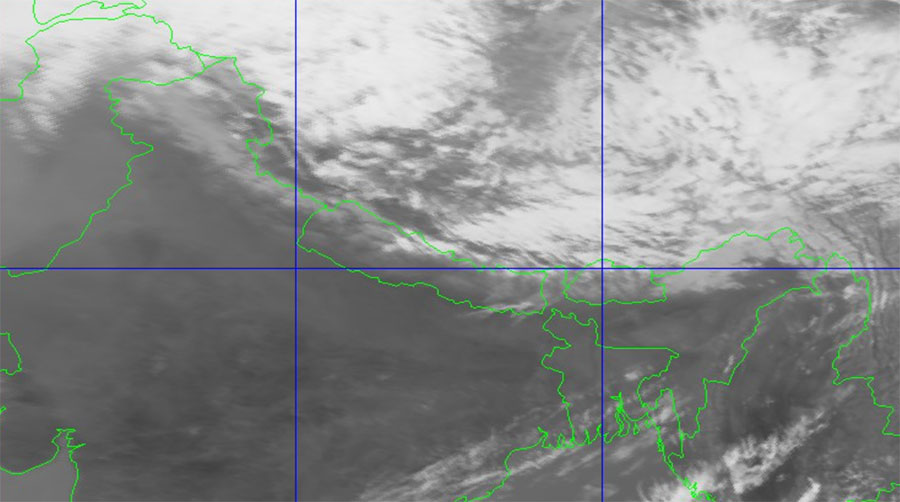
Kathmandu, June 17: The monsoon, which usually arrives in Nepal in June 13 every year, has not yet arrived. The arrival of the monsoon has been delayed by four days already due to the weather system developed in the Pacific Ocean and the influence of the westerly winds.
Based on the analysis of weather forecasts conducted by the Department of Hydrology and Meteorology, the arrival of the monsoon is expected to be delayed by a few more days. Department Spokesperson Bibhuti Pokharel said that El-Nino has developed in the Pacific Ocean and is still strengthening, which is likely to affect the arrival of the monsoon in Nepal and weaken the monsoon in South Asia as a whole.
The Department has also projected that Nepal will receive less than average rainfall, resulting in rise in temperature during the monsoon period. According to the department, there is a 55 to 65 percent chance of less than average rainfall in the southern parts of Karnali Province, most areas of Lumbini Province, eastern parts of Madhes Province and southern areas of Koshi Province this year.
Similarly, the department has stated that there is a 45 to 55 percent chance of below-average rainfall in most parts of the Sudurpaschim Province, the western part of the Madhes Province and the Koshi Province.
The northern part of the Karnali and Koshi Provinces is said to have a 35 to 45 percent chance of below-average rainfall. The department estimates that most of the remaining areas have a 35 to 45 percent chance of below-average rainfall.
Regarding maximum temperatures, the department has stated that there is a 55 to 65 percent chance of above-average temperatures in various parts of the country.
Similarly, the department has concluded that the minimum temperature is also likely to be above-average across the country.
Sujan Subedi, in-charge of the Department’s Weather Analysis Branch, said that monsoon is the most sensitive weather system in Nepal and about 80 percent of the annual rainfall occurs during the monsoon period.
Nepal usually has a four-month monsoon period from early June to early September.
Meanwhile, Joint-spokesperson and senior agricultural economist at the Ministry of Agriculture, Forest and Environment, Lal Kumar Shrestha, expressed concern that the late arrival of the monsoon could affect the paddy crop in the country.
Since majority of the paddy transplanted in the country is dependent on rainwater due to the lack of good irrigation facilities, if the rainfall is less or delayed, it can affect paddy plantation and subsequently lead to reduced production.
Shrestha suggests adopting weather-adapted farming systems to minimize the impact on agricultural production due to the climate change and possible low rainfall.
—
24- Return of Cooperatives deposits not from state funds: Minister Rawal
Kathmandu, June 17: Minister for Land Management, Cooperatives, Federal Affairs and General Administration Pratibha Rawal has made it clear that not a single penny has been spent from the state treasury so far in the return of the savings of the depositors of problematic cooperatives institutions.
Responding to queries from MPs on various headings of her Ministry under the Appropriation Bill, 2083 at the House of Representatives today, Minister Rawal said in the last three months alone, amount worth Rs 5.94 million of 1,452 small savers with a deposit of Rs 10,000 or less from eight problematic cooperative organizations have been returned. “The amount was recovered from the directors, managers, members of the accounts committee and loan subcommittee of the concerned cooperatives.”
On a different context, the Minister said that the government is actively working to end the anomalies and anomalies seen in the financial cooperatives sector. The local levels, which have relatively weak nutritional status, have been given more priority in relation to the regional differences seen in the nutrition cluster.
Minister Rawal said that a draft bill to make provisions regarding the formation, operation and conditions of service of the federal civil service has been prepared and sent to the Ministry of Law, Justice and Parliamentary Affairs for suggestions.
“After receiving the ministry’s opinion, the bill regarding the formation, operation and conditions of service of the federal civil service will be presented to the parliament as per the due process.”
—
25- ‘Nagarik Chautari’: A digital platform to directly provide inputs to government
Kathmandu, June 17: The government is afoot to bring into operation the digital system called ‘Nagarik Chautari’ to directly connect the Nepali citizens at home and abroad to every activity of the State.
The Office of the Prime Minister and Council of Ministers has made necessary preparation to make public the primary (beta) version of the digital platform, informed Prime Minister Balendra Shah’s personal deputy secretary, Prakriti Dhakal.
The platform would not be limited to conduct dialogue on the public policies but also act as a medium to ensure easy access of the citizens to the government plans, policies and practices.
With this in operation, citizens can raise the challenges facing different parts of the country, benefit the two-way communications and directly recommend practical resolving measures to the government through mobile or computer.
Through the digital platform ‘Nagarik Chautari’, citizens can directly provide their inputs and recommendations to the government while the government can also receive explicit support from the people thereby expanding their sense of ownership.
“Through this digital platform, the government can also search for talented and hardworking volunteers willing to contribute to the country’s development. Nepali citizens, at home and abroad, would be able to contribute their expertise to the country’s development through this platform,” Dhakal added.
Dr. Pukar Malla, a member of the National Planning Commission, expressed his belief that the Nagarik Chautari would become a strong medium for good governance that people are looking for, and that it will make government policies and practices more citizen-friendly and results-oriented.
He claimed the platform would be transparent for public service delivery and participatory development.
The Citizen Chautari digital platform is being designed to be simple and easy for every citizen to use, and that there are also plans to engage with citizens across the country through direct ‘in-person’ programmes.
—
26- Ambassador of Russian Federation calls on Vice President Yadav
Kathmandu, June 17: Ambassador of the Russian Federation to Nepal, Alexey V. Surovtsev, paid a courtesy call on Vice President Ram Sahay Prasad Yadav.
During the meeting held at the Office of the Vice President on Wednesday, discussions were held on various aspects of bilateral relations between Nepal and Russia.
—
27- National Conference of Special Rights Committee
Lumbini, June 17: The first national conference of the chairperson and members of the Special Rights (or Privileges) Committees of Bagmati, Lumbini and Sudurpaschim Province Assemblies concluded today with a seven-point ‘Lumbini Declaration-2083’.
The two-day conference organized by the Privileges Committee of Lumbini Province Assembly in Deukhuri, Rapti Valley issued the declaration, prioritizing the protection of parliamentary privileges, the autonomy of the Province Assemblies and the strengthening of democratic institutions.
The declaration expresses a commitment to adopt the sovereign principles of parliamentary privileges in accordance with national and international best practices and thereby promote the autonomy and dignity of the Province Assemblies.
All parties should be responsible for increasing the trust of the citizens in the parliamentary practices of the Federal Republic of Nepal, reads the declaration.
Serious attention has been drawn to the act of the Executive not being serious enough towards the directives, monitoring and vigilance of the legislature, which has affected the privileges of the parliament and members of parliament.
The declaration also includes a commitment to further expand mutual cooperation, coordination and exchange of experiences between the Privilege Committees at the province level.
Concluding that it is necessary to formulate laws related to privileges in the provincial assemblies in accordance with Article 187 (9) of the Constitution, the Privilege Committees of the provinces decided to take the necessary initiatives and move forward with the law-making process.
The conference also announced the establishment of a coordination committee to institutionalize the exchange of experiences, coordination and collaboration between the Privilege Committees.
The declaration has been signed by the Chairs of the Privilege Committees of Lumbini, Sudurpaschim and Bagmati Provinces.
—
28- Govt. places higher priority to health sector: Minister Mehta
Kathmandu, June 17: Minister for Health and Food Safety, Nisha Mehta has said that the government has placed higher priority to the health sector than the past.
Responding to the queries raised by parliamentarians in today’s meeting of the House of Representatives (HoR) regarding the ministry-wise allocations for the upcoming fiscal year 2026/27, Minister Mehta expressed the commitment to bring wider reforms in the health system based on good governance, accountability, and transparency.
“Over 80 percent of Nepal’s public health problems are caused by factors beyond the Ministry of Health’s control, such as pollution, indiscriminate pesticide use, and antibiotic resistance, so both the health sector and other agencies need to act with equal responsibility and commitment”, she noted.
Informing that there are currently 14,474 viral rabies vaccines in stock in the country, Minister Mehta shared the process to receive 4,500 vaccines as assistance from the World Health Organization next week to prevent an immediate shortage is in final stage.
She also mentioned once the central-level procurement is completed, the supply of rabies medication will go fully smooth.
In order to prevent such shortages in the future, she said the government has initiated a ‘multi-year procurement process.’
In response to concerns about shortages of cancer medicine, Minister Mehta said the government is exploring a long-term solution to address the issue.
The ministry has taken market shortage of essential drugs used in cancer treatment very seriously.
Of the goal to build basic hospitals in 657 local units, construction of hospitals have so far been completed in 109 locations, Minister Mehta informed the HoR. She also mentioned that hospital construction is currently underway in 336 locations.
The ministry, she informed, has appropriated Rs 200 million for instituting the ‘Burn Fund’ in the next fiscal year. It allows burn patients to receive free treatment, and budget has been arranged for the Kirtipur Burn Hospital and Bir Hospital for burn case treatment.
Efforts have been accelerated to establish burn treatment units in 14 federal hospitals and to train healthcare workers, Minister Mehta shared, expressing commitment that the burn-related bill will be tabled in parliament within the next fiscal year.
Likewise, she stated that the ministry has allocated necessary budget to provide specialized health services in remote districts and that various software and digital applications will be used to offer tech-friendly health services.
—