- Monday, 16 November 2026
Kathmandu, Nov 16: Diplomacy takes many forms and evolves with changing circumstances. While a country’s foreign policy is generally expected to remain consistent across successive governments, its diplomatic approaches must adapt to emerging challenges, shifting global priorities and changing national interests.
Ultimately, diplomacy is an extension of a country’s foreign policy, pursued abroad and in its international relations to protect and advance national interests. It must respond to changing times without losing sight of those interests.
Nepal now needs to make such an adjustment by embracing climate diplomacy as a central pillar of its foreign policy. Our recent focus on labour, energy and economic diplomacy reflects an evolving approach to international engagement. Climate diplomacy must now become an equally important part of that effort, with a broader and more clearly defined mandate.
For Nepal, climate diplomacy should serve two fundamental purposes: making the international community aware of the damage the country is suffering from climate change and asserting its rights in the pursuit of climate justice. This requires establishing credible evidence of Nepal’s negligible contribution to global emissions and documenting the disproportionate burden it bears. Armed with reliable data and clear benchmarks, Nepal must engage the international community to advance its national interests.
A closer examination of the damage reveals the scale of the injustice. Nepal’s contribution to global carbon emissions–the principal driver of climate change–is negligible, almost insignificant. Yet the country has become one of the world’s most vulnerable to climate-related disasters. We have seen this in numerous instances, most recently in the devastating Bhotekoshi disaster and flooding along the Budhigandaki, among others.
In effect, Nepal is paying the price for a crisis it did little to create. If we bear the consequences of emissions generated largely elsewhere, should we not be entitled to compensation? A country repeatedly exposed to such disasters must take its evidence and grievances to the international arena and make a compelling case for justice. Taking that case to the United Nations and other global forums is precisely what effective climate diplomacy should entail.
As Nepal suffers increasingly from floods, landslides, glacial lake outburst floods, droughts, wildfires, rising temperatures and retreating glaciers, it must become more assertive in its diplomatic engagement. Climate diplomacy should not be confined to informing the international community about disasters or seeking emergency assistance. It must go beyond the conventional practice of diplomacy and become a sustained effort to establish accountability and secure climate justice.
The first step is to build a comprehensive, scientific and evidence-based record of climate-related losses and damage. Nepal needs a permanent mechanism to document the human, economic, infrastructural, environmental and non-economic costs of every major flood, landslide, glacial lake outburst or glacier-related disaster. This will require stronger research capacity, systematic data collection and coordination among relevant institutions.
Nepal must then make a clear distinction between seeking assistance and demanding justice. It needs to establish, through credible evidence, the link between the damage suffered by vulnerable countries such as Nepal and the emissions generated by developed and high-emitting nations. Building that evidence base and presenting the case convincingly on international platforms will require considerable diplomatic skill.
Nepal could also strengthen its position by building a common front with other countries facing similar geographical vulnerabilities and climate-related losses. If its voice alone fails to command sufficient attention internationally, it should work towards a diplomatic alliance of countries with shared concerns and demands. Cooperation with other Himalayan and Hindu Kush countries, as well as mountainous nations and small island states, could help build a stronger collective voice.
Nepal must also make the international community understand that melting glaciers, glacial lake outburst floods, soil erosion in mountain regions and extreme rainfall threaten not just Nepal but the water security, food systems and economies of the wider South Asian region. Nepal is well placed to lead this conversation, but doing so will require sustained and determined diplomatic engagement.
Need for treating climate diplomacy as long-term national priority
Climate diplomacy must also be treated as a long-term national priority, not an agenda that changes with successive governments or the sole responsibility of the Ministry of Foreign Affairs. A comprehensive national strategy could be developed through coordination among the ministries of agriculture, forest and environment, finance and foreign affairs, the National Planning Commission, disaster management agencies, universities and research institutions.
Diplomatic engagement around the world is becoming increasingly diverse, with countries expanding their traditional approaches to accommodate emerging global challenges. Nepal, too, must broaden its diplomatic priorities in keeping with the times, particularly given its distinctive geographical position and geopolitical circumstances.
Climate diplomacy is now indispensable to Nepal’s national interests. Wherever Nepal has a presence–whether at regional, international or global forums–it must consistently raise the issue of the damage it is suffering from climate change. Such engagement is essential to ensure that the country’s vulnerabilities and concerns are understood beyond its borders. Nepal must also make climate change a regular part of meaningful bilateral meetings and negotiations rather than treating it as an issue reserved for multilateral conferences.
Three years ago, United Nations Secretary-General António Guterres visited Nepal and travelled to the Himalayan region. During the visit, he shared a stark warning on social media about the future facing coming generations if the country’s mountains continued to melt at the current pace.
Soon afterwards, the United Arab Emirates hosted the Conference of the Parties (COP). At the summit, Guterres himself drew international attention to Nepal’s predicament. Having the UN chief convey such a message to the global community was an important diplomatic opportunity for Nepal. But the more important question is what the country gained from the international attention generated by that visit and the subsequent discussions.
Nepal’s concerns reached the global stage, but did they translate into meaningful action and support? This is the question that must shape the country’s next phase of climate diplomacy. The objective is not simply to make the world aware of our suffering; it is to ensure that the international community responds in a manner commensurate with the scale of the damage. Climate diplomacy means giving a stronger diplomatic voice to those affected and making a persuasive case for their rights.
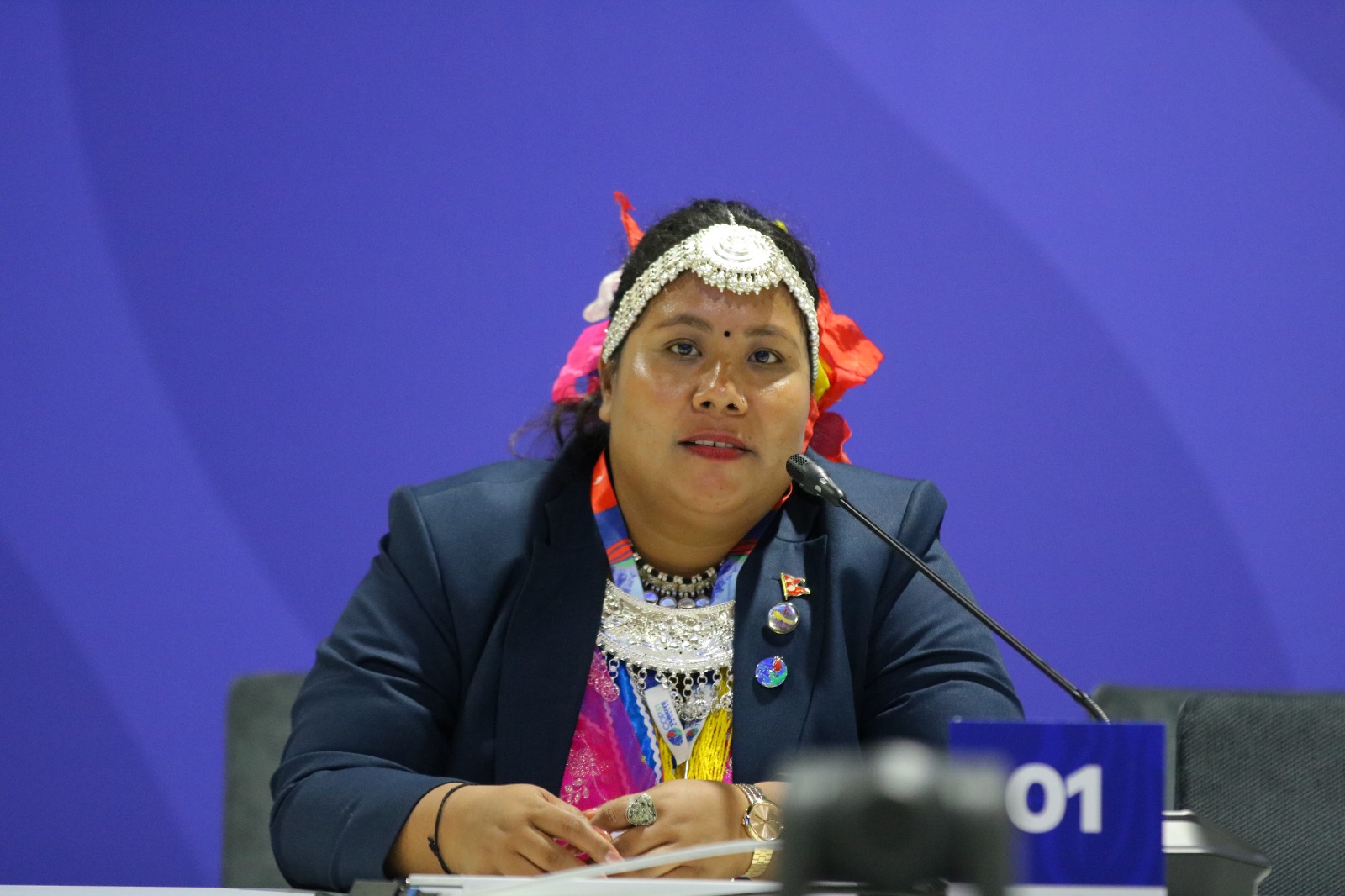
Nepal has already taken its climate justice campaign to the International Court of Justice (ICJ), where it has formally presented its claims. Nearly two years ago, the country appeared before the court to seek justice over the impacts of climate change and the compensation it believes it is entitled to. This marked Nepal’s first appearance before the ICJ to present its case for climate justice.
The injustice is clear: wealthy and developed countries have contributed disproportionately to carbon emissions, while countries such as Nepal, which have contributed almost nothing to the problem, are bearing some of its harshest consequences. How can it be justified that those least responsible for climate change should suffer its most severe impacts? Nepal has been presenting this imbalance at international forums, and it must continue to do so with greater force and clarity.
This is precisely the case Nepal must advance through climate diplomacy. It must articulate its problems, needs and constraints firmly before the international community build domestic consensus around its national interests and demonstrate the diplomatic resolve needed to defend its rights.
Climate diplomacy will also be a test of Nepal’s diplomatic capacity. Its greatest strengths lie in negotiation and the power of persuasion. Nepal must make the fullest possible use of these instruments to advance its interests and secure a fairer international response to the climate crisis. That is also what should be expected of the environment diplomacy section recently established at the Ministry of Foreign Affairs. #nepal (Yek Raj Pathak / RSS)