- Saturday, 28 November 2026
Sundar Kumar Thakali/RSS
Mustang, Nov 26: Due to climate change, the availability and quality of grass in the highland grazing areas of Mustang have started to decline, so studies of the grazing areas and collection of grass samples have begun for the conservation of snow leopards and their prey species, the Himalayan blue sheep.
A study of pasture land and collection of grass samples has started in the high-altitude regions of Mustang, which are home to the rare snow leopard, to assess the condition of the grazing areas and the quality of the grass.
Sanjog Thakali, Senior Natural Resource Conservation Assistant of the Annapurna Conservation Area Project (ACAP), told RSS that ACAP’s Jomsom and Lomanthang offices under the National Trust for Nature Conservation are conducting separate surveys to protect and increase the population of the snow leopard’s prey species, the naur or the Himalayan blue sheep.
In the lower Mustang area, one camera has been installed to study snow leopards, and in the upper Mustang, the pasture land and grass are being studied in four areas, including at three places.
Grass samples will be collected from those areas to measure the current grazing condition, the species and diversity of grasses, the amount of organic matter, and the state of nutrients.
In this connection, grass samples are being collected in Baragung Muktichhetra and Gharpajhong Rural Municipality by creating 10 square meter plots and designating one square meter subplots within each plot.
Thakali said that samples of grass the Naur feed on would be collected from 15 plots of pasture land in Baragung Muktichhetra and nine in Gharpajhong rural municipality and their 48 subplots in lower Mustang.
Samples are being collected in high-altitude areas of Baragung Muktichhetra like Sangta, Phalyak, Lupra, Muktinath, Kagbeni, and Jhong. Thakali mentioned that in areas where cameras are installed, samples are taken maintaining a minimum distance of 500 meters from one section to another.
Similarly, in Upper Mustang, ACAP Lomanthang has started measuring the pasture and grass quality in three areas where cameras were previously installed for snow leopard studies.
Umesh Paudel, the head of ACAP Lomanthang, said that to increase the snow leopard population, it is necessary to increase the number of its prey species, which requires improving grazing areas and the quality of grass.
Grass samples are being collected from 150 plots in Lomanthang and Loghekar Damodarkund rural municipalities. He mentioned that in three areas designated for snow leopard studies, the grazing areas within a five-square-kilometer grid structure are being included for sample collection.
Based on the area covered by grass, samples will be collected from a maximum of 40 to 50 plots.
During the survey, green grass and dry grass will also be weighed, Poudel said. The collected samples will be sent to the lab to test the nutritional content and quality of the grass. It is expected that this will help identify ways to improve the availability and quality of feed for the Himalayan blue sheep.
He mentioned that since the main prey of the snow leopards is the blue sheep, the quality and availability of the grass will also be studied for its effects on the blue sheep’s physical condition, obesity, and reproductive capacity.
The goal is to study the condition of grazing areas and grass species scientifically to protect and increase the number of feed species.
—
11- Opinion: Reconstruction can be avenue for sustainable urban planning
Ambika Prasad Adhikari, PhD
Kathmandu, Nov 26: It has been three months Nepal suffered the devastative glacial disaster. The Bhotekoshi flood occurred on August 26 took a huge toll on human life and physical property in Nepal. With the initial rescue, relief works and compensations, the government is now at work to launch reconstruction drive.
The reconstruction drive following the recent disaster is, however, complicated because the disaster was caused by multiple factors. It was more than a flood – glacier collapse, rock failure, snow melt, rainfall and debris flow, thereby building up to a catastrophe with cascading effects. It evidently requires multifarious issues to attend and engage with for advancing the reconstruction campaign effectively and sustainability. First of all, identification of relocation site is imperative. It is challenging in deed. However, scientific research and extensive consultations are helpful in taking ahead the process to identify safe locations.
Irrespective of humongous loss of lives and property, the disaster has created an avenue for Nepal to lay a solid foundation of sustainable urban planning. The concept of constructing resilient housing was forwarded much after 2015 Gorkha earthquake. The materials and methods used for housing were different from the past.
The August 26 disaster has made us consider seriously on construction works on flood plain. The massive destruction of various sorts of physical structures and agricultural lands on flood plain this time must be a wakeup call for Nepal in terms of reconstruction and urban planning. The previous studies conducted by the Nepal government and international researchers on safety threat on flood plains can be useful to avoid further risks.
For example, the Nepali offices relating to geology, meteorology and weather forecasting, and geographers may have the studies on the record of floods in the past 100 years and its reaches. So, in view of scientific data on previous floods and flood plains, the housing/structures can be shifted elsewhere- away from flood plain. The recent disaster has made it clear how vulnerable the permanent settlements on the river banks are. Agriculture, wetland and parks can be prioritized more on flood plains or near river banks.
For the identification of new site for permanent relocation of the displaced people, selecting mere geographical sites away from riverbank is not sufficient either. Geological to climatic conditions are increasingly pressing issues to which the governments at all three-tiers can work in unison so that a safe and long term settlements can be raised. When it comes to safe housing, issues relating to earthquake also comes with equal concern. Proper selection of construction materials and technology can be helpful. As Nepal is in seismic zone, it is vulnerable to earthquake and we experienced the mighty one just a decade back. Nepal’s Himalayan range is geologically young. So, geological mapping and GIS mapping counts much for selecting right site.
Roadway also needs to be shifted up from river corridors. The recent disaster has also made us reconsider riverbank roadways. Importantly, considering Nepal’s hilly and mountainous features, one of the options can be tunnel ways system.
While raising new settlements, the scheme of sustainable urban planning can be forwarded so that multiple vulnerabilities would be reduced and modern facilities put in place.
Knowledge building and transfer
Investing on knowledge is vital for taking ahead the sustainable urban planning and management. However, it is not that difficult as was the case in the past, to generate and transfer knowledge on urban planning. There are a large number of experts within Nepal and abroad who can contribute to Nepal’s development at present, for the government is focused on giving a pace to development and good governance.
Some national and international experts can even voluntarily provide assistance to the present government led by the young and energetic Prime Minister and his young and smart team. The government is vibrant. However, experiences should not be belittled. So, sharing of experience and expertise on the reconstruction and urban planning is vital to make further informed decisions.
Irrespective of the political movements Nepal waged for multiple times for change and development, the development was not focused much to the expectation for lack of integrity. But now, it is right time to advance Nepal towards industrialization and development. For this to happen, one of the key issues is proper urban planning.
Adopt condominium concept
The Kathmandu Valley, once having sparse houses except the core city areas with cultural heritages, is now getting crowded and suffocated. It clearly indicates sheer absence of timely urban management.
Although concept of real estate can be seen in Nepal with some apartments, even the subnational governments can adopt the condominium model to minimize the cost of housing and facilities. Once the condominiums are raised, it drastically cuts the construction cost and time, avoids hassles and prevents duplication in managing facilities. Nepali’s existing single housing system is costly mode of urban development. The municipal governments can prepare laws and policies that favour the implementation of condominium so that people would not be encouraged to build a single house and demand the facilities of drinking water, electricity, road for one, two or few houses.
Urban planning is not new concept because it is as old as human history. Even in Nepal, there were urban planning in Lichhavi era and Rana period. However, Nepal badly missed modern urban planning – sustainable management of water, electricity, drainage, waste sewerage, transport in cities.
Building a house in city seems an individual aspiration, but it comes with huge cost- to the individual and government. Providing infrastructures to scattered- bit and pieces facility to individual housing is difficult and costly. But in case on huge building with apartment system is made, a single point system of facility can be cost effective and managed at once.
Even the rich countries have enforced the concept of condominium. The US, Canada, Singapore, Switzerland, and Hong Kong City have settled people in high-risers. They have discouraged single family zone. But, it is reverse in Nepal, which is problematic for urban planning. Once the condominium is developed, the facilities are not only provided from single points but also help generate adequate open space, which can be utilized for park, garden and agriculture. It sharply reduces city flooding because there is adequate open space for rain water absorption.
There are a lot of urban master plans that can be studied and replicated. The Kigali City Master Plan, 2020 of Rwanda is one of the best models of urban planning. The country having per capita income less than that of Nepal has set a successful example of City Master Plan. Not so far, even the Gujarat case is fine for Nepal to learn much for urban planning.
Allow not ‘recipe for disaster’
Concentrating everything in Kathmandu is turning into a ‘recipe for disaster’. It is one of the biggest challenges of Nepal’s urban planning. It is the right moment the government of young and energetic leaders can consider how balanced developments can be ensured across the country with just decentralization of infrastructures. Considering the present unmanaged, densely populated and suffocating the Kathmandu Valley, the educational knowledge city can be developed out of Kathmandu Valley where roadway, water and electricity are sustainable. The urban flooding is getting increasingly unmanageable in Kathmandu Valley. It is after all the result of mis-governance of urban management. As the climate-induced disaster is increasing in scale and intensity, the federal capital itself undergoes a severe test. So, well informed and sustainable urban planning is the need of present Nepal.
[Dr Adhikari is a noted urban planner and international development specialist. This opinion is prepared based on a conversation Executive Editor at RSS, Narayan Prasad Ghimire, had with him in Kathmandu.]
—
12- Artificial intelligence and life skills to be added to school curriculum
Kathmandu, Nov 26: Skill-based education, artificial intelligence, information technology, and life skills will receive priority in the school-level curriculum.
The task force established to revise the ‘National Curriculum Framework for School Education, 2076 BS’ is preparing to incorporate practices such as ‘bagless day’ and ‘book-free Friday,’ moral education grounded in national values, sports science, health and well-being, climate change, the use of language and information technology, and related ethical considerations.
Following a decision at the National Curriculum Development and Evaluation Council’s 98th meeting on May 5, a 19-member task force was formed under the coordination of Prof. Dr. Balchandra Luintel, then Dean of the Faculty of Education at Kathmandu University.
Task force member-secretary and Curriculum Development Centre Executive Director Mahendra Parajuli said that the curriculum draft revision has secured participation from the widest range of stakeholders to date. He reported that around 150,000 suggestions have been received through various channels.
The draft, he said, will be revised to respond to present-day needs and the aspirations of future generations. The task force will prepare a curriculum draft covering early childhood development through Grade 12.
A new curriculum will then be developed and formulated in stages, drawing on the revised draft and the report on suggestions received. Twelve subject-based groups have been established for the revision, and working papers have been prepared.
The groups have gathered feedback through stakeholder discussions, field studies, websites, electronic media, professional and institutional associations, and various forms.
In revising the draft, they are also considering the roles of provincial and local governments within the federal governance system.
—
13- Minister Sah reiterates government commitment to working with private sector
Kathmandu, Nov 26: Minister for Industry, Commerce and Supplies Deepak Kumar Sah said the current government is committed to working with the private sector to build an investment-friendly environment grounded in transparency, stable policies, and mutual trust.
Speaking today at the ‘Nepal–UK Business Forum’, organized by the Nepal–Britain Chamber of Commerce and Industry, he encouraged British companies to explore joint investment and technical partnerships, as well as opportunities in manufacturing.
Minister Sah also urged Nepalis living and working in Britain to help connect the two economies by investing in their homeland and sharing their professional expertise, innovations, and knowledge. He noted that Nepal and Britain have enjoyed more than two centuries of friendship, mutual respect, trust, and cooperation.
Their relationship, he said, extends beyond diplomacy and is rooted in close ties between their people. “There is an opportunity to build on this historic relationship and create a stronger economic partnership—one that supports advanced technology, responsible investment, and sustainable trade,” he said.
Nepal and the United Kingdom, he added, have considerable scope to work together in renewable energy, hydropower, information technology, green technology, manufacturing and industrial development, sustainable infrastructure, and services.
Noting that opportunity alone is not enough to attract investors, Sah said the government is working to strengthen investor confidence through policy stability and transparency.
—
14- Minister Badi reaches Rasuwa to check on condition of flood-affected communities
Rasuwa, Nov 26: Minister for Women, Children, Gender and Sexual Minorities, and Social Security, Sita Badi, has come to Amachhodingmo Rural Municipality in Rasuwa today to take stock of the situation of communities affected by the Bhotekoshi flood.
Participating in a special programme organized in the rural municipality, Minister Badi gathered information about the impact of the flood on women, children, and the gender and sexual minority community, her personal secretariat stated.
On the occasion, she discussed with local representatives and relevant authorities about the post-flood situation, the immediate needs of the affected communities, and the problems they had faced.
Minister Badi expressed commitment to do her best to support and take initiative in ensuring the protection, rehabilitation, and social security of flood-affected women, children, and gender and sexual minority communities.
Rural municipality vice-chairperson Chandika Tamang said that the municipality’s special programmes and initiatives for long-term protection, restoration, and social security, while addressing the immediate needs of the affected community, would start right from Amachhodingmo Rural Municipality.
—
15- Health Minister discusses with stakeholders on Insurance Act Amendment Bill
Kathmandu, Nov 26: The Ministry of Health and Food Safety has begun amending the Health Insurance Act to make the National Health Insurance Programme more organized, effective, and financially sustainable.
Today, Health Minister Nisha Mehta met with representatives of the Health Insurance Board, the Social Security Fund, and other related bodies to discuss the bill. Following the discussions and preparatory work, the ministry has drafted the amendment bill and sent it to the Ministry of Law, Justice and Parliamentary Affairs.
The minister’s secretariat said the necessary legal steps are now being taken, with the bill expected to be registered in the Federal Parliament soon. The proposed amendments focus on improving how contributions are collected and services are paid for, and expanding insurance coverage to government and private-sector employees, self-employed people, and other citizens.
They would also make the state responsible for medical care for people who cannot afford to contribute. The reforms propose coordinating and integrating treatment services offered through the Health Insurance Board, the Social Security Fund, and the Employees Provident Fund; simplifying access to insurance services; expanding the network of health institutions; and curbing unnecessary tests and improper claims.
Minister Mehta said the ministry is pursuing legal and policy reforms to ensure health insurance goes beyond covering treatment costs and helps protect every citizen’s health. She added that the aim is to ensure no one is denied treatment because of financial hardship.
—
16- Migratory birds start arriving in Chitwan to evade cold
Chitwan, Nov 26: As the cold increases, birds have started coming down from the Himalayan region to the plains in search of food.
Migratory birds from within the country and abroad have started arriving in Chitwan National Park and nearby areas.
Eagles, kites, and other birds, along with water fowls, have come here to escape the cold. Basu Bidari, coordinator of the Ornithologists’ Association of Bagmati Province, mentioned that such birds have been spotted along the riverbanks and around the lakes here.
According to him, 12 to 15 species of ducks that have come from outside Nepal have started appearing in the Narayani, Rapti, and Riu rivers here. He mentioned that some of the birds have already arrived while others are yet to come.
Birds have been coming to Chitwan to escape the cold, even from the Himalayan areas of Nepal. According to Bidari, birds come to Nepal from Siberia, Mongolia, Uzbekistan, Pakistan, and China.
He mentioned that 120 to 180 species of birds migrate to Nepal to escape winter cold. Bidari added that more than a hundred species have arrived so far. He also noted that these birds return from south to north after six months when it’s time for them to hatch their chicks.
—
17- Journalist Rajendra Bista passes away
Kathmandu, Nov 26: Former vice chairman of the Press Chautari Nepal, Rajendra Bista, passed away on Thursday.
Sudurpaschim in-charge of the Press Chautari, Dil Bahadur Chhatyal, informed that Bista died while undergoing treatment at Seti Provincial Hospital, Kailali. He had been suffering from liver problem. He was admitted to the hospital due to health complication on Wednesday.
Active in journalism for nearly three decades, Bista was associated with till recent time.
—
18- Bagmati Province to prepare development framework for next ten years
Hetauda, Nov 26: The Bagmati Province government is all set to prepare a development framework for the next ten years after conducting an in-depth review of the works it carried out since the establishment of province.
The 18th meeting of the Provincial Council of Ministers held on Thursday decided to form a high-level steering committee under the coordination of the Chief Minister.
Making public the decisions of the meeting, spokesperson and Minister for Physical Infrastructure Development in province, Bharat Bahadur KC, informed that the province government’s presence and activities would be reviewed from the very ward levels. A strategic plan and master plan would be prepared for the next ten years to advance the development in a sustainable manner.
The meeting also decided to manage reading facilities to the children who lost one of their parents in the Bhotekoshi floods. The government would take such children’s guardianship.
A priority project would be advanced for a solid waste management centre with the designation of a place at Manthali Municipality-6 of Ramechhap.
—
19- Infrastructure Development Division Office set up in Achham
Achham, Nov 26: An Infrastructure Development Division Office has been established at Sanfebagar of Achham. The Office was established on Thursday as a subordinate body of the Infrastructure Supervision and Monitoring Office of Dhangadhi.
The Office’s operational area includes Doti, Accham and Bajura districts.
The entity was established implementing a decision of the Council of Ministers on September 9. The decision was about the establishment of seven Infrastructure Supervision and Monitoring Offices, and 21 Infrastructure Development Divisions across each province under the Ministry of Infrastructure Development.
The Office will undertake the projects to construct motorable and suspension bridges in all three districts. It also carries out repair and maintenance works.
According to Division chief Sohinder Yadav, the Office would enforce the project to connect local levels with the central road network, improve community access, develop alternative highways and tourist roads, enhance road safety, and upgrade existing road infrastructures.
Mayor of Sanfebagar Municipality, Rajendra Bahadur Kunwar, said the establishment of the Office has ended the need for local representatives and residents to travel all the way to Dhangadhi to pursue development-related works.
Chief district officer of Achham, Tikaram Dhakal, expressed his confidence that the Office would be effective in facilitating physical infrastructure efforts due to its geographical remoteness.
—
20- Karnali govt to formulate disability policy
Karnali, Nov 26: Secretary at the Ministry of Social Development in Karnali Province, Roshni Kumari Shrestha, has said the provincial government was taking initiative to formulate a disability policy.
Speaking at an ‘Orientation Programme on Disability Inclusive Development (DID) for the Government Officials of Karnali Province and Members of Local Disability Coordination Committees’ organized by the National Federation of the Disabled Persons, Karnali Province in Birendranagar, on Thursday, secretary Shrestha informed that the disability policy would be launched by considering its relevance for a long time. It prioritizes the sensitivities, problems and needs of persons with disabilities, according to her.
The provincial government has also forwarded a process to manage interpreters at Karnali Provincial Hospital, Surkhet to facilitate services for the people with disabilities. The disability cases are increasing in the wake of rising accidents and disasters, she said.
Deputy mayor of Birendranagar Municipality, Nilkantha Khanal, said although some progress was realized for the rights of people with disabilities as compared to the past, there are much to do in this sector. The disability sector is waiting adequate budget to fully address the problems, according to him.
President of the National Federation of the Disabled Persons in Karnali Province, Nandaraj Dhital, viewed the state needs to speak for those who cannot speak. “Positive attitude of government officials is equally imperative,” he stressed.
Head of the Ministry’s Education and Social Development Division, Subarna Kumar Khadka, made a presentation on the activities carried by the Ministry so far on inclusive development. The new policy to be formulated by the Karnali government would address the need of ensuring all physical structures in Karnali disabled-friendly and accessible.
—
21- CIT directed to submit detailed report on service expansion
Kathmandu, Nov 26: The Finance Committee under the House of Representatives has directed the Citizen Investment Trust (CIT) to submit a detailed report with a plan to expand access and future course of action within 10 days.
The Finance Committee meeting held on Thursday the directed CIT’s executive director Parbat Bahadur Karki to this regard, according to Committee chairman Dr Krishnahari Budhathoki.
“Irrespective of the pressure for widening services, CIT is yet to reach all prospective citizens,” said chairman Budhathoki, directing the CIT director to submit a comprehensive report within 10 days.
CIT was suggested expanding investment in large infrastructures and productive projects. It is essential to increase the CIT’s involvement in long-term projects.
On the occasion, CIT spoke on the need for government to create an environment favourable for expanding investment in infrastructure projects. Executive director Karki said the government initiatives plays vital roles in increasing investment in hydropower projects such as Upper Tamakoshi and Nyadi.
—
22- RSP president Lamichhane holds meeting with PM Shah
Kathmandu, Nov 26: President of the Rastriya Swatantra Party (RSP), Rabi Lamichhane, and Prime Minister Balendra Shah held a meeting on Thursday.
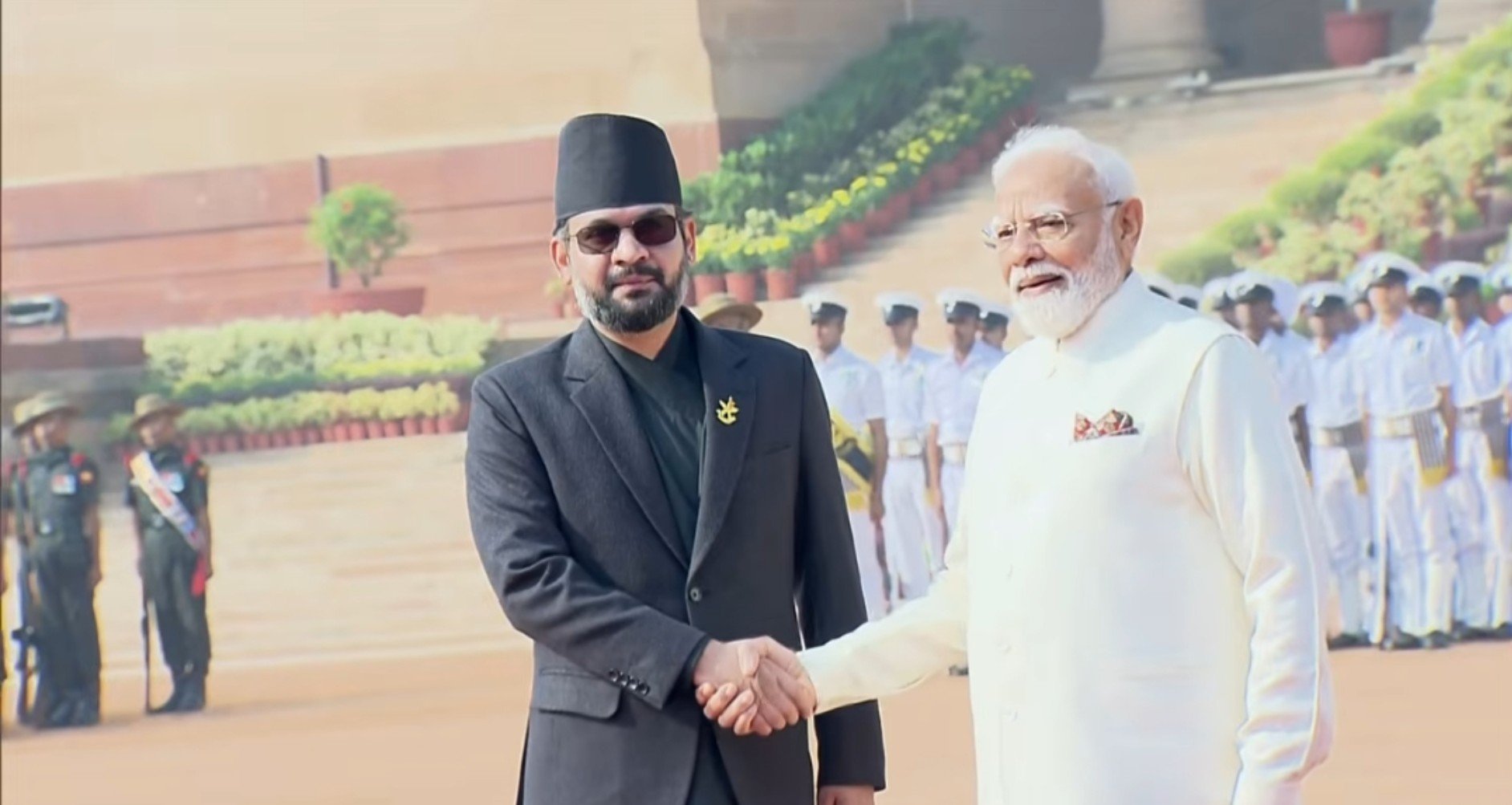
During a meeting held at president Lamichhane’s residence, Budhanilakantha, the issues ranging from contemporary politics to PM’s India visit were discussed, according to RSP spokesperson Jagdish Kharel.
In the meeting held in an amicable atmosphere, the two leaders dwelt on internal issues of RSP, party’s orientation programme, upcoming parliament session and the ordinances the government is planning.
—
23- National guideline mandates indigenous people’s consent on dev projects
Lalitpur, Nov 26: The Indigenous Nationalities Commission, the National Foundation for Development of Indigenous Nationalities, and the Nepal Federation of Indigenous Nationalities jointly issued a ‘National Guideline for the Implementation of Free, Prior Informed Consent (FPIC) Directive, 2083’.
The Guideline urges the government agencies, non-governmental organisations and multinational companies to obtain the consent of the affected indigenous communities before undertaking any project in their areas, said Indigenous Nationalities Commission’s chairperson Ram Bahadur Thapamagar.
The final authority to decide whether a project should proceed with rests on the customary institutions of the respective communities. Likewise, a tri-party contract among the government involved in the project, investors and affected communities should be forged before undertaking a project.
Even after obtaining consent, a project can be withheld if any adversity comes. The entire cost of the consensus procedures will be borne by the respective project.
For an implementation of the directive, it has been proposed to form the National Facilitation Mechanism. The Indigenous Nationalities Commission will address grievance and disputes seen in course of the project implementation.
According to chair, the Guideline is necessary to implement the International Labour Organisation (ILO) Convention No 169 and the United Nations Declaration on the Rights of Indigenous Peoples. He urged the government to formally recognize the directive as an official government document and introduce necessary laws to ensure their effective implementation.
—
24- Former chief secretary Aryal arrested on fraud charge
Kathmandu, Nov 26: Former chief secretary of government, Eaknarayan Aryal, has been arrested on the charge of collecting amount illegally from Nepali migrant workers while facilitating them to travel to Malaysia for foreign employment.
The former chief secretary who had also served as the secretary at the Ministry of Labour, Employment and Social Security was apprehended from Nepal-India border area of Morang on Thursday.
According to spokesperson at the Central Investigation Bureau (CIB), Senior Superintendent of Police, Anup Shumsher JB Rana, further investigation into the charge against Aryal was underway. Talking to RSS, he confirmed the arrest of former chief Secretary.
Prior to this, police arrested some senior government officials and other people on the charge of defrauding Nepali foreign migrant workers.
The then Ministers for Labour, Employment and Social Security, Sher Bahadur Kunwar and Rameshwor Ray Yadav, Ministry’s the then secretary Binod KC, the then chiefs of Employment Management Division, Umesh Dhungana and Rajib Pokhrel and the then law officer Nirmala Gurung are among those already arrested on the same charge.
—
25- Aspiring climbers from 77 nations take permit for winter ascent
Kathmandu, Nov 26: A total of 1,633 people from 77 nations have obtained permission to climb various peaks in Nepal this winter. According to information provided by the Department of Tourism, among those obtaining expedition permits, 1,253 area men and 380 women.
The highest number of aspiring climbers is from France, 150, followed by 146 from China, 130 from the US, 124 from Russia, 112 from the UK, 102 from Germany, 90 from Nepal, 56 from Spain, 52 from Switzerland, 46 from Australia and 42 from Czech Republic.
The government has collected revenue of Rs 334.20 million by issuing the climbing permits.
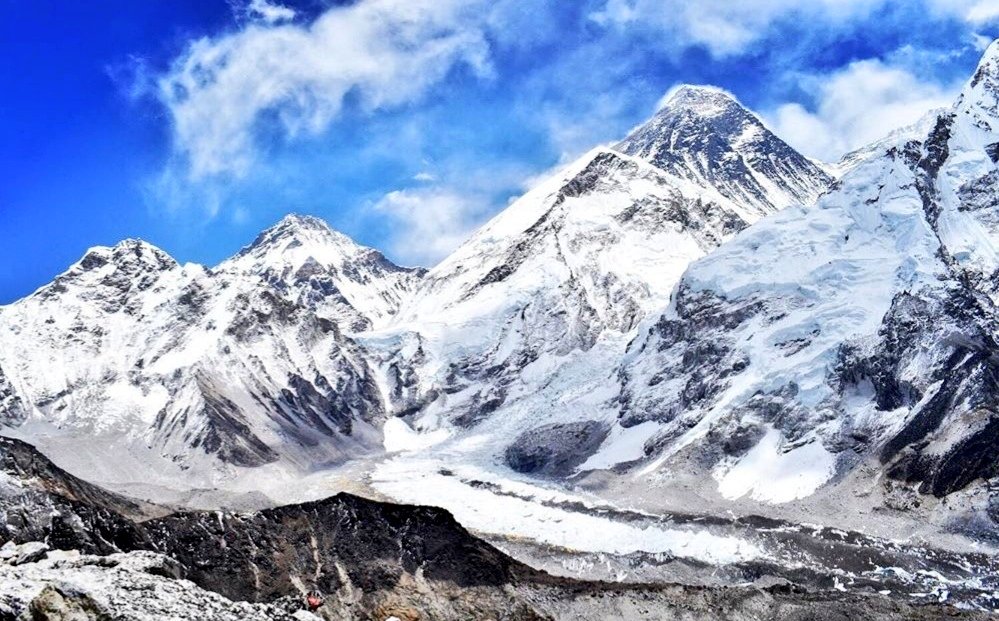
The permits are for scaling the peaks including Manaslu, Dhaulagiri, Makalu, Himlung and Amadablam.
—