- Friday, 20 February 2026
Narayan Prasad Ghimire
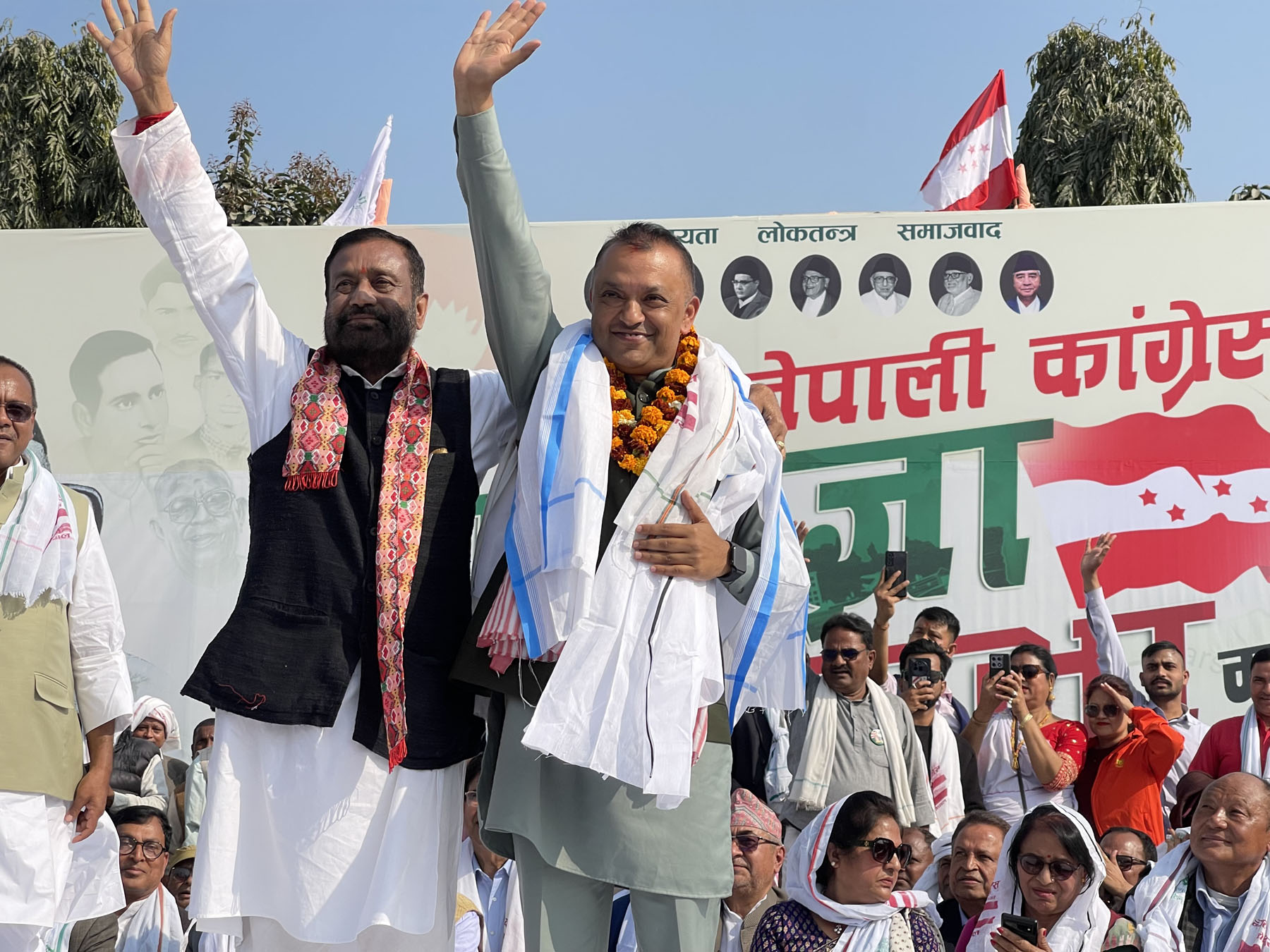
Kathmandu, Feb 20: Nepal observed the National Democracy Day yesterday, Falgun 7, organizing various programmes across the country. The day is observed every year, commemorating the abolishment of autocratic Rana regime and paying tribute to the martyrs.
Since then, the country did not witness the autocracy as that of Ranarchy. However, the democracy was hijacked frequently. We were destined not to see democracy flourished, but flailed and faltered.
Struggles continued to safely release the democracy from the hijackers’ clutch. Interestingly, the democracy (prajatantra) has been given new name ‘loktantra’ since the 2063BS people’s movement. Loktantra is in use, probably because Nepalis are no more praja (subject) after the abolishment of monarchy. Even before loktantra, the prajatantra was restored, bringing the monarchy under constitution in 2046BS.
Until the flash protest of youths last September, which was later recognized as ‘Gen Z movement’ by the incumbent government, the abolishment of monarchy or the adoption of federal democratic republic was regarded as the most consequential political event. The country has been undergoing a new system of federalism. Not long after such phenomenal change, the country witnessed another flash protest that not only pulled down the sitting government but also caused dissolution of the House of Representatives, the supreme institution of people’s representatives. Now, Nepal is poised to have a fresh mandate on March 5, less than two weeks to go for voting.
Democratic deficit
With these indents in the background, it is worth pondering: What were the reasons behind such recurring protests and movements in Nepal? Was the system, which was revered as ‘democracy’ and ‘loktantra’ itself a faulty scheme? Or were the political actors or those in power failed to retain public trust in absence of delivery as they promised?
Defining democracy with beautiful words and limiting it to paper- constitution, acts, policies and parties’ manifestos are largely blamed for the faltering democracy. The background struggles to this stage expose our proclivity towards protest and movement, but sheer ignorance to institutionalize the achievements. The institutionalization of democratic achievements gained through struggles requires utmost political consensus that retain public trust.
The constitution Nepal promulgated in 2015 is often prided on for its progressive features. It is indeed a solid foundation for empowering citizens with three-tiers of governments in place. The present system is qualified also as an inclusive democracy.
Worryingly, the decoration of system with flowery words failed to win people’s trust in system, political parties and institutions, which ultimately resulted in the unprecedented protest, Gen Z movement. It evidently unmasked a state of democratic deficit. Those to bear the brunt of democratic deficit are largely the youths, who are delivered dream of new Nepal, prosperity and happiness, but reality remained elusive. The public demand of good governance, corruption free society, rule of law, and development with thriving economy fell on pachyderm ears of rulers that caused the fresh political quake last September, forcing parties to prove their trust and strength again.
There is no doubt that Gen Z movement that demanded lift on social networks for free speech and corruption free society for good governance was a stark reminder of democratic dividend in short supply. The movement was therefore for reinforcing democratic values, keeping in centre the youths’ demand and aspirations.
Propping up pillars
As the country is all set to hold the HoR election on March 5, how the post-election would prop up other democratic pillars – free press, independent judiciary, separation of powers, good governance, economic freedoms and developments- is a new concern. In addition to serving as a step further to wipe out present political adversity, the successful conduct of March 5 election is instrumental in strengthening these pillars of democracy. Whoever comes to hold the power post-election, these are fundamental issues to address the youths’ aspiration and reclaim public trust.
Nepal cannot imagine democratic casualties anymore. For it, it is time to work honestly to check deficits. Only corrected politics with noticeable change in practice can navigate well the system that best reflects the youths’ aspiration. The parties- both with legacy and the new ones- require smooth conversation and robust coordination at this stage so that they can avoid intolerance, politics of negation and confrontation. If the politics of negation and revenge as seen in the past is repeated, it brews another round of hostility.
Seize the moment
There is no luxury for the political parties at all to belittle the democratic achievements made so far either. Working together for betterment is urgency. Democracy thrives on conversation and tolerance, cooperation and coordination that ultimately helps the State actors build consensus for public welfare and earn their trust.
Now, it is time for delivery that pays heed to democratic values and practices. Creation of trust in parties, system and institutions is imperative that builds an atmosphere conducive to curb democratic backsliding. Nepal cannot undergo more sufferings that further derail democracy. It is opportune moment to bring the democracy back on track. Let’s seize the moment.
—
08- Finance Minister Khanal pledges adequate resources for successful HoR election
Lalitpur, Feb 20: Minister for Finance Rameshore Khanal has reaffirmed his commitment to ensuring that there will be no shortage of resources to successfully conduct the March 5 election to House of Representatives.
Speaking at the Nepal Tourism Symposium 2026 jointly organized here today by the Nepal Tourism Board and Parishuchak Media, Minister Khanal asserted that the government is fully focused on making the upcoming election a success.
Stating it is now time for the government to shift its attention towards economic agendas, Khanal noted that the biggest challenge for the government at present was to steer itself away from debates over political instability.
He admitted that the previous government’s pledge to grant tourism sector industry-level facilities had not been fully realised.
Highlighting the interim government’s efforts towards improving the national economy, the Finance Minister shared that various policy measures have been undertaken towards this end.
—
09- Mayors Forum decides on sustainable waste management in
Kathmandu Valley
Kathmandu, Feb 20: The Valley Mayors Forum has decided to collaborate with the federal government to study the scientific and sustainable management of waste produced in the Kathmandu Valley.
The Waste Management Study and Coordination Committee has stated that, in addition to studying the methods and technologies of waste management, it will collaborate with the government to facilitate support, coordination, and collective management among all local levels as needed.
The Forum’s 13th meeting held in Kathmandu, on Thursday and chaired by Forum Chairperson and Lalitpur Metropolitan City Mayor, Chiribabu Maharjan, decided to formulate laws and develop a master plan for the bicycle lane from Godavari to Budhanilkantha, and to collaborate with the government for infrastructure development and operation.
There is a lot of work to be done to cooperate and coordinate for making the life of the Valley denizens easier by developing the Kathmandu Valley in an integrated manner. The Forum’s current vision aligns with this.
After the meeting, Forum Chairman Maharjan stated that the local levels of the Valley are ready to cooperate with the federal government for implementing the Metro Concept and stated that they are prepared to construct and operate the infrastructure according to this concept.
In the meeting, Acting Mayor of the Kathmandu Metropolitan City (KMC), Sunita Dangol, stated that while operating public transport, it is necessary to collaborate with the government to construct infrastructure by selecting an appropriate medium that suits the geography of the Valley, the originality of settlements, and the cultural and social practices.
She opined that in order to reach a concrete conclusion about which studies on public transport systems are appropriate, it is necessary to review past studies.
“Problems are endless; results come not by insisting solely on one’s own opinion within an administrative framework, but through recognising the coexistence of local levels in the Valley and collaborating in a coordinated manner,” Dangol said.
Forum Chairman Maharjan said that the analysis of the previously conducted study report for the operation of public transport in the Valley and the suitable format for the Valley will be presented in the upcoming meeting.
According to KMC Acting Mayor Dangol, waste management, operation of public transport, drinking water supply and river protection, conservation of the river civilization, food hygiene, disaster management, and reducing the impacts of climate change are the perennial problems and the Forum should take the onus to solve these problems.
—
10- PM Karki visits Muktinath, instructs to ensure a successful election
Mustang, Feb 20: Prime Minister Sushila Karki has visited the Muktinath Temple located in Baragung Muktikshetra-1.
PM Karki, who arrived here on a helicopter of the Nepali Army, performed the ‘water sprinkling ritual’ from the 108 stone spouts on the premises of the Muktinath Temple and also paid homage to the god Muktinath on the occasion.
On the way to visit the temple, she was welcomed by Rinzin Namgel Gurung, the chairperson of Baragung Muktikshetra Rural Municipality and also the vice-chairperson of Muktinath Development Committee, Eknarayan Bhandari, the assistant chief district officer, Dinesh Bhusal, the Committee administrator, and the head of Muktinath Ranipauwa village.
Assistant Chief District Officer Bhandari said that Prime Minister Karki interacted with both local and foreign devotees and tourists while going towards the temple, about 200 metres above from the helipad, along with security personnel and aides.In that context, Baragung Mukti Kshetra Rural Municipality Chairman Gurung and Muktinath Development Committee Administrator Bhusal informed Prime Minister Karki about the problems faced by devotees at Muktinath Temple.
The Committee Vice-Chairman Gurung informed that although a file regarding the necessary infrastructure construction plan in the temple area has been submitted to the Department of Archaeology, it has yet to be approved by the Department and works on construction of necessary infrastructure could not be carried out due to delays in approval.
“We have submitted files to the Department of Archaeology for eight projects including a changing room, reconstruction of the 108 taps, construction of an annex building, residence block for anis (Buddhist nuns) and visitor-friendly infrastructure in Muktinath Temple. The work has not progressed due to delays in approval of the plan, and the Prime Minister has been verbally informed of this matter,” he said.
In response, Prime Minister Karki stated that the necessary process will be taken forward after consulting with the Director General of the Department of Archaeology, said Bhusal, the manager of the Muktinath Development Committee.
After spending about an hour at Muktinath, PM Karki headed to the Indrabaks Battalion of the Nepali Army in Jomsom via a Nepal Army helicopter.
PM Karki’s directive for making elections successful
Prime Minister Karki has directed that the House of Representatives elections to be held on March 5 be conducted in a free, fair, fear-free and credible environment.Chief District Officer Ajita Sharma said that during the election-related discussion and interaction held at the Indrabaks Battalion in Jomsom the Prime Minister directed the authorities to ensure a peaceful environment for the election.
“Work wholeheartedly to make the election successful. You are doing well. Prepare in a way that no problems arise,” CDO Sharma quoted Prime Minister Karki as saying.
Prime Minister Karki was briefed by Chief District Officer Sharma on the overall security situation of the district and the security plans for the elections.Similarly, the District Chief Election Officer Bidyaraj Paudel provided information to the Prime Minister about the progress and other matters related to the House of Representatives member election so far.
—
11- HoR election: Voters of Rupandehi-4 say they need pro-development leader
Rabindra Pratap Gupta/RSS
Devdaha (Rupandehi), Feb 20: “The road leading up to Marchawari is in poor condition. The major problem here is the bad road. Until it is improved, life will not be easy,” expressed Om Prakash Kandu of Siso Semara of Marchawari-3 in Rupandehi constituency no 4.
Like Kandu, many voters of this constituency agree that bad roads are their biggest common problem.
He rued that even bringing an ambulance or fire engine becomes difficult due to poor road condition.As unemployment remains another biggest concern here, Kundu observed that this constituency needs a leader who can establish new industries and create jobs for local residents.
“Farmers are not getting fertilizer on time. Even now, they are compelled to cross the border into India to buy it. There are no proper irrigation facilities either,” he shed light on the problems facing the voters in this constituency.
As he is going to exercise his franchise from Rupandehi constituency no 4 for the March 5 election to House of Representatives, he divulged that he plans to vote for a candidate who can genuinely develop this area and advance it further.
He argued, “Development will only be realized if people vote for a candidate capable of developing this area. Voters should choose the candidate carefully. Why elect someone who never shows up in the constituency after winning?”He called for a representative who truly cares about this area and its people. “We always receive assurances on what they deliver after winning. Once elected, they don’t even recognize us,” he ranted.
Another voter Sadhu Saran Yadav of Raipur Marchwari–3 highlighted the key issues in the constituency no 4 including poor roads, lack of timely fertilizer and irrigation facilities for farmers, absence of a well-equipped hospital and inadequate infrastructure in schools.
“The representatives elected in the past could not deliver significantly on development works. This time, by casting our ballot in the upcoming election, we will elect a candidate who can ensure education, health, employment and overall development of this area,” he disclosed his polling plan.
Makkhan Lodh of Parasahawa of Kotahimai Rural Municipality-7 pointed out that there is a pile of problems and stressed the need to elect a candidate who can address these problems. Voicing the similar views as Kundu is Shyam Mohan Yadav of Siso Semara, Marchawari Rural Municipality. Yadav admitted that poor road conditions remain the most pressing issue.
“There are potholes everywhere in the roads which have increased road accidents. Schools are marred by various challenges and there is no well-equipped hospital either,” he mentioned,
“The elected representative must pay special attention to the development of physical infrastructures, education, health, agriculture and employment,” he voiced the collective aspirations of the voters here.
Chandra Shekhar Gupta of Mayadevi Rural Municipality-4 stated that the main issue in this area is primarily related to road infrastructure. He demanded that the people’s representatives should pay special attention to the development of the education and health sectors.
Shreeram Yadav from Marchwari-1 echoed Gupta. He said, “The candidate who can arrange for food, irrigation, and roads in this electoral constituency is the one who will be elected this time.”Mohammad Aslam Khan, a resident of Asuraina, Sammarimai Rural Municipality-6, stated that the main problems are in the sectors of education, health, roads and agriculture.
Menka Yadav of Marchwari-1 questioned why incompetent candidates should be elected. She stated that people’s representatives who focus on education, roads, agriculture, and employment are necessary.
There are 116,172 voters, including 66,062 men and 50,110 women, in Rupandehi Constituency No. 4.The election candidates in this constituency include former ministers, former House of Representatives members and Provincial Assembly members. Seven independent candidates and 15 candidates from political parties are in fray.
Sarbendra Nath Shukla of the Loktantrik Samajwadi Party (LSP), Nepal was elected from this constituency in the general election held in 2022. In the 2017 elections, Pramod Kumar Yadav of the Nepali Congress was elected, while in 2013 elections, Shukla was elected from the Terai-Madhesh Loktantrik Party (TMLP) from this constituency.
In 2007 election, Om Prakash Yadav, a candidate of the Madhesi People’s Rights Forum, was elected as the Constituent Assembly member from here.
—
12 – Opinion: Menstrual Discrimination Hinders Menstruators’ Political Engagement from Kitchen to Parliament
Radha Paudel and Pabitra Guragain
Kathmandu, Feb 20: As March 5, the voting day for the House of Representatives (HoR), approaches, election enthusiasm has spread across the country. Yet a closer look at candidacies through a power lens reveals a stark imbalance. Of the 3,400 candidates contesting under the first-past-the-post (FPTP) system, only 395 are women. This disparity raises urgent questions: Where are the women in the 2026 parliamentary elections? Have political parties failed to ensure one-third women candidates as directed by the Election Commission? Does the Constitution not guarantee 33 percent women’s participation in Parliament? Are political parties accountable for implementing inclusion provisions? And as a signatory to various UN human rights frameworks, is Nepal upholding its commitments?
These questions echo widely across social media and public forums. Conventional explanations for women’s low political participation often cite familiar barriers: women are perceived as physically weak; they lack financial resources and property to fund campaigns; they are discouraged from attending late-night meetings; they are viewed as followers rather than leaders; they are not socially recognized as public figures; and they are considered less competent than men. While these stereotypes have persisted since the advent of democracy, they are symptoms rather than root causes.
The deeper and largely unaddressed structural factor is menstrual discrimination. This form of discrimination shapes and perpetuates the very stereotypes used to exclude menstruators from decision-making spaces. It begins early in life. A comprehensive study of 12,000 respondents conducted by the Global South Coalition for Dignified Menstruation/Radha Paudel Foundation found that regardless of class, caste, religion, education or geography, participants learned about menstrual discrimination between the ages of six and nine—mainly through family members, media and everyday social interactions.
Long before their first menstruation, menstruators internalize messages that position them as unsafe, inferior and powerless. They learn to perceive non-menstruators as superior. This psychological conditioning—rooted in the biological distinction between those who menstruate and those who do not—gradually shapes individual identity, social norms, power relations and state structures. Simultaneously, non-menstruators internalize a sense of security and superiority because they do not bleed or face menstrual restrictions. Over time, this dual and opposing psychology reinforces patriarchal systems.
This dynamic forms a vicious cycle of discrimination that affects menstruators emotionally, socially, politically, economically and technologically throughout their lives. Their participation in leadership and decision-making remains nominal, whether in politics, corporate sectors, bureaucracy or other public institutions. The mere 11 percent participation of menstruators in the FPTP system for the upcoming election reflects this imbalance. Yet menstruators exist and excel everywhere—even in space exploration, as illustrated by figures such as Sunita Williams. The issue is not capability, but systemic exclusion.
From the moment their biological sex is identified, menstruators are often treated differently. Through repeated exposure to discriminatory practices and narratives, they may come to believe they are subordinate rather than equal in dignity and worth. Menstrual blood is socially framed as impure or weak instead of recognized as a natural and life-sustaining biological process. Once menstruation begins, restrictions intensify. Cultural and religious norms often confine menstruators’ mobility, limit their participation in social life and reduce their agency.
Power structures across society—from homes and temples to schools and parliaments—are predominantly controlled by non-menstruators. As a result, menstruators are often prevented from fully developing their potential. Police Report 2025 indicates that 92 percent of violence occurs at home and is perpetrated by non-menstruating family members. Given that menstrual discrimination reportedly exists in over 95 percent of households in Nepal, it is reasonable to link domestic violence to these entrenched power imbalances. Menstrual discrimination sustains unequal authority within families and strengthens patriarchy.Economic exclusion further illustrates this pattern. Only a small number of menstruators hold land ownership in Nepal. From birth, fathers and brothers may not view daughters and sisters as equal inheritors.
These attitudes, embedded in menstrual and gender norms, discourage menstruators from claiming property rights—even when policies guarantee them. Over time, these structural barriers appear normal and unchallenged.Despite these constraints, menstruators have historically played vital roles in Nepal’s political movements—from the era of Yogmaya to the democratic movements of 1949, 1990, 2006 and recent youth-led mobilizations. Yet their contributions are often relegated to the background, and they are confined to caregiving or supportive roles.
Menstrual discrimination is deeply woven into everyday domestic life. From an early age, children observe that mothers and aunts abstain from kitchen work for several days each month. The kitchen—often the center of household decision-making—functions symbolically like an executive, legislative and judicial space. Exclusion from it signals exclusion from power. Daily choices, such as whose food preferences matter, reinforce hierarchies: the father’s or son’s tastes may dominate over the mother’s or daughter’s. This normalization of diminished agency erodes confidence and participation.
Over time, menstruators may hesitate to join community bodies such as irrigation committees, school management committees or ward committees. Even when they participate, they may lack the confidence to assert their rights. Those who attempt to claim political positions can face stigma, character assassination and resistance. The pervasive, “spider-web-like” nature of menstrual discrimination spans all spheres of life.
Although menstruators constitute over 51 percent of Nepal’s population, they remain marginalized. Public institutions, including political parties, rarely prioritize menstrual education or challenge menstrual norms. Menstrual blood continues to be stigmatized rather than acknowledged as natural and essential to life. Ironically, non-menstruators owe their existence to menstruation, yet historically have maintained power by fostering silence and fear around it.
Some argue that indigenous communities do not practice menstrual discrimination. Yet representation of indigenous menstruators in the FPTP system remains limited. Others claim that Dalit menstruators are unaffected because caste-based exclusion already dominates their lives. However, the National Demographic Health Survey (2022) reports that 62–76 percent of visible and invisible forms of menstrual discrimination persist across all provinces. Practices such as stigma, silence, restrictions and deprivation of services are widespread.
Menstruation predates caste, religion and political theory. The continuity of humanity depends on it. Nevertheless, its social and political implications remain largely unacknowledged. Even global human rights discourse since 1948 has rarely framed menstrual discrimination as a violation of rights. Discussions on gender-based violence often overlook its foundational role. Many academic analyses reduce menstruation to hygiene management rather than examining its central function in constructing power hierarchies.
Today, many Dalit menstruators continue to endure undignified and exclusionary conditions within their homes. Addressing this requires more than policy quotas. Stronger legal frameworks, educational reforms and social awareness initiatives are essential to dismantle centuries-old discrimination.
To achieve proportional representation and meaningful inclusion, dignified menstruation must be placed at the center of equality efforts. Political and non-political actors—from households to state institutions—must confront the structural roots of exclusion. Without addressing menstrual discrimination, commitments to gender equality, inclusion and democratic participation will remain incomplete.
Only by acknowledging and transforming this deeply embedded system can Nepal move toward genuine equality—from the kitchen to Parliament, and beyond.
—
13 – Minister Shrestha calls for women-focused climate financing in tourism sector
Kathmandu, Feb 20: Minister for Women, Children and Senior Citizens Shraddha Shrestha asserted that climate-resilient financing should go beyond roads and infrastructure and called for directing investments towards women-led enterprises, gender-sensitive infrastructures and community-based conservation.
Addressing the Nepal Tourism Symposium 2026, jointly organized by the Nepal Tourism Board and Parishuchak Media here today, Minister Shrestha noted that climate change is directly affecting tourism with women being the hardest hit.
Shrestha spoke of the need to invest on women-centered initiatives and connect tourism revenues with community resilience.
“Climate-financing must prioritize women’s causes, not just developing infrastructures,” the Minister argued, emphasizing easier access to climate funds for women-led enterprises and recognition of women’s contributions to forest, water and cultural conservation.
Minister Shrestha, who also served the Nepal Tourism Board prior to assuming this post, expressed her concern over the growing impacts of climate change such as glacial lake outburst floods, irregular snowfall, landslides blocking trekking routes, water shortages in tourist areas, biodiversity loss and damage to heritage sites that, she worried, were increasingly affecting tourism sector of the country.
She also raised concerns over the climate change impacts adversely affecting women who rely heavily on homestays, seasonal jobs and cultural services for their livelihoods.
Furthermore, she highlighted the need for gender-sensitive planning in tourism infrastructure, stronger partnerships and ensuring that women directly benefit from tourism-generated income.
”When tourism declines, women suffer the most,” she observed, noting that women-led households dependent on tourism income are particularly vulnerable to climate change-induced incidents.
The Minister, thus, called for policies that link women to the economy while strengthening resilience against climate-induced challenges.
—
14- NA Chair Dahal wants prompt construction of Federal Parliament
Building
Kathmandu, Feb 20: National Assembly (NA) Chairperson Narayan Prasad Dahal inspected the under-construction Federal Parliament Building at Singha Durbar today.
In course of the inspection, he responded that the recent progress in work has been encouraging as the upcoming session of the federal parliament is supposed to be held from this building.
“The speed at which this was expected to be completed does not yet seem to be achieved. However, we are making efforts, the contractor has been working vigorously to that end, and the building should be handed over so that the upcoming parliamentary session can be conducted from this building,” said Dahal, the Chairperson of the upper house of the Federal Parliament.
Minister for Urban Development Kumar Ingnam stated that work is underway with a commitment to hand over at least the House of Representatives section, the Centre Lobby, and the canteen block by coming March 15.
“The construction works have been moved ahead with a commitment to operate the upcoming federal parliamentary session from the new building, and for that, the company involved in the construction of the building has been instructed to hand over the House of Representatives, the centre lobby, and the canteen block by March 15. I am optimistic, there is no other option,” Minister Ingnam said.
Noting that additional effort is needed to be able to hand over the building within the given time based on the time allocated for construction and the pace and progress of the work, Minister Ingnam said the building’s interior finishing is currently underway and some equipment to be installed in the auditorium needs to be brought from abroad.
—
15 – CPN (UML) calls attention to flag burning incident
Kathmandu, Feb 20: The Communist Party of Nepal (UML) has expressed serious concern over the incident in which workers of the Rastriya Swatantra Party (RSP) set fire to a flag bearing the UML party’s election symbol ‘Sun’ in Tulsipur, Dang on Thursday night.
The UML’s central publicity coordinator Min Bahadur Shahi issued a statement today stating that the sloganeering with abusive words against the party Chairman KP Sharma Oli and the style adopted by the RSP workers in the UML General Secretary Shankar Pokharel’s hometown are criminal acts against the state, the people, democracy and the constitution.
The UML has demanded legal action against those involved in the incident.
—
16 – Pokhara University’s 21st Convocation: Education should not be limited to formal certificates, asserts PM Karki
Gandaki, Feb 20: Prime Minister Sushila Karki has said that education should not be confined to formal certificates alone, emphasizing its practical application.
Addressing the 21st Convocation Ceremony of the Pokhara University here today, PM Karki, also the Chancellor of the University, stressed that the universities must oriented themselves towards producing skilled, entrepreneurial, innovative and ethical human resources to cater the need of the contemporary society.
Pointing out the need to promote academic activities based on research and the innovation of new technologies, Karki underscored that the university programmes should be directly linked to strengthening the national economy.
The PM warned that the knowledge and curriculum that fail to connect with economic prosperity and human welfare pose risk of becoming irrelevant.
“It is a matter of shared concern that a large number of youths are leaving abroad immediately after completing their university studies,” the Head of the Government voiced her concern, urging both students and universities to adapt to emerging technologies and make themselves competitive and capable in the context of rapidly changing global landscape.
She observed that embracing change as an opportunity and pursuing innovation and entrepreneurship had become an unavoidable necessity in the present time.On the occasion, PM Karki lauded the Pokhara University for its continued efforts aimed at expanding access to higher education in areas such as management and science since its establishment.
“It is necessary to focus on qualitative growth and make special efforts towards producing human resources that can meet the demands of global market and fare in the competition,” the septuagenarian leader stated.
The PM encouraged the new graduates and said, “The certificates you graduates have received is not merely a basis for employment. It is also a testament to your capacity to identify complex problems in Nepali society and country and seek long-term solutions. You must succeed in that.”
Stating that youths in today’s era are leaders, policymakers, administrators and agents of social transformation, she urged them to lay foundation for responsible leadership from now onward.
PM Karki, who is leading the government formed in the wake of Gen-Z movement in 2025, remarked that the voices raised by the youths during the Gen-Z uprising in last September 8 and 9 reflected deep and fundamental concerns.
Calling for self-reflection on the past shortcomings, she expressed optimism and said, “Desired transformation is possible if we move ahead with a positive outlook towards the future, a sense of responsibility on our shoulders, dedication and integrity in our heart.”
She further appealed to everyone to actively and responsibly participate in the March 5 election to House of Representatives, describing the upcoming election as an important opportunity to strengthen democracy, promote good-governance and build a corruption-free nation.
A total of 6,622 students were conferred degrees in the Convocation Ceremony today.Among the graduates are 3,625 students from the Faculty of Management; 2,506 from the Faculty of Science and Technology, 365 from Health Sciences, and 126 from the Faculty of Humanities and Social Sciences, according to PU’s information officer Lok Prasad Dhakal.
—
17- Kathmandu’s air pollution level declining
Kathmandu, Feb 20: Air pollution in the Kathmandu Valley is decreasing. This afternoon, air pollution has reduced and the air quality index (AQI) has reached 99.Last Tuesday, the AQI of the valley had reached 191 at 1.0pm, whereas on Wednesday at the same time it had fallen to 114.
The Department of Environment said that air pollution level in the Kathmandu Valley has decreased along with the rate of occurrence of wind.
As per the latest AQI, Kathmandu, which was listed as the third most polluted city in the world on Tuesday, has dropped to 18th place today.
At present, Lahore in Pakistan is in first place with 373 AQI, and Kolkata, India is in second place with 186 AQI.
Director General of the Department of Environment, Gyanaraj Subedi, said that air pollution increases during dry weather and decreases during rainfall and windy conditions.
AQI 101–150, highlighted in orange, is considered unhealthy for sensitive groups, who may experience health effects.
—
18- Three Indian nationals arrested from TIA with over 11 kg of
cannabis
Kathmandu, Feb 20: Police today arrested three Indian nationals from the arrival tunnel gate of the Tribhuvan International Airport (TIA) with 11.27 grammes of illegal cannabis.
According to Abhi Narayan Kafle, Deputy Inspector General (DIG) and Spokesperson of Nepal Police, the arrested ones have been identified as Samina Akhtar Beg Mirza, 43, Mohammad Junaid, 24 and Afsana Amir Hussain Sheikh.
A joint team of police from the TIA security office and Narcotics Control Bureau apprehended Mohammad Junaid and Samina Akhtar Beg Mirza with approximately 3.87 kg of narcotic substance, informed DIG Kafle.
Likewise, police nabbed Afsana in possession of 7.4 kg of the illegal substance, he added. The arrested ones have been handed over to the Narcotics Control Bureau for further investigation and legal action, police said.
—