- Wednesday, 20 May 2026
Kathmandu, May 20: During the urgent session in the House of Representatives meeting today, MPs drew the government’s attention to issues such as healthcare, disaster management, problems of landless people, road safety, and social inclusion.
Airing her views in the session, Gyanu Paudel stressed that the fundamental right of every citizen to receive healthcare services must be effectively implemented.
She said that access to and easy availability of health services across the country has still not been ensured and noted the shortage of essential health supplies at the 93-year-old Bhim Hospital in Rupandehi.
“There is a shortage of anti-rabies vaccines, medicines required for snakebite treatment, and life-saving drugs in the hospital. I urge the government to manage this immediately,” said Paudel.
Khadak Bahadur Budha stated that timely management of those affected by natural disasters and real residents is necessary. He urged for the prompt advancement of restoration work for roads, drinking water, and other infrastructure projects damaged by natural disasters.
Dr Arjun Kumar Karki highlighted the need for the government to be serious about the risk of Ebola virus infection. He noted that the World Health Organization (WHO) considers Ebola infection a serious health risk and urged that necessary precautions be taken as Nepal could also be at risk due to Nepali citizens working in African countries where the disease has been spreading.
Guru Prasad Baral pointed out the need to arrange permanent settlement for a long-term solution to the squatter problem. He mentioned that citizens living in the holding centre are facing difficulties and urged for immediate proper management.
Sajida Khatun Siddiqi stated that incidents of road accidents are increasing in the country and it is necessary to pay special attention to road safety. She urged the government to make road improvement and safety measures more effective.
Madan Krishna Shrestha highlighted the need for the state to make special arrangements for the protection and care of persons with severe disabilities.
Samina Miya urged to postpone the exams scheduled during the Islamic festival of Bakarid and to make alternative arrangements. She called for the need to respect the country’s diversity and cultural sensitivity.
Yashodha Kumari Baral demanded immediate relief arrangements for the affected citizens, stating that the severe flood that hit Chankheli Rural Municipality-5 in Humla district caused extensive damage.
Ramesh Sapkota also stated that the unusual flood in Humla has caused significant damage, but relief materials have not reached the affected areas due to the lack of road access.
He urged for the immediate allocation of the budget to make relief and rescue operations effective and highlighted the need to establish a long-term mechanism for disaster management.
During the urgent time, the issues raised by MPs mainly focused on strengthening healthcare services, disaster management, social security, and ensuring citizens’ fundamental rights.
—
14- Govt has no intention to curtail the press: Information and Communications Minister
Kathmandu, May 20: Minister for Information and Communications, Dr Bikram Timilsina, has made it clear that the government has no intension to curtail the press.
In today’s meeting of the House of Representatives, responding to queries related to his ministry raised by lawmakers during different meetings of the House, Minister Dr Timilsina argued that the government is fully committed to press freedom.
“The Constitution has given rights of press freedom. No one can restrain this right, but press freedom cannot be liberty itself. Press should maintain its dignity and boundaries,” he underscored.
Minister Dr Timilsina added, “The government cannot do anything it wants if the press maintains its dignity and boundaries. So I urge journalism sector to work being confident, and maintaining its dignity and boundaries.”
He underlined that the government is committed to make Press Council Nepal and Central Board of Film Censor capable.
—
15- Labour Minister vows to contain cheating in employment sector
Kathmandu, May 20: Minister for Youth, Labour and Employment, Ramji Yadav, has said that works would be carried out effectively to control fraud in foreign employment sector.
Replying queries raised by MPs in various meetings of the House of Representatives, Minister Yadav said that fraud would be controlled by implementing the existing legal framework and structure.
He informed the Parliament that complaints regarding cheating in foreign employment are still being received and made it clear that the ministry’s attention has also been drawn towards amending the existing laws and regulations.
—
16- HoR meeting: Main opposition party leader wants prompt appointments in TJ bodies
Kathmandu, May 20: In today’s meeting of the House of Representatives, the leader of the main opposition party, Vishmaraj Angdembey, has demanded the speedy appointment of officials to the Truth and Reconciliation Commission and the Commission of Investigation into Enforced Disappeared Persons.
Leader Angdembey said that when officials are removed also from sensitive bodies such as those commissions through the special ordinance regarding the dismissal of officials in public bodies, it delays settling the remaining works of the peace process.
“It is necessary to activate the commissions quickly by appointing capable and impartial individuals to these transitional justice-related bodies. The prolonged struggle of the conflict victims has been considerably long. There is also deep international concern in this,” said leader Angdembey.
Stating that the conflict-affected people are still deprived of justice even two decades after the Comprehensive Peace Accord was signed, the leader of the main opposition party in parliament said it is heard that UN Special Rapporteur Bernard Duhaime will be visiting Nepal this coming June to this connection.
“Even if the existing law is amended for the third time to align it with the Comprehensive Peace Accord, Supreme Court rulings, and international standards, many legal weaknesses still remain. The government should focus on addressing these weaknesses before making new appointments,” he added.
—
17- Two bills tabled in HoR
Kathmandu, May 20: Minister for Law, Justice and Parliamentary Affairs, Sobita Gautam, on the behalf of Prime Minister Balendra Shah, tabled two bills designed to replace ordinances issued for March 5 election purpose.
In today’s meeting of the House of Representatives, Minister Gautam tabled ‘House of Representatives Members Election (First Amendment) Bill, 2083 and ‘Voter Name List (First Amendment) Bill, 2083’.
The proposal seeking permission to present the bill was approved by a majority. The HoR will next meet at 11:00am tomorrow (Thursday).
—
18- Importance and prestige of local government is huge in republic: President
Sunsari, May 20: President Ramchandra Paudel has remarked that the importance and dignity of local government have become extensive and profound after the country turned into a federal democratic republic.
Addressing the inauguration ceremony of Laukahi City Hall built in Koshi Rural Municipality of Sunsari today, he stressed on the need to strengthen activities in accordance with the norms, values and ideals of the federal democratic republic by expediting development works that meet the minimum basic needs and the demands of the people.
“The interests and aspirations of the people, along with the objectives set by the Constitution and the system of governance, can only be fulfilled through peace, development and good governance. I hope you will pay special attention in this regard,” the Head of State said on the occasion.
He mentioned that local governments are the closest government to the people and stated that providing services according to public expectations, making facilities available, and conducting development activities are important responsibilities of local governments.
The President said, “In this context, the construction of such a modern and multi-purpose city hall in this rural area is highly commendable. This project is also a good example of cooperation among all three levels of government in development.”
Highlighting that Koshi Rural Municipality, situated on the banks of the Saptakoshi River, is significant from both historical and religious perspectives, he recalled that a revolution for ushering in democracy took place at Kushahaghat of the Saptakoshi River, noting that this place is connected with the democratic movement.
“Important religious sites such as Barahakshetra Dham, Ramdhuni, Pindeshwor, Dantakali, and Budha Subba Temple are located near the Saptakoshi River. Therefore, visiting this area has also given me an enchanting experience. Being significant from historical, geographical, and religious point of view, this place has great potential for tourism development, and I urge all concerned parties to develop it accordingly,” he said.
President Paudel said that he felt happy to see that the settlement had been rebuilt and development activities were being carried out rapidly in this area where the community had been displaced when the Koshi dam broke in 2008 due to massive floods in the Koshi River.
He said that he expects attention to be paid to making adequate pre-disaster management arrangements in this flood-affected risk-prone area through the cooperation of all three levels of government.
—
19- Four people injured during scuffle over border dispute airlifted for treatment
Bajura, May 20: Four people injured in an attack by locals from Humla during a border dispute in Ranisaina of Himali Rural Municipality have been rescued by helicopter.
The residents of Thali, Kharpunath Rural Municipality–2, Humla attacked them after a dispute broke out between the locals of the two rural municipalities over the construction of a temporary police post in Lampata, Himali Rural Municipality–3. Six people were injured in that attack.
Police Inspector Naresh Bahadur Shahi of the District Police Office said that those injured in the attack include Chief Administrative Officer of Himali Rural Municipality Kul Bahadur Thapa, Ward Member Pema Gara Gurung of Ward No. 3, his wife Lakshmi Gurung, locals Meenu Kunwar and Nara Bahadur Gurung, and Police Head Constable Mahesh Dhami stationed at Bichchhya Police Outpost.
Chief District Officer Dorendra Niraula told RSS that four of the injured were taken to Surkhet Provincial Hospital in Karnali Province by helicopter.
According to him, the injured were rescued using a private company’s helicopter, with the expenses borne by the Himali rural municipality itself.
Ward Member Pema Gara Gurung of Ward No. 3, his wife Laxmi Gurung, local Minu Kunwar and Nara Bahadur Gurung, who were injured in the attack, were rescued by helicopter.
Earlier, on May 17 also the locals of the two municipalities had clashed over a dispute related to the border between the two rural municipalities.
—
20- Budget in agro sector increasing, but production decreasing
Kathmandu, May 20: The gap between the investment and production in agriculture sector has increased in the last one decade.
Though the investment is increasing in agro sector, production and fertile land is decreasing. There is fluctuation in production of main crops from fiscal year 2070/71 BS to 2080/81 BS.
The main crops of Nepal is paddy, maize, wheat, millet and buckwheat. The government has been increasing budget by 10.7 per cent in agro sector per year. The government had allocated Rs 21.40 billion budget in fiscal year 2070/71 BS and Rs 59 billion in fiscal year 2081/82 BS.
A book released by the then Ministry for Agriculture and Livestock Development mentioned that 5.047 million metric tonnes of paddy, 2.283 million metric tonnes of maize, 1.883 million metric tonnes of wheat, 304,105 metric tonnes of millet and 100,335 metric tonnes of buckwheat in the fiscal year 2070/71 BS.
According to the statistics of the Department of Customs, paddy, rice, millet and buckwheat except wheat were imported from India, China, Argentina, Malaysia and other countries in recent years.
A total of 753,305 metric tonnes of paddy and rice, 299,989 metric tonnes of maize, 8,443 metric tonnes of millet and 698 metric tonnes of buckwheat were imported in the fiscal year 2981/82 BS.
Similarly, total 59.92 billion was exported to import such crops in the fiscal year 2081/82 BS. The government had allocated Rs 57.29 billion budget for the development of agro sector during the period which was more by Rs 2.63 billion (4.06 per cent) as compared to the budget.
Paddy production has been increasing by 1.034 per cent and population growth rate by 0.92 per cent per year. As per the 2078 census, Nepal’s current population is 29.164 thousands 578.
According to Senior Agriculture Economist at the Department of Agriculture, Tilak Raj Chaulagain, around seven million metric tonnes of paddy is required for around 30 million population. It is necessary to increase paddy production by 1.3 million metric tonnes for this population.
Decreasing crop yield
Three million 193 thousand and 869 metric tonnes of maize was produced in the fiscal year 2081/82. In ten years, production increased by 910,647 metric tonnes, which is an annual growth of 3.98 percent.
Wheat production has increased by eight percent, reaching 2, million 35 thousand and 559 metric tonnes. This is an annual increase of 0.8 percent.
The production of millet and buckwheat has declined significantly over 10 years. In the fiscal year 2070/71, three hundred four thousand105 metric tonnes of millet was produced, whereas it was 24,931 metric tonnes in 2080/81. The production of millet has decreased by 22.1 percent annually.
Similarly, while the production of maize was 133,000 metric tonnes in 2070/71, it was only 14,516 metric tonnes in 2080/81. The annual production of maize has decreased by 17.6 percent.
Over the past ten years, the government has been increasing the budget for the agricultural sector by 10.7 percent. The production of rice has increased by 1.034 percent per year, maize by 3.98 percent and wheat by 0.08 percent, whereas production of millet has declined by 22.1 percent and buckwheat by 17.6 percent per year.
Similarly, the area of arable land is also decreasing. According to the National Statistics Office, the agricultural census of 2012 recorded 2 million 525 thousand and 639 hectares of arable land in the country, and ten years later, in the 2021 agricultural census, it noted that area of cultivable land decreased nearly by 300,000 hectares to 2 million 218 thousand and 410 hectares.
Agricultural censuses have been conducted in Nepal every 10 years. The agricultural census started in 1961.
—
21- Rights defender Rubi Khan ends hunger strike in 23 days
Kathmandu, May 20: Rubi Khan, a human rights defender staging a hunger strike at Nepalgunj Hospital, Banke, broke her strike on the 23rd day today. She resorted to the strike demanding a fair investigation into the abduction and murder of Nirmala Kurmi from the district,
She broke the hunger strike following a five-point agreement reached between her representatives and the government. Prime Minister Balendra Shah’s press and research expert Dipa Dahal offered a glass of water to Khan, thereby ending her strike on the 23rd day.
A special team was mobilized by the government to hold talks with agitating Khan. The team included additional inspector general of Nepal Police, Sushil Singh Rathaur; joint secretary at Home Ministry, Anand Kafle; and press and research expert Dahal.
The agreement was signed by joint secretary Kafle and Khan from the respective sides following continuous talks since last Monday. Right defender Khan expressed gratitude to Prime Minister Shah and government representatives for the agreement to advance action against those involved in the crimes.
As per agreement, the complaint lodged at District Police Office, Banke on April 2, 2021 over the abduction, captivity and murder of Nirmala Kurmi, which has been pending till date, would be forwarded promptly.
In regards to other issues Khan raised, Lumbini Province Police Office, Dang would initiate investigation and even the erring police employees would be taken legal action accordingly.
The government also vowed terminating the case filed against right defender Khan relating to ‘breach of public peace’ at District Police Office, Banke.
Various persons working in human rights sector in the district witnessed the signing of the agreement.
—
22- World Cup Cricket League: USA defeats Scotland by 6 wickets
Kathmandu, May 20: The United States of America (USA) has defeated Scotland by 6 wickets in the match held today under under the ICC World Cup League 2.
In the match played at the TU International Cricket Ground in Kirtipur, chasing a target of 170 runs set by Scotland for victory, USA achieved it in 27.1 overs for the loss of 4 wickets.
Openers Smith Patel and Shahan Jahangir scored 37 runs each for USA while Captain Sayteja Mukkamalla scored 35 runs.
Earlier, Scotland, who had won the toss and elected to bat first, scored a total of 169 runs in 43.3 overs, losing all their wickets.
Mark Watt contributed the most for Scotland with 66 runs. Similarly, Brandon McMullan, scored 32 runs while Matthew Cross scored 20 runs.
For the bowling side, Rushil Ugarkar took 4 wickets alone, while Saurabh Netrawalkar took three wickets. Similarly, Shubham Ranjan took two wickets while Harmeet Singh took one wicket.
With the win, USA has climbed to the top spot in the points table with 38 points. Scotland, which has the same 38 points, is in second place based on run rate. Nepal will now face the USA on coming Friday.
—
23- Grade 11 classes to resume from Asad 1
Kathmandu, May 20: The Ministry of Education and Sports has issued directives to all concerned academic institutions to begin the academic session for Grade 11 from coming Asad 1 or June 15.
The Ministry has fixed the time for beginning of Grade 11 classes in the context of the publication of the results of the Secondary Education Examination (SEE) for the academic session 2082.
The Education and Human Resource Development Center has informed the Education Development and Coordination Units about the ministry’s decision through a communication today.
—
24- NC leads Madhes Province govt: President Thapa
Mahottari, May 20: President of the Nepali Congress, Gagan Kumar Thapa, has claimed that NC itself would lead the government in Madhes Province.
President Thapa said it during a province level gathering of the party and the grassroots campaign at Bardibas here on Wednesday. NC’s leadership in government will continue, he assured.
He directed party cadres and leaders to link each activity to social movements.
NC led by Thapa, which saw severe dent in the March 5 House of Representatives, has launched a ‘jara abhiyan’ (grassroots campaign) in a bid to restore public trust and unite the party within. Thapa is addressing various gatherings across the country as part of the drive.
—
25- Former Minister Gupta released on bail of Rs 5 million
Kathmandu, May 20: The Supreme Court has ordered the release of former Minister Rajkumar Gupta, who was arrested for accepting a bribe, on a bail of Rs 5 million.
The written order made public today by a division bench of Justices Sharanga Subedi and Sunil Kumar Pokharel on Tuesday states that former Minister Gupta be released on bail after the bail amount is secured.
The Special Court, Kathmandu, has remained Gupta to judicial custody after the Commission for the Investigation of Abuse of Authority filed a case against him for allegedly accepting bribes to transfer Land Revenue Officials, when he was the Minister of General Administration.
Meanwhile, the apex court has sought a written response through the Attorney General’s Office within 24 hours on the reason behind the arrest of medical entrepreneur Durga Prasai.
A single bench of Justice Mahesh Sharma Poudel issued the order today in response a habeas corpus writ petition filed by advocate Ashish Luintel.
—
26- Skills Championship to promote technical education
Lumbini, May 20: The ‘Lumbini Skills Championship 2026’ is being organized for the first time in Rupandehi of Lumbini Province with the objective of increasing attraction towards technical education, skills development and employment-oriented training among the youth.
The Championship to be held on May 22 aims to help produce skilled human resources, promote employment opportunities and create respectable employment in the country. It is being held in Tilottama Municipality of Rupandehi under the auspices of the Rupandehi Industries Association and in coordination with the Ministry of Social Development, Lumbini Province, according to the association Chair, Krishna Prasad Parajuli.
The initiative is part of the second phase of the ‘Skills Project for Sustainable and Decent Employment’, which is being run under the bilateral agreement between the Government of Nepal and the Swiss Government.
During the Championship, skills competition will be held among students of information technology, automobile engineering and hotel management. Similarly, panel discussions will be held with experts on the current status, challenges and opportunities of technical and vocational education and training.
The program will provide information about career counseling services, industry and business related stall exhibitions, skills development units and services provided by the Employment Information Center. Students, youth, industrialists, traders, educational institutions, schools, parents and employers are expected to take part in the program.
—
27- Push for Data Centres likely to gain pace in Nepal
Kathmandu, May 20: At a time when the digital infrastructure is gradually taking a central stage as a prerequisite for development, both the government and private sectors are positive towards setting up data centres in Nepal.
The private sector has been encouraged with government’s positive initiatives, arguing that Nepal could even be a regional hub of data centres once it amplified its schemes accordingly. Although there is no specific law on establishment of data centres, the introduction of the Data Centre and Cloud Services (Operation and Management) Directives, 2081 BS two years back came in response to the investor’s demands.
Recently, Finance Minister Dr Swarnim Wagle met with investors of Bechuten Data Vault and assured of necessary support from government side for the construction of data centres.
Likewise, Minister for Information and Communications, Dr Bikram Timilsina, also informed that feasibility study would be conducted on bringing in foreign direct investment in the construction of data centres in Nepal. Government is developing a plan to study the interest of multinational companies in data centres in Nepal.
The early stage of data centre can be nurtured and thriven by giving a boost to interest shown by private sectors and even foreign companies, according to the investors. The foreign companies seem lured also because of temperate climate and increasing production of electricity in Nepal.
Some Nepali businesspersons had announced on April 24 that they would build a Tier-4 hyper-scale data centre in Kathmandu and Birgunj. The company already announced an investment of about Rs 5 billion in both locations.
In this regard, Managing Director at Bichuten Data Vault, Navin Agrawal, shared that his company had decided to make investment in this sector after conducting a research for one and half year. “From all sections, I am helpful that Nepal can be developed as a data hub,” he said, crediting increasing use of technology in Nepal, in the region and across the globe.
Huawei Nepal’s Data Centre Leader, Rohit Chandra Sah, who has been working at Huawei Nepal for a decade, said as data has a high value in digital world, Nepal cannot stay aloof. There is an increasing investment in data, said Shah, who is Nepal’s first Accredited Tire Specialist (ATS).
Rapid use of digital technologies can been seen in Nepal with most banking transactions gone mobile; government services turned online, and users’ digital hours on significant rise. Even the number of people using artificial intelligence (AI) is growing. For all these to thrive, data is fundamental. It is therefore gaining a centre stage of the economy, trade, security and government services. And, it is the data centre that stores and processes the data.
Nepal’s Favourable Climate
Cooling centres are essential to run data centres and as Nepal has a cold climate, such centres can be run with less energy unlike the places of hot atmosphere. “Once the operating costs are low compared to other parts of the world, the companies can also provide services at a low cost,” said Sah, seeing full prospect of Nepal becoming a regional data hub.
Across the globe, the data centre industry is transitioning to new cooling systems like ‘GPU servers’, especially in the wake of AI spurt that consumes much heat. Power management and thermal control are vital to run AI data centres.
Huawei is currently augmenting investment in cloud computing, AI infrastructure, smart energy systems and data centre solutions in different parts of the world. It claims developing a ‘one-stop solution’ for AI data centres. The company has also focused on the concept of ‘modular data centres’, which means such facilities can be expanded as per need and operated at low cost. It argues such model can be useful for the developing countries.
Nepal’s Data Centres
Nepal government is also running data centres. However, the ones Nepal has are of up to tier-3, requiring the establishment of hyper-scale data centre to meet growing demands as the experts suggest.
The government has been running an Integrated Data Management Centre within Singha Durbar, the central administrative complex of the country. It was built in 2009 with the support of Korean government. The Centre has been looking after entire government agencies’ domain registration to website hosting, providing IT infrastructure required for electronic services of government agencies, handling Singha Durbar’s network infrastructure and the government data backup.
Even Nepal Telecom has its data centre at Jawalakhel and Bhairahawa, while the telecommunications and internet service providers such as Ncell and WorldLink are expanding their data infrastructures. Ncell’s data centre at Nakkhu, Laliltpur and the Nepal Electricity Authority’s data centre at Syuchatar, Kathmandu and the WorldLink’s data centre are among the largest ones in Nepal.
Global Standards
The data centres’ quality, efficiency and safety are measured by the global tech companies. The data centres are categorized from tier -1 to tier-4. The Uptime Institute, globally headquartered in New York, the USA is the body measuring standard of data centre. It also assesses and certifies reliability and continuous operation capability (uptime) of the data centre.
As per classification, tier-1 is the most basic level, where there is limited infrastructure and a low backup system, due to which the service may be interrupted even in case of minor glitches. Once the tier layer increases, the quality too improves.
In Nepal, Ncell’s Nakkhu Data Centre and the Nepal Electricity Authority’s Syuchatar Data Centre are of the Tier-3 facilities. Tier-4 is the highest level which is uninterrupted and has almost 100 percent uptime.
Another in the list measuring standard of the data centre are the American National Standards Institute (ANSI) and the Building Industry Consulting Services International (BICSI). Even the trainings are provided by these tech institutes for ICT and standard for technical infrastructures.
Irrespective of the government’s encouragement, the problems still persist in Nepal to build high quality data centres. High-capacity electricity, cooling systems, cyber security, networks and skilled tech workforces are some of the challenges. Nepal needs to address these challenges before realizing the dream of establishing cutting-edge data centres, with foreign direct investments.
—
28- Birgunj Metropolitan City obstructs Administrative Officer for assuming office
Birgunj (Parsa), May 20: The Birgunj Metropolitan City has been obstructing the Chief Administrative Officer designated by the federal government for assuming the office.
According to the erstwhile government’s decision of last February 24, Reshamlal Kandel was transferred as the Chief Administrative Officer at Birgunj metropolitan city.
However, the metropolis has not created atmosphere for Kandel to attend and assume the office. Kandel has been staying in Birgunj for the past 10 days. Yet, the metropolis has not allowed him to do attendance.
However, Mayor of Birgunj metropolis Rajeshman Singh accused officer Kandel of ignoring to attend the metropolitan city office on time since the federal government decided to transfer him almost three months ago. ‘He did not want to come immediately after the transfer decision,’ Mayor Singh said, adding, ‘Currently, he has come only after the ministry followed up on him, so we have not tried to make him report to work. It would have been acceptable had there been sent a new Chief Administrative Officer in his replacement.’
On the other hand, Chief Administrative Officer Kandel said, ‘I have been staying in Birgunj for the past 10 days. So far, an environment to mark my attendance at the metropolitan office has not been created. Even now, I have come to sit at the District Administration Office waiting to mark my attendance.’
In Kathmandu, Ekadev Adhikari, spokesperson at the Ministry of Land Management, Cooperatives, Federal Affairs, and General Administration, shared that coordination was being made with Birgunj metropolitan city to resolve the situation. ‘The issue will be resolved in a few days,’ he said.
In absence of the Chief Administrative Officer, the financial and administrative works have been halted for long, the mayor lamented.
—
29- Low Risk of Hantavirus infection in Nepal
Kathmandu, May 20: The Ministry of Health and Food Hygiene has said that the risk of Hantavirus infection in Nepal is low.
The risk of Hantavirus infection in Nepal is very low as rats infected with the ‘Andes virus’ of the Hantavirus group are not found in Nepal, according to the Ministry’s Joint Spokesperson Dr Samir Kumar Adhikari.
Hantavirus infection has not yet been confirmed in Nepal. It is a type of rare virus mainly transmitted to humans through the urine, feces and saliva of infected rats. According to scientific studies, human-to-human transmission is possible only in limited cases.
Meanwhile, the Ministry has requested everyone not to follow rumors and not to create unnecessary panic. It has also urged everyone to trust only the information issued by the Ministry and official bodies.
Similarly, the Ministry has requested one and all to take precautions against Hantavirus infection, urging people to clean their homes and surroundings, close off potential entry points for rats, use masks and gloves when cleaning rat waste, wash their hands regularly with soap and water, and contact the nearest health facility if they experience fever, breathing problems, or other unusual symptoms.
—
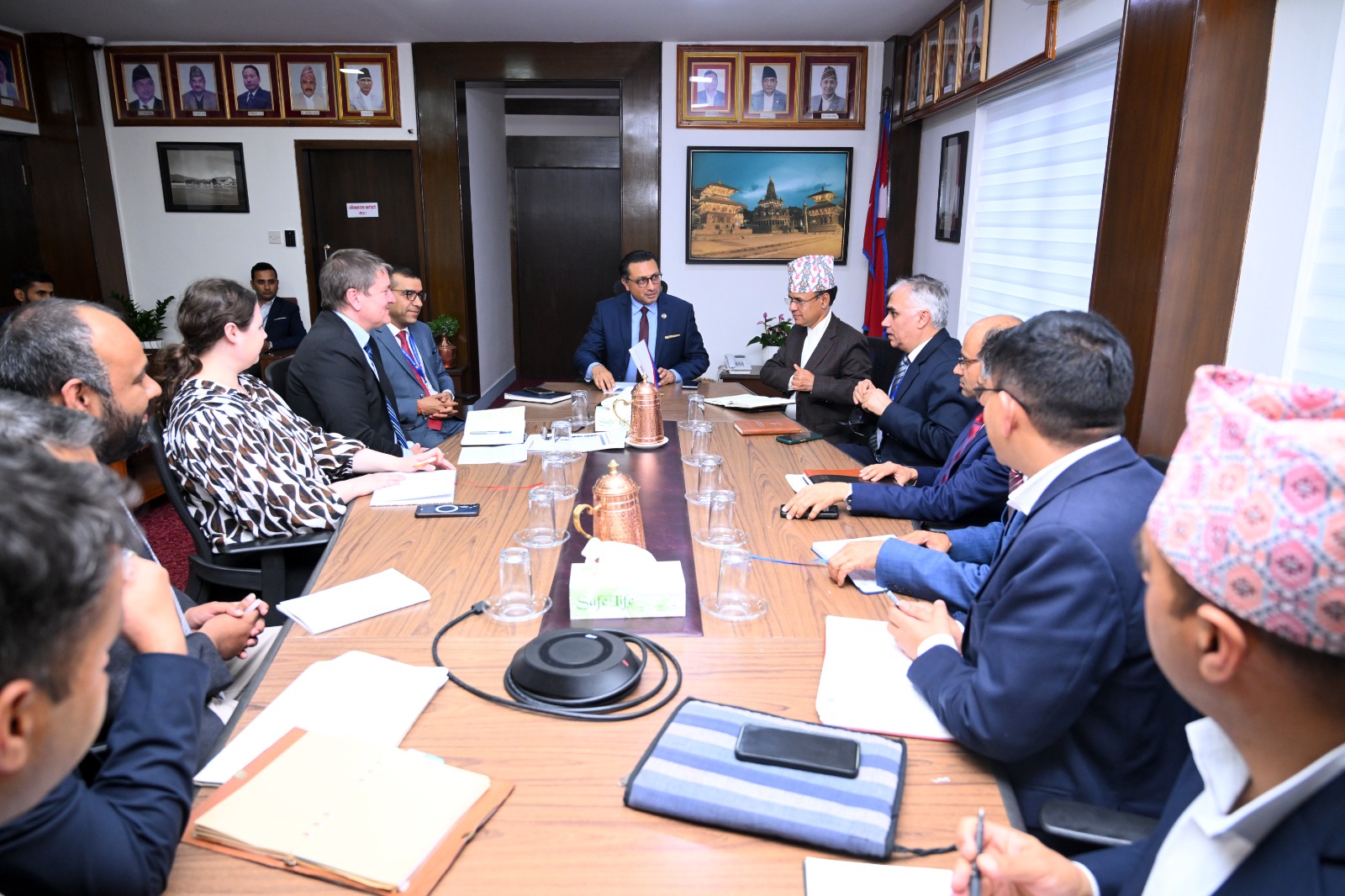
30- Health Minister Mehta meets with Indian counterpart Nadda
Kathmandu, May 20: A bilateral meeting was held between Minister for Health and Food Hygiene Nisha Mehta and Indian Minister for Health and Family Welfare JP Nadda.
The meeting took place on the sidelines of the 79th World Health Assembly organized by the World Health Organization in Geneva, Switzerland, shared the Ministry’s Joint Spokesperson Dr. Samir Kumar Adhikari.
According to him, during the meeting ways to make the existing bilateral partnership in the health sector more sustainable and effective were discussed.
Ministry Spokesperson Yashoda Aryal also participated in the meeting. Health Minister Mehta is currently in Geneva leading a three-member Nepali delegation to the WHO Assembly.
—
31- Communications Minister Timilsina vows free press, telecommunications expansion
Kathmandu, May 20: Minister for Information and Communications, Dr Bikram Timilsina, has pledged unrestricted exercise of press freedom.
In his response to the queries raised by House of Representatives (HoR) members in the HoR meeting on Wednesday, Minister Timilsina said Press Council Nepal would be strengthened to monitor media contents effectively. He made it clear that the government was for clean, independent, accountable and dignified media sector.
According to him, government was planning to address film and mass media through upcoming budget. The films that are produced in a way to give original identity would be provided incentives and grants, the Minister added.
Similarly, certain budget has been proposed for the media organizations under the Ministry so that they would engage actively in producing and disseminating the contents of mother languages and the arts. The Minister was furnishing responses to the issues related the Ministry.
“The right to press freedom is a fundamental right enshrined by the constitution. So, it can not be curtailed at all, however, exercising press freedom is not crossing limits,” he reminded, adding that dignity and decency count much in journalism.
The Parliament Secretariat has arranged marques, chairs and drinking water in the waiting stations of parliament building premises so that journalists could do parliament reporting conveniently, according to him.
Minister Timilsina clarified that the recommendations related to ‘digital work from home’ and ‘community IT setup’ would be considered for implementation.
The government has laid high emphasis on expanding and improving access to telephone and internet services in all geographical areas of Nepal, especially remote and more business transaction areas, Minister said, adding necessary works would be carried out in the areas through programme and budget.
Informing that the information system related to ‘remote work’ has been developed and is coming into effect after policy decision.
The government websites have been redesigned as per the ‘web content accessibility guidance’ to ensure easy access to the people with disabilities, the minister shared.
He shared government’s policy priorities on utilizing the capabilities of Nepali youth based on the concept of declaring information technology as a national strategic industry and making Nepal a ‘tech hub.’
He highlighted that the government prioritizes the operation of an integrated data management center, a data recovery center, capacity enhancement in Hetauda, and a new data center in Kohalpur to reduce server downtime.
In regard to guaranteeing the right to information, he said the public information has been provided through official social media and various government systems and apps.
He mentioned that services have been added for everyone’s easy access to through the Citizen App, and necessary awareness programmes.
Stating that the government is serious and sensitive to the issues related to telecommunications and internet services, he expressed his commitment to expand reliable, quality and accessible telecommunications services from remote to urban areas within the next one year.
The government has taken forward an action plan to provide services to all possible human settlements in remote areas within the next one year through further ‘4G’ expansion, establishment of new sites and strengthening of necessary infrastructure.
Responding to the lawmakers, Minister Dr Timilsina has said that necessary coordination and facilitation is being done with service providers to resolve the problems of poor mobile and internet services seen in areas such as Lalbandi, Ramechhap, Lalitpur, etc.
Minister Timilsina, in his response, said to implement the goal of Digital Nepal the government has put forward a clear action plan to expand access to remote settlements where internet service is not available within the next one year through the Rural Telecommunications Development Fund. In addition, a program to improve data center, network reliability and backup system will also be implemented to resolve server down and connectivity problems seen in government offices.
—