- Friday, 22 May 2026
Kathmandu, May 21: The Selection and Recommendation Committee has begun studying the applications of a total of 218 candidates for the vacant Vice Chancellor positions of eight different universities.
The Selection and Recommendation Committee at the Ministry of Education and Sports had on May 8 called for applications within 10 days for the post of Vice Chancellor.
According to the notice, the highest number of applicants, 50 people, have applied for the Vice Chancellor position at Tribhuvan University.
The ministry has stated that 38 applicants each have applied for the Vice Chancellor of Purbanchal University and Pokhara University, 19 for the Far-Western University, 20 for Mid-West University, 11 for Lumbini Buddhist University, 15 for Agriculture and Forestry University, and 27 for Rajarshi Janak University.
The Selection and Recommendation Committee has begun scrutinizing the applicants’ documents and is preparing to initiate the selection process by publishing the list of approved candidates.
The Committee comprises Education Minister Sasmit Pokharel, Secretary of the Ministry of Education and Sports Chudamani Paudel, and relevant experts for the concerned universities.
—
13- HoR meeting: Lawmakers draw govt. attention on various issues, district border dispute
Kathmandu, May 21: Lawmakers have drawn the government’s attention to immediately resolve the border dispute between Humla and Bajura districts.
Speaking during the ‘urgent time’ in today’s meeting of the House of Representatives, Jayapati Rokaya, asked the government to immediately seek solution about the border dispute between the two districts through dialogue.
“The Karnali highway has been obstructed by locals over the dispute, affecting patients, students and those who needs to go for essential works,” mentioned Rokaya.
Similarly, KP Khanal drew government’s attention towards misbehavior with a group comprising Mayor of Dhangadhi sub-metropolitan city, Gopi Hamal, due to dispute of Ranisaina area, the border of Humla and Bajura.
The incident took place in order to make efforts to control smuggling of herbs and wildlife taking place there since years as Saipal area is rich in herbs and wildlife, he argued, demanding the government to make arrangement for medical treatment to the injured, security of the citizens of the area and conservation of herbs.
Likewise, Janak Raj Giri called attention of the government to physical attack on Assistant Sub-Inspector of Police, Mahesh Dhami and Chief Administrative Officer of Himali rural municipality, Kul Bahadur Thapa, among others on May 18, over the border dispute.
He also demanded the government to immediately resolve the border dispute.
Niskal Rai accused the government of not following parliament discipline in the name of ‘breaking tradition’ though the opposition parties have tried to make the government accountable.
Similarly, Ashok Chaudhary urged the government to make arrangement of a new ambulance in Itahari Municipality immediately.
—
14- HoR Session: MPs call attention of government to various issues of public life
Kathmandu, May 21: Airing their views in the ‘special time’ in today’s meeting of the House of Representatives, MPs called attention of the government to several topics of public life, the problems faced by the people and the urgent need to address these issues.
MPs have also demanded the empowerment of local levels through the implementation of fiscal federalism and the allocation of budget for the development of technology to help farmers in rural areas combat the menace of monkeys.
They drew the government’s attention to stopping irregularities in the distribution of taxi number plates and making diplomatic efforts to resolve the issues of veteran soldiers.
Toshima Karki of the Rastriya Swatantra Party (RSP) drew the government’s attention to road safety, noting that on average eight Nepalis die daily in road accidents. She said it is a matter of regret that over 24,095 Nepalis were killed in road accidents in the last 10 years and drew the government’s attention to making road travel safe and secure by promptly forwarding the Road Safety Bill in parliament.
Karki also demanded the operation of trauma centres in all seven provinces, stating that an integrated trauma policy is necessary.
Arjun Narsingh KC of the Nepali Congress drew the government’s attention to prepare, well in time, for disaster risk as the monsoon is about to begin. KC emphasised the need for coordination and cooperation among local, provincial and central governments for the management of the early warning system before disasters occur.
Padma Aryal of the Communist Party of Nepal (UML) drew the government’s attention to the immediate supply of fertiliser as it is the rice planting time across the country. Despite it being the farming season, fertiliser has not yet been supplied, causing farmers to struggle to find it, she said and emphasised that measures should be taken to prevent farmland from being left barren due to a lack of fertiliser. She called for immediate supply of fertiliser across the country.
She said that the government needs to focus on controlling inflation and monitoring the market, stating the situation has become serious as the price increase has left citizens struggling to keep a fire burning at home.
Gopal Sharma drew the government’s attention to the fact that three years have passed, yet the state has not focused on the citizens affected by the earthquake in Rukum West, Jajarkot, Doti, Dailekh and other districts. He demanded that the government immediately construct housing for the earthquake victims.
Demand to allocate budget for technology development
Purna Prasad Limbu of the Shram Sanskriti Party demanded that descendants of Ex-British Gurkha soldiers be granted Nepali citizenship based on descent.
He said, “I request the government to make diplomatic efforts to resolve the problems of retired Ex-British Gurkha soldiers who have been protesting for years demanding equal pensions and other benefits.”
Khushbu Oli of the Rastriya Prajatantra Party (RPP) expressed the view that the government should not proceed in a way that strengthens the centre and weakens local levels. She urged not to see the financial equalisation grant as an easy means to cut expenditure of local levels.
Independent MP Mahabir Pun said that the National Innovation Centre has made research efforts to develop technology to stop monkey menace and drew the government’s attention to invest in this technology development initiative.
“The technology to drive away monkeys has not yet been developed anywhere in the world. Funds need to be allocated for research. I have heard that the government is planning to form a committee to reduce monkey menace, and I have been asked to be part of that team as well. Just speaking in Parliament will not eliminate the monkey menace,” he said.
Ain Mahar of the CPN (UML) has drawn the government’s attention to immediately rescue 22-year-old Prem Bohara, who fell seriously ill due to high altitude sickness while collecting Yarsagumba in the high Himalayan region of Surma Rural Municipality, Bajhang.
Ganga Lakshmi Awal of the Nepali Congress highlighted the nationwide shortage of the essential drug ‘carboplatin’ for treating cancer patients and cited instances of patients being sent home without treatment, urging the government to ensure the prompt availability of this medicine.
In the meeting, Speaker Dol Prasad Aryal drew the government’s attention to the concerns raised by the MPs during the urgent time of today’s House session.
—
15- Indian Home Minister Shah provides 40 kg of sandalwood to Nepal
Kathmandu, May 21: Minister of Home Affairs of India, Amit Shah has gifted 40 kilogrammes of sandalwood for the purpose of using it for worship to the Shree Yantra of Pashupatinath Temple.
The sandalwood gifted by Home Minister Shah was handed over to the main priest of Pashupatinath Temple, Ganesh Bhatta, in coordination with the House of Representatives member Sandeep Rana.
Special type of sandalwood is gifted by India every year to offer Shree Yantra worship of the Pashupatinath.
The sandalwood received by Main Priest Bhatta was handed over to Chief of the Guthi Sansthan Pashupati Goswara Office, Sushila Sharma, for the storage today itself.
Nepal receives special type of sandalwood every year in line with close religious and cultural relations between the people of Nepal and India.
—
16- HoR Session: Opposition parties obstruct House proceedings demanding PM’s attendance
Kathmandu, May 21: MPs have demanded that the Prime Minister appear in Parliament and answer questions from MPs in accordance with the provision in Article 56 of the House of Representatives Rules.
After the special time of today’s House of Representatives meeting ended, the Speaker Dol Prasad Aryal gave time to the opposition lawmaker Ain Mahar of the opposition party Nepal CPN (UML) who stood up to express protest, demanding the Prime Minister’s presence in the House.
Mahar had requested the Speaker to summon the Prime Minister to the House, stating that the Prime Minister would become autocratic if he ignored Rule 56, accusing him of deflecting the Parliament.
Since the regulations allow for putting direct questions to the PM, and as the provision for the Speaker to allocate an hour’s time for this purpose on the first week of the calling of parliament session was not made even until the 7th of Jestha, Mahar urged the Speaker to make the Prime Minister to be present in order to proceed with the House business.
Opposition party Shram Sanskriti Party MP Aren Rai called for a ruling from the Speaker to summon the Prime Minister, as Parliament cannot function by going beyond the rules and regulations above the rule of law and policy.
Nepali Communist Party (NCP) MP Yubaraj Dulal had demanded that the Prime Minister be summoned, stating that the provision to hold the Parliament accountable had been violated, the constitution breached, and this was a matter of respect towards the sovereign people.
Rastriya Prajatantra Party (RPP) MP Khusbu Oli demanded in the House that the Prime Minister be summoned since there is a provision that allows for 15 members to ask question to the PM, and the ruling party lawmakers can also ask questions.
Ashok Kumar Chaudhary of the Rastriya Swatantra Party (RSP) stated that the parliament should proceed ahead with its business according to the agenda.
The Speaker Aryal repeatedly requested the protesting MPs to sit, but when they did not, the meeting was adjourned for 15 minutes today.
—
17- Purnima summits Sagarmatha for sixth time
Gorkha, May 21: Photo journalist Purnima Shrestha from Gorkha has summited Sagarmatha (Mt Everest) for the sixth time, breaking her own record.
She successfully climbed the world’s tallest peak on Wednesday with the ‘Satori Adventure’ mountaineering expedition team.
Shrestha had previously climbed Mt Everest three times in two weeks, registering her name in the Guinness Book of World Records.
She set a record by reaching to the summit of Mount Everest three times in a single season over 13 days in May 2024.
Shrestha, a resident of Arutar, Arughat Rural Municipality, Gorkha, climbed Mount Everest on May 12, May 19, and May 25 in 2024.
—
18- Economists suggest for restructuring of tax administration
Kathmandu, May 21: Economists have laid emphasis on the need of restructuring tax administration, improving public finance management and making value added tax (VAT) system further effective.
In today’s meeting of the Finance Committee under the House of Representatives, Economist Dr Dilli Raj Khanal expressed the view that there should be clear relations between economic policy and budget, adding restructuring of economy should be kept in priority.
He stressed the need of forwarding structural reforms of economy and good governance simultaneously in the context of Nepal.
Khanal argued that a long-term restructuring strategy should be prepared by identifying the primary sectors of economy.
Similarly, another Economist Dirga Raj Mainali pointed out the need of extensive reforms in existing structure of tax administration.
Sharing that there is structural problem in tax administration system since long, he suggested to restructuring was necessary to make tax administration system effective.
Though efforts have been made for some improvement, extensive structural reforms is needed as it would take long time to give expected result, opined Mainali.
Likewise, Economist Dr Rupak Khadka underlined that effectiveness of VAT depends on its structure and implementation, suggesting that it would be more beneficial for economy if VAT system is implemented at a single rate.
Presenting New Zealand’s GST system as the example, he mentioned that system with a broader tax base with limited exemption has been considered effective.
He argued that a single rate system would be simpler, more transparent and administratively effective rather than multiple rates.
The Economists suggested making economic management further strong by reforming public finance policy, tax administration and revenue system.
—
19- Taskforce on constitution amendment discussing with political parties
Kathmandu, May 21: The taskforce formed to prepare a paper on constitution amendment began a discussion with representatives of various political parties.
The panel formed under the coordination of Prime Minister Balendra Shah’s political advisor Ashim Shah is currently holding the discussion with political parties at Prime Minister’s Office, Singha Durbar. Suggestions on the major issues for change in constitution would be garnered in the dialogue.
—
20- SC recalls late Justice Pradhan’s contribution
Kathmandu, May 21: The Supreme Court (SC) held a full-court meeting on Thursday to revere the late Justice Hargovinda Singh Pradhan, who passed away at the age of 95 on May 20.
The justices, including the Chief Justice, expressed condolences to the bereaved family and observed a minute of silence in memory of Pradhan and his role in Nepal’s judiciary.
Late Pradhan was recognized for his significant influence on civil and criminal law. He was a diligent, friendly and experienced judicial figure, according to the justices.
He was appointed as the SC justice on 30 September 1991, and served until 20 December, 1994. He had embarked on judicial career as a temporary judge at then Central Regional Court on 8 September, 1976.
—
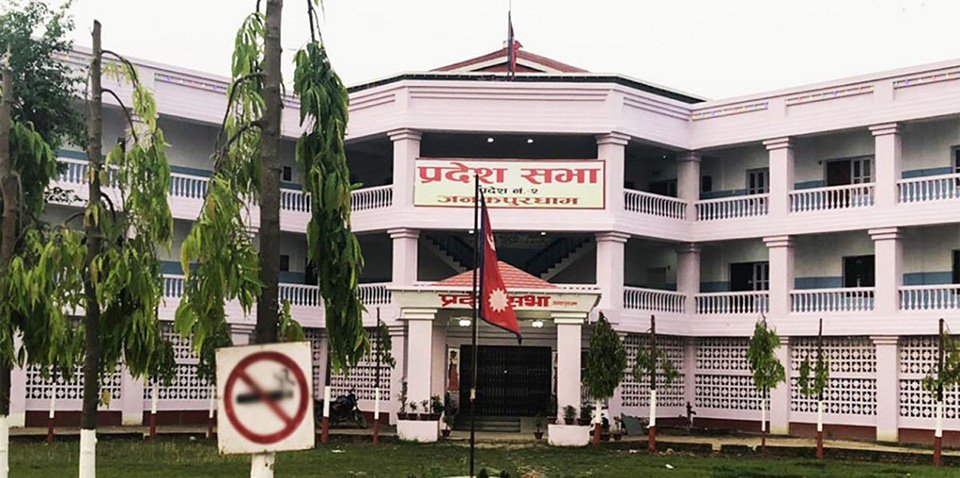
21- Lumbini Province to focus on production, employment and infrastructure in upcoming budget
Lumbini, May 21: The Province government in Lumbini has forwarded plans to underscore production, employment, infrastructure development, good governance and social justice through the upcoming budget for the fiscal year, 2083/84.
Minister for Economic Affairs, Dhanendra Karki, presented the principles and priorities of the Appropriation Bill, 2083 and argued the budget would be made objective, feasible and result-oriented irrespective of limited resources and increasing liabilities. He was making presentation in the Lumbini Province Assembly on Thursday.
Karki pledged increase in capital expenditure, curb in current expenditure and public expenditures along with fiscal discipline. He reminded the second development plan of the provincial government, sustainable development goals, socialism-oriented concept of the constitution and the long-term vision of ‘Prosperous Lumbini: Happy Citizens’ as the foundation of the upcoming budget.
According to him, the economy will be made dynamic by increasing production and productivity with effective mobilization of resources in agriculture, industry, tourism, energy and infrastructures. The sectors contributing to import substitution and export promotion would be given utmost priority as the Minister shared.
Creation of employments in the province with youth-targeted skill development, startup, self-employment and innovation-based programmes in the budget would be other features. Service delivery will be made smooth, transparent and citizen-friendly by bolstering the digital governance. The government is for introduction and expansion of digital systems in revenue administration, public procurement, accounting and service delivery.
The projects would be selected by taking into account the strategic importance and high returns, Minister Karki said, adding that even multi-year and incomplete projects would be paid heed. Stating that projects with dismal progress would be reviewed, Karki shared project bank would be consulted for systematically selecting and implementing the plans.
Road expansion and upgrading, and replacement of risky bridges would be carried out as part of the provincial road master plan. Construction of access roads based on economic, industrial and tourism potential is being forwarded. The Minister further mentioned the schemes as modernization of agriculture, organic farming, preservation of indigenous crops, expansion of irrigation, branding of agricultural products and value chain development.
Health sector is another priority, to which he pledged financial support for hospital upgrading, expansion of specialist services and critical treatments including that of cancer, kidney transplantation and heart valve replacement. Programmes to reduce malnutrition and promote mental health are also in government’s attention.
Development of Lumbini, the birthplace of Buddha, as a centre for Buddhist philosophy and health tourism, emphasis on the protection and promotion of religious, cultural, historical and natural destinations, enhancement of technical education, information technology-friendly education, development of sports infrastructure and programmes are other in the to-do list.
Social empowerment, road safety, safe drinking water, sanitation, land management, management and regulation of cooperatives, renewable energy, forest conservation and disaster management, improved tax system with adoption of technology, transparent public expenditure would be addressed in the upcoming budget.
In the Assembly meeting, Chief Minister Chet Narayan Acharya presented the ‘Fifth Annual Report of the Auditor General, 2079’. The Provincial Assembly members expressed their views on contemporary issues during a session.
—
22- Energy Minister for timely construction of Jagadulla Hydropower Project
Kathmandu, May 21: Minister for Energy, Water Resources and Irrigation, Biraj Bhakta Shrestha, has pressed for timely completion of the Jagadulla Hydropower Project during an inspection visit of Jagadulla Hydropower Company Limited’s head office in the federal capital, Kathmandu on Thursday.
He, however, acknowledged the pace of the project irrespective of challenging geography of Karnali region and hoped it would enhance the quality of life for local residents and contribute significantly to the energy sector.
Minister Shrestha pledged immediate support in case of technical or administrative issues during the construction. He urged the concerned side to report the problems on time so that project would not see delay.
The Jagadulla Hydropower Company is currently developing two projects: the Jagadulla Semi-Reservoir Project (106 MW) and the Jagadulla ‘A’ Semi-Reservoir Project (124.35 MW) in Dolpa district, Karnali Province.
Successful completions of these projects are expected to contribute hugely to Karnali region so that physical development and economic activities would thrive there.
Energy Secretary Chiranjivi Chataut was also together in the visit. He spoke of the need of collaborative effort to achieve the goals.
—
23- Three Bills tabled in HoR, endorsed by majority votes
Kathmandu, May 21: Three bills were tabled in the House of Representatives meeting on Thursday. A proposal seeking consideration on the bills by the parliament was also passed by majority votes.
Amidst objection of lawmakers from the opposition parties, Minister for Law, Justice and Parliamentary Affairs, Sobita Gautam, on behalf of Prime Minister and Minister for Science, Technology and Innovation, Balendra Shah, presented the proposals, seeking consideration on ‘HoR Member Election (first amendment) Bill, 2083′, Voter List (first amendment) Bill, 2083’ and ‘National Forensic Lab (Establishment and Operation), 2081’.
Although Speaker Dol Prasad Aryal sought names for the discussion on the proposal, no names were received. He then presented the bills for endorsement.
The major opposition Nepali Congress lawmakers showed objection, standing from respective seats, while lawmakers of other parties- the CPN UML and the Nepali Communist Party- picketed rostrum and chanted slogans in protest.
—
24- HoR passes ‘Alternative Development Finance Mobilization Bill, 2082’
Kathmandu, May 21: The meeting of the House of Representatives (HoR) has passed the ‘Alternative Development Finance Mobilization Bill, 2082’ with a majority of votes.
Speaker Dol Prasad Aryal presented the Bill before parliament meeting to decide whether to pass it, and declared its passage with a majority of votes.
Earlier, a proposal for deliberation on the Bill was made by Finance Minister Dr SwarnimWagle in the meeting.
There were six amendments proposed to the Bill, while two members, Leema Adhikari Acharya and Ganesh Karki, withdrew their proposed amendments.
Finance Minister Dr Wagle vowed the government was open to accept the amendments proposed by other lawmakers. The next session of the HoR is scheduled for 11: 00 am on May 26.
—
25- Swimmers leaving for Japan to participate in Para Swimming World Series
Kathmandu, May 21: A three-member Nepali team, including two athletes, is scheduled to leave for Fuji Shizuoka, Japan coming Saturday to participate in the Para Swimming World Series. The event is scheduled from May 29 to 31.
The athletes representing Nepal are Membar Singh Saungba, who will compete in the men’s S9 category, and Jenisha Kadayat, who will compete in the women’s S6 category.
Both swimmers are playing in the 50 and 100 metre freestyle events. The team is led by President of the National Para Swimming Federation of Nepal, Saroj Shrestha.
The World Series is also a part of the selection for Asian Games.
Member Secretary at the National Sports Council, Ram Charitra Mehta, bade farewell to the team and extended best wishes.
—
26- Minister Pokharel lauds progress of Nepal Women’s National Football Team
Kathmandu, May 21: Minister for Education and Sports Sasmit Pokharel has pledged to make all possible efforts for the development of sports sector and recognition of players.
Bidding a farewell to the members of Nepal’s National Women Football Team, going to participate in the South Asian Football Federation (SAFF), at the ministry today, Pokharel said priority would be given to the recognition of players and advancement of the sports sector despite limited resources.
Performance of national women football team is outstanding in Nepali footfall, Minister Pokharel said, adding that their achievements at national and international levels are laudable.
On the occasion, Minister Pokharel had handed over the national flag and jersey to the team.
President of the All Nepal Football Association (ANFA), Pankaj Bikram Nembang expressed his confidence that the Nepali football would take a new height adopting the government policy.
The SAFF Women Championship, 2026 is taking place in Madgaon, Goa of India from May 25 to June 6.
The Nepali women football team will depart for India on May 22 and return home on June 8 after the championship.
—
27- Former Finance Ministers’ suggestions range from economic reforms to austerity measures
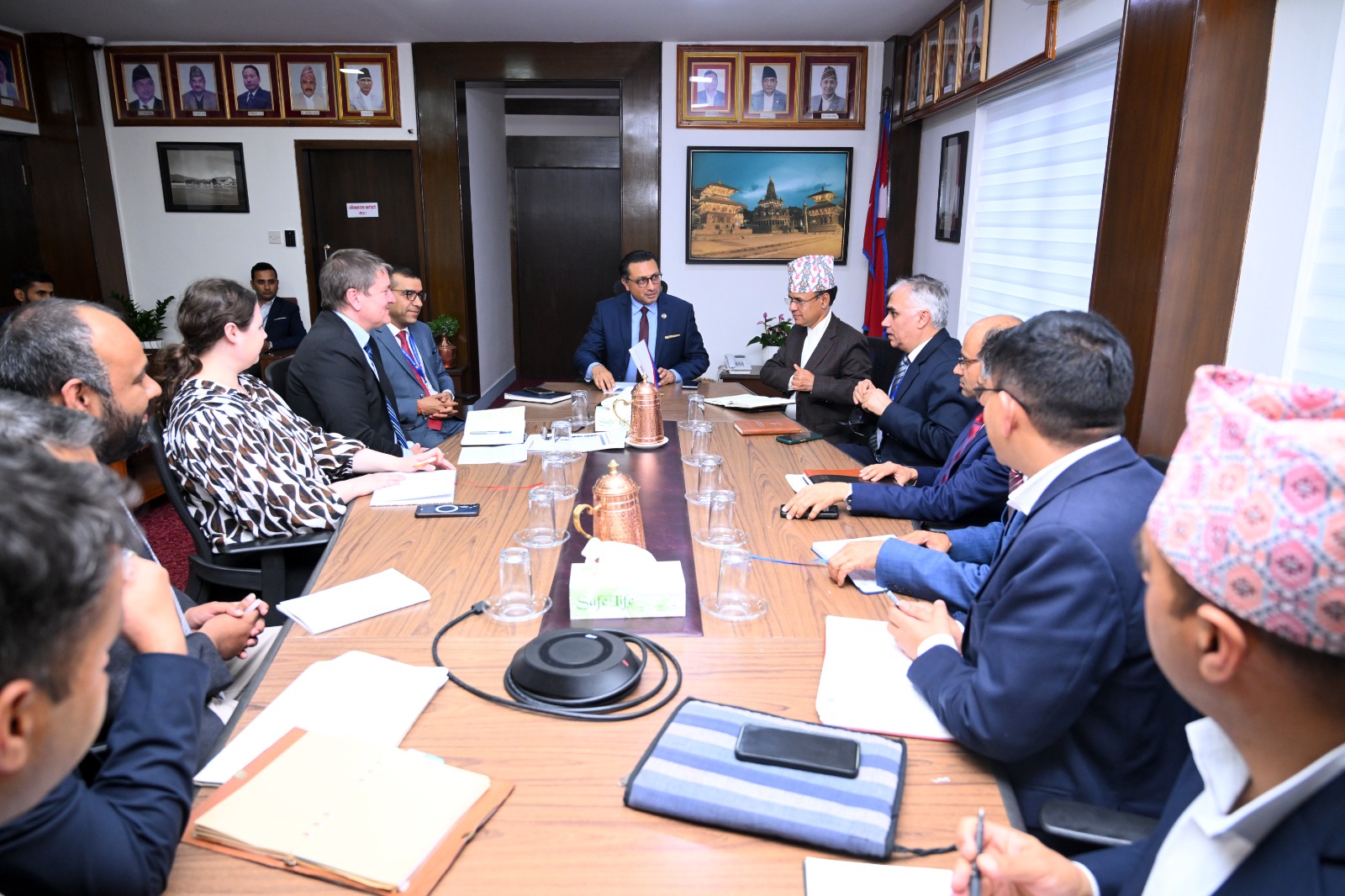
Kathmandu, May 21: Finance Minister Dr Swarnim Wagle has held a meeting with eight former Finance Minister and received recommendation to be considered while formulating the upcoming national budget.
Sharing that preparation of the executive budget proposal for the upcoming fiscal year was in its final stage, Finance Minister Dr Wagle sought suggestions from former finance ministers and economists.
During the meeting, Minister Dr. Wagle informed that preparations were underway to bring the budget aimed at enhancing the living standards of ordinary Nepali being emboldened to good governance.
Finance Minister Dr. Wagle noted that all former finance ministers had led the Ministry of Finance in their time, for the benefit of the country and the people, and that the goals remain the same whether circumstances were favorable or not.
He further said past achievements and shortcomings would be reviewed and best practices would be continued.
“We will advance by continuing the best practices you have done. We will walk along the path shown by our seniors. It is through this system and these political achievements that prosperity will be attained.”
Former finance ministers participating in the discussion suggested economic reforms and the proper collection of revenue for the upcoming budget.
Former Secretary of Finance Rameshwar Khanal urged the implementation of the High-level Economic Reform Taskforce Report and suggested not to allocate the budget for unprepared and fragmented projects. He urged not to impose value-added tax in the electricity sector.
Former Finance Minister Shankar Koirala recommended to study the previous economic reports for policymaking, He also suggested to open the electricity trade to the private sector, expand industrial areas, and advance the hedging policy.
Former Finance Minister Dr. Yubaraj Khatiwada suggested not to set overly ambitious revenue targets and stated that the revenue growth rate should be kept within the range of 10 to 12 percent.
He asked the Finance Minister to pursue financial sector reforms and drive fiscal policy to boost the morale of the private sector.
Former Finance Minister Dr. Prakash Chandra Lohani emphasized on cooperation between the government and the private sector and that a policy to equally promote small, medium, and large industries was necessary.
He highlighted the need of economic dialogue to explore the Indian market for agricultural products.
Former Finance Minister Surendra Pandey suggested reducing the number of large projects and focusing on limited national pride projects. He mentioned that land use laws need to be reformed and special plans should be introduced for the development of the tourism sector.
Former Finance Minister Dr. Prakash Sharan Mahat recommended to limit social security allowances to targeted groups and that government industries and assets could be operated under a ‘lease’ model. He suggested reducing foreign debt and preventing possible collusion in large contracts.
Former Finance Minister Barshaman Pun noted that the returns on past infrastructure construction have appeared weak and expressed the view that investment in tourism infrastructure should be increased.
He suggested developing ‘hill stations’ and wedding destinations to attract the Indian middle class.
Former Finance Minister Bishnu Prasad Paudel emphasized that the budget should be prepared based on a realistic assessment of expenditures and noted that bold decisions were necessary regarding the use of mines and natural resources. He suggested that large projects like Budhigandaki should be brought into implementation.
Former Finance Minister Janardan Sharma interpreted the budget as a document for implementing political commitments and stated that government expenditure needs to be reduced.
He suggested that investment should be increased in mining, the pharmaceutical industry, the chemical fertilizer industry, and the production of skilled manpower. Most former finance ministers participating in the discussion shared the view that economic reforms should be accelerated, confidence in the private sector should be increased, spending should be controlled, and investment in production-oriented sectors should be increased.
—
28- Koshi Province govt unveils policies and programmes
Biratnagar, May 21: Chief of Koshi Province, Parshuram Khapung, presented the policies and programmes of Koshi Province government for the upcoming fiscal year, 2083/84. He unveiled the policies and programmes on behalf of the government in the meeting of Koshi Province Assembly on Thursday.
Khapung shared that the second development plan of Koshi Province was under the implementation phase with a vision of building a ‘happy and prosperous province’. He said that the province government was at work to achieve the goals set by the province and to make the province economically strong, capable and citizen-friendly with the reforms in policy, law and institution.
“The province government is committed to institutionalizing the achievements it has made so far, creating hope and trust in the citizens, advancing socio-economic transformation, curbing corruption to maintain good governance and reinforcing the federal system as per letter and spirit of the Constitution,” he said, informing that the policies and programmes for the fiscal year, 2083/84 would stress effective enforcement of exclusive and concurrent rights of the federal, provincial and local levels in line with the Constitution.
Balanced mobilization of resources, considering geography, distribution of population, gender equality, poverty reduction, environmental protection and sustainable development has aimed by the government, according to him. Khapung said the policies and programmes emphasize the construction of inclusive, sustainable and quality structures by giving high priority to infrastructure development in the areas of education, health, agriculture, physical infrastructure and information technology.
Public-private partnerships and private sector investment would be promoted to reinforce local economy. Expansion of tourism activities with construction and upgrading of tourism infrastructure and promotion of tourist destinations is paid heed, Khapung said, adding that economic prosperity would be achieved by expanding market for agricultural and industrial goods produced within the province, promoting exports and developing tourism.
Other features of the policies and programmes as the Province Chief stated are quality of public service, development of administrative capacity, governance reform, and coordination and collaboration with federal and local levels. The Provincial Coordination Council and the Administrative Coordination Council will be made further active to make robust the relationship among the federal, provincial and local levels.
The Chief Minister ‘Dashboard’ programme would be made further effective to implement and monitor programmes and budgets, plans and projects and align them with the result framework.
The rights of Dalits and marginalized communities would be guaranteed by protecting and promoting their fundamental rights and human rights; the provincial ministries and agencies restructured and integrated to speed up government performance; and the administrative organization reviewed based on the workload and through the organization and management survey (ONM).
In a bid to foster inter-province coordination and collaboration, a Chief Ministers’ Conference will be organized, Khapung shared.
The policy and programme states that tea and coffee will be exported by maintaining international standard and quality. Tea testing laboratories and research centres will be set up and run effectively. Even the tea conference of international level will be organized.
The document has 128 points. It has introduced various schemes to identify and utilize youth talents. ‘Adolescent Girl Empowerment and Self-Defense’, ‘Capable Daughter’, ‘Koshi Province Visit Year’ are some other schemes.
Before Province Chief read out the policies and programmes, Chief Minister Hikmat Kumar Karki had tabled the document in the Assembly meeting. The next meeting of the Province Assembly is scheduled for May 24.
—
29- Taskforce formed to prepare debate paper for constitution amendment consults political leaders
Kathmandu, May 21: Coordinator of the taskforce formed to prepare debate paper for constitution amendment and Prime Minister Balendra Shah’s political adviser, Asim Shah, clarified that the constitution amendment would be taken ahead based on the national debate and consensus.
During the process of gathering suggestions from leaders of various political parties regarding paper preparation, Shah clarified the government was not attempting to amend the constitution unilaterally, but was rather effortful to find a common point by forging national political consensus.
In the discussion held today at the Prime Minister and Council of Ministers’ office, Coordinator Shah reiterated the government’s seriousness to the sensitive aspects of the constitution.
The taskforce is identifying areas where common consensus are possible and where not on various issues, he informed.
Leaders of various political parties participating in the discussion presented their suggestions regarding the forms of governance, electoral system, and the structure of the province.
Janamat Party Chair Dr. CK Raut emphasized the need to strengthen the republic through constitutional amendment and proposed comprehensive structural reforms.
He pitched for changing governmental system to have a directly elected president and a directly elected provincial head. Raut recommended electing heads of constitutional bodies, reforming expensive electoral system and guarantying the ‘right to reject’ and ‘right to recall’ provisions in the constitution.
Dr. Raut argued ministers should be appointed based on experts, lawmakers should not be subject to whips, and Supreme Court justices should be elected.
Nepali Congress leader Min Bishwokarma said the fundamental aspects and the preamble of the constitution should in no way be the subject to change.
Defining the constitution as a dynamic document, he suggested fundamental achievements such as the republic, federalism, inclusiveness, and national sovereignty should not be interfered with.
He recommended reducing the number of people’s representatives and ministers in the federal and provincial levels.
CPN (UML) central member Krishna Bhakta Pokharel echoed not to make the fundamental pillars of the constitution the subject of change. He also stressed on the need to bestow the non-resident Nepalis with the rights, excluding political ones.
Also speaking on the occasion were Nepali Communist Party leader Madhav Sapkota, Rastriya Swatantra Party leader Kabindra Burlakoti, Keshab Kumar Jha of Rastriya Mukti Party, former minister Kalpana Dhamala, and NC leader Deepak Kumar Kuinkel.
—
30- CAVA Women’s Volleyball Championship begins on Friday
Kathmandu, May 21: The CAVA Women’s Volleyball Championship is beginning in Kathmandu from Friday.
The Championship is being attended by the players from Nepal, India, Sri Lanka, Bangladesh, Iran, Kirgizstan, Maldives and Kazakhstan.
It was shared by Nepali Team Captain Niruta Thagunna at a press conference organized on the eve of the tournament today. She hoped Nepali team would play excellently.
—
31- Two die after consuming toxic mushroom in Palpa
Palpa, May 21: Two individuals have lost their lives after consuming poisonous mushroom in Rambha Municipality-5 in the district.
The deceased are 66-year-old Binimaya Kamu Magar and 35-year-old Balakumari Khamcha, according to District Police Office.
Both of them died while undergoing treatment at Mission Hospital, Tansen. They had fallen sick after eating the toxic mushroom. Binimaya died on Monday and Balakumari on Tuesday.
—