- Wednesday, 10 June 2026
Nuwakot, June 10: Millennium Challenge Account Nepal (MCA-Nepal) today formally broke ground on the Ratmate Substation, the New Damauli Substation, and the 297km transmission line under the Electricity Transmission Project of the Millennium Challenge Corporation (MCC) Nepal Compact.
This historic partnership—combining a $550 million grant from the United States and a $197 million investment from the Government of Nepal—is building world-class electricity transmission infrastructure and upgrading vital road networks.
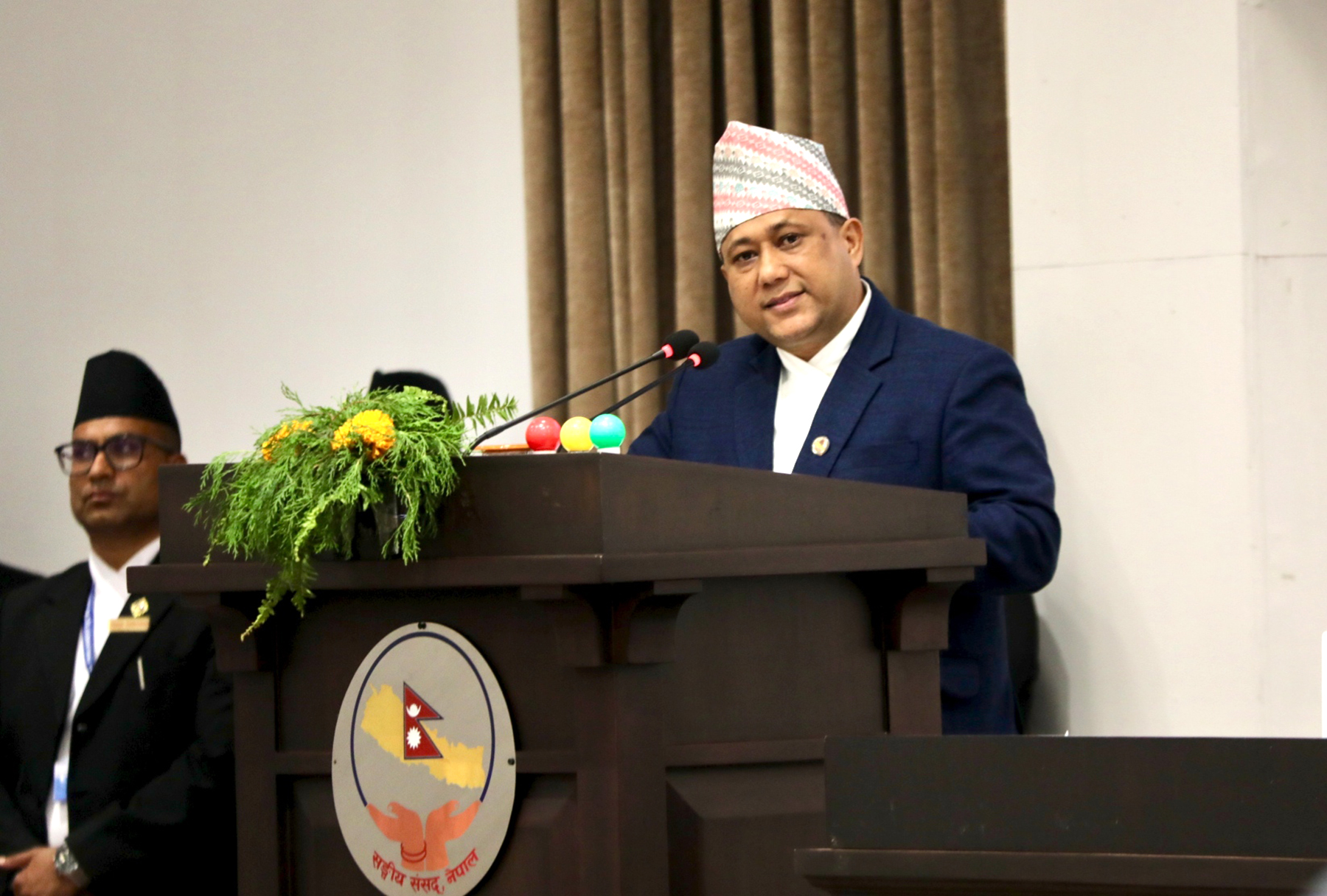
The groundbreaking ceremony at the Ratmate Substation site in Nuwakot brought together senior officials of the government, representatives from MCC and the U.S. Embassy, development partners, contractors, local stakeholders, media and community leaders.
Jointly funded by the Governments of Nepal and the United States through the MCC Nepal Compact, the Electricity Transmission Project will construct high-capacity 400kV substations and 315km of transmission lines.
The infrastructure will strengthen Nepal’s national electricity grid, ease transmission bottlenecks, improve electricity reliability for households and businesses, and support greater participation of Nepal in regional electricity markets.
The 297km transmission line network includes the Ratmate–New Damauli and New Damauli –New Butwal corridors, as well as the Lapsiphedi–Ratmate–New Hetauda section.
On the occasion, Dr. Ghanshyam Upadhyaya, the Secretary of the Ministry of Finance and MCA-Nepal Board Chair shared, “The Government of Nepal considers this project a critical investment in the country’s economic future.”
Similarly, “Strengthening electricity transmission infrastructure is essential to ensuring energy security, promoting investment and industrial growth, and maximizing the benefits of Nepal’s energy potential.” U.S. Chargé d’Affaires Scott Urbom reaffirmed the United States’ longstanding partnership with Nepal and its commitment to the MCC Nepal Compact.
“Through this Compact, we are building the backbone of Nepal’s energy future. Reliable power will flow across the country and beyond its borders. For families, this means lights that stay on. For factories and farms, it means steady energy to drive production. For Nepali businesses, it unlocks new horizons for growth,” he said.
Likewise, MCC Resident Country Director Diane Francisco emphasized the long-term significance for Nepal’s economic growth and regional energy integration.
“These investments will help Nepal unlock the full potential of its energy sector by strengthening the transmission system needed to deliver reliable electricity to households, businesses, and industries. MCC is proud to partner with Nepal on this transformative infrastructure initiative,” she opined.
Addressing the ceremony, Acting Managing Director at Nepal Electricity Authority, Dirghayu Kumar Shrestha, mentioned, “The infrastructure being constructed under the MCC Nepal Compact is not a standalone system. It is an important addition to Nepal’s national transmission network.”
MCA-Nepal Executive Director Khadga Bahadur Bisht viewed, “Today marks a major milestone in Nepal’s energy infrastructure development. This stronger, more reliable, and future-ready electricity transmission network will benefit generations of Nepalis and position Nepal as a key player in regional energy markets.”
He noted that the project will ease transmission bottlenecks and enhance connectivity in Nepal and in the region.
Four contractors are executing the work: Techno Electric and Engineering Company Ltd., India, is carrying out the construction of the Ratmate and New Damauli substations; Ashish– Bozlar JV is constructing the 117km Lapsiphedi–Ratmate–New Hetauda transmission line section; and Angelique–Skipper JV and Waiba–Salasar JV are undertaking the construction of the Ratmate–New Damauli and New Damauli–New Butwal transmission line sections, respectively.
Each section spans approximately 90 kilometers. Once completed, the Ratmate and New Damauli substations will rank among Nepal’s largest high-voltage substations. Together with the transmission lines, the infrastructure will strengthen Nepal’s power transmission network and support long-term energy demand and economic growth.