- Saturday, 4 July 2026
Kathmandu, July 3: The Ministry of Infrastructure Development has emphatically advanced the concept of e-governance for license printing and other several public services while implementing the government’s 100-charter agenda of governance reform.
The agenda endorsed by the cabinet meeting on last March 27 includes expansion of digital service to the search for stagnant projects and their implementation to pursue the goal towards inclusive infrastructure development and transport sector management.
Some of the agendas listed in the work schedule have been completed, while others are in the implementation phase. In order to deliver faster, easier, and more transparent services, the Ministry of Infrastructure Development has imparted a positive message by digitizing the vehicle driving license distribution system. This indicates efforts to deliver services quickly and in simplified manner to the public through adoption of an e-governance system.
The process of reviewing projects that have remained stagnant and in poor condition for years and giving them new life has also received accolade.
Senior Divisional Engineer at the ministry, Jibendra Mishra, noted the ministry has laid emphasis on executing various programmes, from making service delivery digital, transparent, and citizen-friendly to improving infrastructure development and transport management.
The ministry has initiated to link the performance appraisal of employees with results, and the task of preparing a draft of assessment system based on Key Performance Indicators (KPI).
Likewise, the responsiveness and review system linked with performance has also been taken ahead, the ministry shared. Among other works in progress are collection of details from different departments, preparation of action plan, setup of help desk at the ministry and subordinate agencies, shared Information Officer at the Ministry, Gyan Raj Lamsal.
The ministry has started providing information and facilitating services to the recipients by establishing help desk at the offices under the Department of Roads. Likewise, the grievance management system with help desk has come into operation round the clock.
The ministry has stated that it has set up a mechanism to register and address complaints through a help desk, web portal, social media, and other channels. An online complaint system linked with social media and a real-time dashboard has also been launched.
The ministry has mentioned that the Department of Roads is operating a dashboard that updates weekly progress. The government has started the process of fully digitizing and making timely the driver’s license distribution system to provide citizens with faster, easier, and intermediary-free service.
The Department of Transport has stated that it is running various reform programmes to make driver’s license-related services ‘faceless,’ digital, and available within a predictable timeframe.
According to the department, an essential driver’s license printing service has been launched online for service users going abroad for foreign employment, study, or government work.
According to the department, arrangements have been made to send the licenses printed by the Security Printing Press to the respective provincial and transport offices on the same day.
So far, the department has stated that more than 1,349,000 driver licenses have been sent through postal service to the respective offices for those who have passed the trial exam and renewed their licenses. Similarly, details of the licenses sent for distribution are regularly published and updated on the department’s website, allowing service users to easily check the status of their licenses online.
The government aims to make services such as citizenship, passports, national ID cards, and services available from the District Administration Office progressively digital and integrated, ensuring service delivery is transparent, timely, and trackable.
It has also been reported that preparations are underway to use the national ID card as part of an integrated identification system and to implement a digital recommendation system at the ward level.
The ministry has said that it has coordinated with the IT department to develop an ‘alert system’ to track how long files stay in each table and to automatically send notifications if they exceed the allotted time. Following the government’s goal of providing certificate and service-related details digitally, license-related information has been made available on the citizen app.
Mishra shared that the government has initiated a study process to resolve the issues of projects that have long been neglected, are in poor condition, or have failed to deliver the expected results.
—
13- Education Minister Pokharel assures of quality education in Nepal
Kavrepalanchok, July 3: Minister for Education and Sports Sasmit Pokharel has said that the government is working with the aim of providing quality education right here in Nepal.
Addressing to the 31st convocation ceremony of Kathmandu University (KU) held today in Dhulikhel, Kavrepalanchok, he expressed the view that an active role of educated youth is necessary to build a prosperous and developed society.
“The government is working with the goal of providing quality education in Nepal, and for this, the active role of educated youth is necessary,” said Minister Pokharel.
Stating that the government is striving to build a progressive society as the new generation envisions, he said, “We are working on what kind of society you want to create; we are try striving to that end, and in that, the youth needs to play an active role.”
Minister Pokharel pointed out that over 51,000 human resources have been produced in various fields from Kathmandu University so far, and he expressed his expectation that they too should help the government to fulfill the dream of a developed society.
The Education Minister urged the graduated students to utilize the knowledge, skills, and experience they gained from KU for the development of the nation right here in Nepal. He said, “Don’t worry, you can find opportunities in Nepal, and we ourselves will also create opportunities.”
On the occasion, he handed educational certificates to students who had won diplomas in various fields. Vice-Chancellor Prof. Dr. Rishikesh Wagle emphasized that along with the rapid development of artificial intelligence and automation, it is important to advance not just technical skills but also wisdom, ethics, cultural awareness, and responsibility towards the nation.
Guest of Honour of the ceremony, Prof. Dr. Bhusan Patwardhan, the Vice-Chancellor of Deccan College Post-Graduate and Research Institute in India, pointed out the need to further strengthen the exchange of education, research, and traditional knowledge between Nepal and India.
He encouraged the university graduates to use the education obtained at the university with confidence, ethics, and responsibility, and to turn challenges into opportunities for the benefit of society.
—
14- Civil Service Hospital extends services to Singha Durbar
Kathmandu, July 3: The Civil Service Hospital has extended its services to the Singha Durbar, the country’s main administrative hub.
The hospital has brought its service unit into operation from the ground floor of the Ministry of Land Management, Cooperatives, Federal Affairs and General Administration.
According to the Ministry, the unit aims to provide services to civil servants in an accessible and prompt way within their working stations, saving their travel time.
Likewise, the establishment of facility in the Singha Durbar is expected to help manage increasing flow of civil service employees in the Civil Service Hospital based in Baneshwor.
—
15- Constitutional Council meeting at 5:00pm
Kathmandu, July 3: The Constitutional Council is holding a meeting under the chairmanship of Prime Minister Balendra Shah later today.
The meeting is scheduled for 5:00pm at the Office of the Prime Minister and Council of Ministers, Singha Durbar. Leader of the major opposition, Bhishma Raj Angdambe, informed that the Council would hold a discussion on recommendation for appointing officials in the vacant posts at various constitutional bodies.
Currently, the Election Commission has two such posts lying vacant, while the National Human Rights Commission has one and the Muslim Commission two. The National Inclusion Commission has two vacant posts, while the Commission for Investigation of Abuse of Authority has one.
Two posts are lying vacant each at the Tharu Commission and the Madhesi Commission; three at the National Natural Resources and Fiscal Commission, and one at the Women’s Commission.
The Constitution Council picks names and makes nomination for parliamentary hearing.
—
16- Six bills tabled in NA
Kathmandu, July 3: Six different bills have been tabled in today’s meeting of the National Assembly.
National Assembly Secretary Tul Bahadur Kandel tabled the message received from the House of Representatives relating to ‘Finance Bill, 2083’, ‘Bill to Raise National Debt, 2083’, ‘Public Procurement (Second Amendment) Bill, 2083,’ and the ‘Prevention of Money Laundering (Third Amendment), 2083’.
Similarly, the message received from HoR relating to ‘Cooperative (First Amendment) Bill, 2083’ and ‘Bill Designed to Amend Some Nepal Acts Related to Institute of Health Sciences, 2083’ was also tabled in the NA.
—
17- Ministry proposed to cut as high as 28 percent employees by adopting AI
Kathmandu, July 3: The Ministry of Industry has been proposed to slash 28 percent of employees by adopting the use of artificial intelligence (AI). Large volume of works could be accomplished quickly with few staffs by leveraging modern technology, AI, the proposal argued.
Such proposal was forwarded by the Office of the Company Registrar. Digital system and AI technology could bring a massive change in human resource management, according to company registrar Krishna Kumari Shrestha.
Shrestha further argued the successful implementation of AI at Office of the Company Registrar would reduce much burden of administrative works and hassles. She shared that the Office had arranged call centre based on AI to immediately address the complaints and problems of service seekers.
The service recipients could get information related to company registration and other services round the clock with the facility equipped by AI.
A fully digital system was launched to end hardship and hassles faced by service recipients in the past. As per the new arrangement, the service seekers are not compelled to visit office for the registration of companies. The system has been developed in a way to ensure it one-stop platform, thereby accessing service online from home.
With its integration to the Inland Revenue Office, obtaining business permanent account number (PAN) after company registration has been eased and available immediately. The Office claimed that this system would save both time and cost of service seekers.
Minister for Industry, Commerce and Supplies, Gauri Kumari Yadav, inspected the Office of Company Registrar today. On the occasion, she instructed the employees to provide smooth service to service recipients and focus on maximum use of new technology in coming days, according to Minister Yadav’s Secretariat.
—
18- NA deliberation going on Appropriation Bill
Kathmandu, July 3: The National Assembly members have been deliberating on the Appropriation Bill, 2083 under various ministry headings.
They argued agriculture and irrigation sectors had received insufficient budget.
During a group-wise discussion, Somnath Portel, said only 62.38 percent of land had irrigation access. “When does the remaining land get irrigation facility,” he wondered. Portel demanded transfer of budget for land irrigation to the province level, and proposed expenditure cuts. He was also for ensuring electricity to all population.
Meanwhile, NA Chairman Narayan Prasad Dahal informed that Minister for Energy, Water Resources and Irrigation, Biraj Bhakta Shrestha, had taken permission for his absence in the meeting today.
Member Durga Kumari Gurung viewed spending in energy sector should be taken as an investment for future. Concrete programmes were imperative to ensure round-the-year irrigation facility to the farmers.
Urmila Aryal stressed conducting study and research on tea production. She drew the attention of Nepal government towards sustained export of Nepali tea.
Prem Prasad Dangal spoke on problem created by monkeys in various districts, while Bishnu Kumari Sapkota wondered shy agriculture sector was not provided adequate budget. Sapkota underlined the need for expanding coffee plantation and allowing marijuana farming.
Tul Prasad Bishwokarma and Mina Singh Rakhal also complained of inadequate budget to agriculture.
—
19- KU observes 31st convocation: 1,527 students graduated
Kavrepalanchok, July 3: The Kathmandu University (KU) has observed the 31st convocation (second phase) with 1,527 students graduated from various streams.
The ceremony chaired by Minister for Education and Sports and Co-Chancellor of the university, Sashmit Pokharel, was held at the university’s campus in Dhulikhel on Friday.
During the event, Minister Pokharel presented certificates to the students who excelled in various disciplines.
Those graduated ones were 161 from the School of Arts, 112 from the School of Education, 355 from the School of Engineering, 42 from the School of Law, 146 from the School of Management, 504 from the School of Medical Sciences, and 307 from the School of Science.
The KU further informed that this year marked a milestone for it because it awarded degrees to 26 students graduated in Bachelor of Technology with Artificial Intelligence major, three students in the Doctor of Medicine in Neonatology, and four students in the Master of Science in Medical Biochemistry and Molecular Biology for the first time.
Two students topping the related degrees were honoured with gold medals. The Vice-Chancellor Gold Medal was conferred on Rista Shrestha, who achieved the highest CGPA 3.99 in her Bachelor of Engineering in Computer. The Maheshnath Parajuli Gold Medal was awarded to Anju Kumari, who secured a CGPA 3.97 in her Master of Education in Leadership and Management in the 2-year the School of Education.
Among those accomplishing the academic degrees, there were 21 undergraduate students, 93 MPhil/Master research students, 279 postgraduate students, two PGDE students, and 1,132 undergraduate students. Importantly, 179 of the graduates were from countries such as Australia, Bangladesh, China, India, Sri Lanka, the United Kingdom, and the United States. Of the total graduates, 11.72 percent are from these countries.
With recent update, the number of students graduated from KU has reached 51,567. Among them, 6,039 are foreign students.
—
20- 100 days of government: Funds mobilisation for carbon trading to EIA approvals facilitation
Kathmandu, July 3: The Ministry of Agriculture, Forest and Environment has argued it achieved significant progress on the areas of environment protection, forest management, climate finance, carbon trading, wildlife conservation and facilitation in development construction in the first 100 days since the incumbent government assumed office.
The procedures for Environmental Impact Assessment (EIA) approval and the use of land belonging to forest areas have been made further effective to facilitate the implementation of development projects. The 100-day achievements include some amendments to the Forest Act, 2076 through the Ordinance relating to an amendment to some of Nepal Acts- 2083 BS, and draft amendments to the Environment Protection Act, the National Parks and Wildlife Conservation Act, and the relevant regulations.
Carbon trading has been facilitated through the Carbon Registry by approving the Carbon Regulation, while Reducing Emissions from Deforestation and forest Degradation (REDD) cells have been established at the Forest Division Offices in Banke, Bara, Rupandehi and Chitwan to effectively mobilize funds achieved from carbon trade for the causes of forest development, management and improvement of community livelihood. Moreover, concerned forest officers and community forest officials have been provided with capacity enhancement trainings.
With a view to making forest management efforts further strengthened, discussions on the draft of guidelines of ‘forest management based on forest protection system’ were held in Madhesh, Gandaki, and Lumbini Provinces. The guideline aims to increase timber and firewood production through scientific management of forests and achieves self-sufficiency in timber.
Likewise, an action plan for rehabilitation, landslides control, source protection and climate adaptation has been readied for the Phewa Protected Watershed and its implementation is expected to begin from the next fiscal year.
Another key achievement is in the climate finance mobilisation: a USD 10 million Food Systems Resilience Project, a USD 12 million Nepal-Bangladesh Joint Water Resources and Climate Resilience Project, and a USD 5 million Locally-Led Climate Adaptation Project have been approved by the Climate Adaptation Fund.
In addition to all these, a USD 8.5 million grant has been endorsed by the Green Climate Fund (GCF) to work in the area of climate resilience in Nepal.
According to the Ministry’s progress report, EIA of ten projects and action plans of five projects under the Infrastructure Development Facilitation have been approved in the given time. Similarly, pursuant to the decision of the Council of Ministers, 275.24 hectares of national forest land have been provided to 26 projects on land tenure. Permission has been granted to clear 30,532 trees and poles.
Two projects relating to commercial wildlife rearing have been endorsed.
For the control of forest fires, 110 fire fighters have been mobilised for four months in 22 districts of Madhesh and Lumbini Provinces and life insurance has been guaranteed for 499 community members and relevant employees.
In Arghakhanchi, a forest fire ambulance was launched, while a special tractor has been managed in Banke.
Likewise, a 15-mmeber technical committee has been formed to proceed with policy reforms for finding durable solutions to the issue. During the tests of 317 vehicles for air pollutions, 92 were found operating against the standard.
The families affected by 3,173 incidents caused by the human-wildlife conflict have been provided with relief and compensation. During this period, 1.19 million cubic feet of wood have been produced, with the collections of Rs 240 million in revenue.
Significant progress has been made in wildlife conservation and biodiversity. Camera trapping has been concluded under the National Tiger and Prey Species Survey 2026. Over 14,000 saplings have been planted, 36 hectares of grasslands restored, four conservation ponds built. Similarly, 141 wild animals have been rescued along with the construction of 100 predator-proof cages and the mobilisation of a community elephant response team.
Six community-based units have been formed to act against potential cases of poaching along the Badimalika-Ramroshan area. In addition, the National Determined Contribution (NDC) Implementation Plan has been presented to the Council of Ministers, seeking an approval, and the process is underway to revise the climate change policy.
—
21- Karki recommended as Chief Election Commissioner
Kathmandu, July 3: The Constitutional Council has recommended Man Bahadur Karki (Morang) as the Chief Election Commissioner.
The Council meeting held at the Office of the Prime Minister and Council of Ministers, Singha Durbar took this decision on Friday.
Similarly, Rajiv Subba (Kathmandu) has been recommended as the Election Commissioner. These posts were lying vacant for some time. Similarly, Guru Prasad Wagle (Okhaldhunga) has been recommended for the post of another Election Commissioner which will be vacant after July 7, according to Deputy Speaker and Council Member Rubi Kumari Karna.
The Constitutional Council is the body to recommend qualified persons for the appointment in the vacant posts at constitutional bodies, including the Election Commission.
—
22- Obstructed highways resume
Kathmandu, July 3: Three highways blocked after huge rainfall have now reopened. However, the Bheri corridor, which connects Jajarkot and Dolpa, is yet to reopen.
According to central spokesperson for Nepal Police, Abhi Narayan Kafle, vehicular movement resumed on the Saljhandi-Dhorpatan road which was obstructed by a landslide on June 29.
Others to reopen are the Siddharth Highway which was blocked since July 1, and the Muglin-Narayangadh road section since July 2. They were obstructed due to landslide caused by heavy rainfall.
Authorities are working actively to clear obstructions. The travelers are urged to maintain extra caution on the affected road sections, stay updated with weather reports, and pay attention to the guidance of local authorities and security agencies.
—
23- Agriculture Minister assures sugarcane farmers of dues clearance within mid-July
Kathmandu, July 3: Minister for Agriculture, Forest and Environment, Gita Chaudhary, has said that sugarcane farmers would receive all outstanding dues by mid-July.
Talking to RSS on Friday, the Minister assured that farmers’ dues would be cleared under any circumstances within the current fiscal year. “This year, farmers receive a government subsidy of Rs 70 per quintal. Payment to farmers will be ensured within a year of the sugarcane-crushing season. Payment to the farmers is our priority, and we have done our best to ensure this.”
She also added that the subsidy has also been increased significantly. Meanwhile, sugar mills have already paid 93 percent of Rs 620 per quintal to farmers, while Rs 70 per quintal government subsidy meant for them has been allocated to the concerned bodies. Such amounts will be deposited in the farmers’ accounts after meeting necessary procedures, according to the Minister.
She informed the RSS that the process of disbursing around Rs 1.51 billion in subsidy payments is in its final stage. The remaining payments have been delayed due to technical issues, including problems related to farmers’ bank accounts and PAN numbers.
According to the Department of Agriculture, 13 sugar mills procured sugarcane from 68,000 farmers during the current fiscal year. The government has facilitated total payments of Rs 13.76 billion for 22.1 million quintals of sugarcane at the government-set purchase price of Rs 620 per quintal.
The farmers await the payment of remaining Rs 1.52 billion as subsidy from the government.
—
24- Karnali Province passes budget unanimously
Karnali, July 3: Karnali Province has unanimously passed the budget for the upcoming fiscal year, 2083/84 BS.
In the 20th meeting of the current session of Province Assembly held Friday, Speaker Nanda Gurung allocated time for Minister of Economic Affairs and Planning, Rajiv Bikram Shah, to present a budget proposal.
This proposal included the overall budget for the upcoming fiscal year, 2083/84 BS- Appropriation Bill, 2083 and the Karnali Province Finance Billm 2083. The proposal was tabled in accordance with Rule 148 (12) and 141 of the Karnali Province Assembly Rules, 2081.
Speaker Gurung announced the unanimous approval of the budget, with voice vote from the Province Assembly members.
The Assembly is scheduled to convene next on Monday at 3:00 pm.
—
25- Minister Timilsina directs newly appointed leadership of Gorkhapatra, Security Printing to materialize civic aspirations
Kathmandu, July 3: Minister for Information and Communications, Dr Bikram Timilsina, has said that public entities should deliver, meeting the citizens’ expectations and aspirations.
As he said, public entities should be operated fairly and those appointed to spearhead such organisations should focus on the organisation’s efficiency enhancement, service expansion and long-term development.
The Minister reminded it to newly appointed general manager of the Gorkhapatra Sansthan, Hikmat Bahadur Rawal, and newly appointed executive director of Securing Printing Centre, Devraj Dhungana, at the Ministry on Friday.
On the occasion, the two received their appointment letters from the line Minister who instructed them to deliver in line with principles of good governance, transparency and law.
They were appointed to their respective posts by the Cabinet meetings held on July2. Rawal, from Kailali, was appointed the general manager of the Gorkhapatra Sansthan for a four-year term while Dhungana, from Morang, is to head the Centre for maximum five years.
Rawal expressed his commitments to making every effort to further strengthen the organisation by implementing the government’s goals for achieving good governance, development and effective service deliveries at the organisational level. He said that enhancing the institutions image, credibility and providing readers’ friendly services would be his top priorities.
Similarly, Dhungana pledged to work with full transparency with a focus on making it financially strong and sufficient. He said his priorities would include integrity, professionalism, good governance and institutional reform.
—
26- Stay safe from bird flu: Health Ministry
Kathmandu, July 3: The Ministry of Health and Food Safety has urged everyone to maintain caution as the bird flu has spread to over 100 places across the country, including the Kathmandu Valley. The Ministry made aware one and all to stay safe from the infection by taking necessary precautions.
Joint spokesperson at the Ministry, Dr Samir Kumar Adhikari, asked all not to carry out work/activities that may lead to direct contact with infected, sick or dead birds. He suggested cooking chicken and eggs properly before eating, and to inform the nearest livestock service if a dead bird is noticed.
According to the Livestock Services Department, bird flu infection has so far spread to 100 places of 11 districts.
Meanwhile, the Department of Livestock Services has urged everyone to report immediately to the nearest livestock service once they find unusually high number of sick or dead birds in poultry farms or sales.
Considering the current spread of bird flu and likelihood of further expansion with virus mutation, the Department called on all relevant agencies to remain vigilant in curbing the disease. Director general at the department, Umesh Dahal, advised poultry businesses to strictly implement bio-security measures in their farms. This includes avoiding reuse of old paper crates for eggs and ensuring that any transportation vehicles entering the farm are thoroughly disinfected.
The Department further appealed to the public to keep poultry in cages to prevent domesticated birds and their feed from coming into contact with wild birds, such as crows.
Lately, the government bodies have culled nearly 700 thousand birds, and destroyed 1.1 million eggs, and 300 thousand kgs grains for chicken in the areas like Kathmandu, Lalitpur, Bhaktapur, Kavrepalanchok, Jhapa, Morang, Sunsari, Mahottari, Bara, Chitwan and Nawalparasi, which have been affected by bird flu.
Dahal also informed that the Department had established a bird flu infection control room led by the deputy director general to take under control the outbreak on time. Necessary personnel are being deployed in collaboration with federal, provincial and local authorities in the affected regions.
—
27- Govt at work to meet public aspirations: President Lamichhane
Kathmandu, July 3: President of the Rastriya Swatantra Party (RSP), Rabi Lamichhane, has shared his thoughts on the government’s progress, stating that it had successfully laid the foundation for good governance.
He expressed confidence that the government would continue advancing by embracing citizens’ feedback. President Lamichhane said it after a Digital Platform (Pulse RSP) and a cyber-security orientation programme for the party’s MPs here today.
“In just 100 days, the government has prioritized issues that matter most to citizens and good governance. Present efforts deliver tomorrow on development,” Lamichhane remarked.
The president reminded that the government has placed special focus on good governance and service delivery. “We’re starting to see a shift where accessing government service is becoming easier. This initial phase of the government is promising and aimed at serving the public,” Lamichhane underlined.
—
28- 100 days of government: From recovery of public land to return of money to cooperative depositors
Kathmandu, July 3: With 100 days of government formation, the Ministry of Land Management has shared various achievements and activities ranging from enforcement of the Rawal Commission report, amendment to the related laws, protection and recovery of public lands, launch of Mero Kitta Mobile App and preparation of restructuring and reform in service at the Ministry.
The Ministry, as per government’s 100-point agenda for governance reform, has forwarded investigation and protection of government and public lands in line with the report of Rawal Commission submitted three decades back.
An eight-member committee was formed under the coordination of Deputy Director General of the Department of Survey and Mapping, Krishna Prasad Sapkota, to implement the Commission’s recommendation.
The Ministry shared that all transactions (purchase, sale, transfer of ownership or any other) of the lands with an area of 1,859 ropanis that have been encroached upon have been stopped.
The Land (Survey) Act, 2019; the Land Revenue Act, 2034; the Land Use Act, 2076; the Forest Act, 2076; and the Land Act, 2021were amended through the ordinance, considering the need of immediate improvement and facilitation in the delivery of land administration services. Even the regulations related to these laws were issued.
The Cooperative (First Amendment) Ordinance, 2083 was amended to ensure prompt address to the problems facing the cooperative sector. The Cooperative (First Amendment) Regulations, 2083 is being amended.
New drafts of Bill on Land (Survey), Land and Cooperatives; Bill to consolidate and amend the Laws on Guthi; Bill to amend the Cooperative Act, 2074 BS and the Kamaiya Labour (Prohibition) (First Amendment) Regulations, 2082 BS were also being prepared.
Over 1,400 savers get their money back
In the current fiscal year 2082/83, Rs. 250 million has been released for the budget management in the revolving fund, aimed at returning the money deposited by the citizens in various cooperatives which faced problems. Till June 16, Rs 5,904,689 was returned to 1,452 small savers of eight cooperatives.
The government has decided to organize the fifth meeting of the thematic committee on cooperatives in accordance with Section 22 (a) of the Federal, Provincial and Local Levels (Coordination and Interrelation Act, 2077 BS) and return the deposits of savers of troubled cooperatives to the provincial and local levels.
Dilli Raj Acharya has been appointed the chairman of the Problematic Cooperative Management Committee, and Nabaraj Simkhada and Roshan Bahadur Shakya as members. Similarly, the Working Procedures for the Establishment and Operation of the Revolving Fund for Return of Savings of Members of Problematic Cooperative Organizations, 2083 BS’ has been endorsed by the government and a notice issued accordingly in Nepal Gazette on April 23.
Digital data collection
` The Ministry has advanced the activities for integrated digital data collection and verification of landless squatters and unorganized settlements. A District Land Problem Resolution Committee is in place with the Chief District Officer as the chairman in each district.
It has also assured the procedures for completing the remaining tasks of previous commissions, committees and task forces to effectively enforce the activities of the Land Problem Resolution Committee, 2083. It is similar in case of distributing land to the landless Dalits and squatters and unorganized settlers. The criteria to identify and verify landless Dalits, landless squatters and unorganized settlers, 2083 is also advanced by the government.
The Ministry has been coordinating with Ministry of Infrastructures Development and facilitating in collection of integrated digital records of the landless Dalit, squatters and those staying in unorganized settlements in the Kathmandu Valley.
—
29- Vice-Chancellors for seven universities appointed, oath taken
Kathmandu, July 3: Prime Minister and Chancellor of universities, Balendra Shah, appointed Vice Chancellors for seven universities including the Tribhuvan University.
The names were picked from among the name list recommended by the Universities Vice Chancellors Selection and Recommendation Committee.
Pro Dr Bhola Thapa has been appointed at TU, while Kishan Datta Bhatta at the Sudurpashim (Far West University) and Rajan Suwal for the Madhyapashim (Mid-West) University.
Similarly, Rhishi Ram Kattel has been picked for the Agriculture and Forestry University, Shyam Narayan Labh at the Rajarshi Janak University, Devendra Adhikari at the Pokhara University and Sujan Babu Marhattha at the Purbanchal University.
Oath taken
Minister for Education and Sports and Universities’ Pro Chancellor Sasmit Pokharel handed them appointments letters. The newly appointed vice chancellors took an office and secrecy before the Minister Friday itself.
The appointments were made through an open competition. This is the first time the appointments of universities’ vice chancellors were made through an integrated process as per the ‘Integrated Procedure for Selection and Recommendation of Vice Chancellors of Various Universities, 2083’.
—
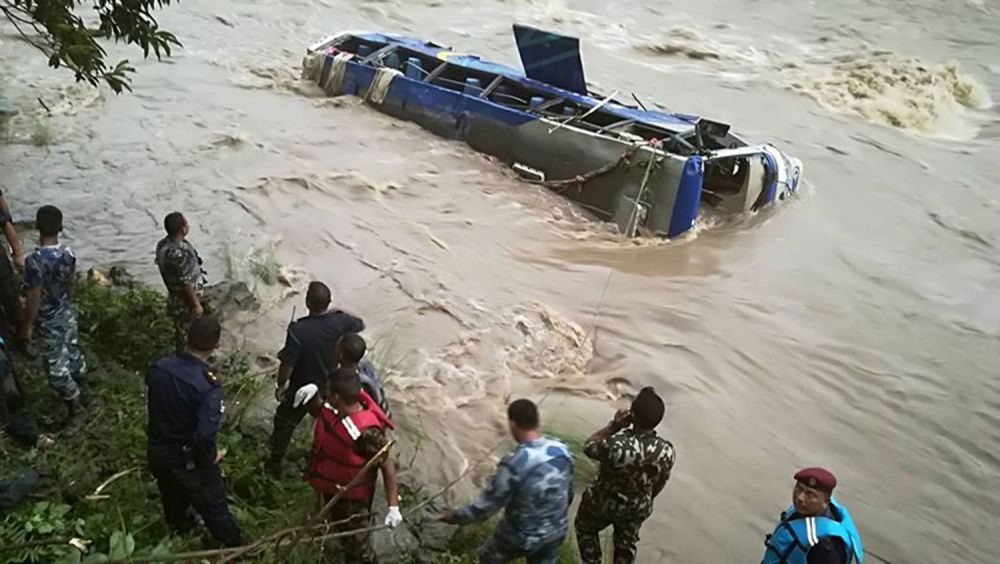
30- Baitadi bus accident: number of injured reaches 20
Dasharathchand (Baitadi), July 3: The number of those injured in the bus accident occurred on Friday afternoon at Gairakhan has reached 20.
The bus (Sudurpashim Province 01001 Kha 3963) met the accident at Gairakhana of Patan Municipality-8 of Baitadi when it was en route to Baitadi from Dhangadhi.
According to police, the bus fell around 100 meters off the road. District Police Office Baitadi’s spokesperson and police inspector Bhuwan Prasad Timilsena said three people were seriously injured in the accident. They include Deepak BK, 31, of Patan-6, a man of nearly 60-year-old and a woman of around 55-year-old.
Among the injured, nine are being treated at Dadeldhura Hospital, while two have been referred to Dhangadhi. The remaining nine have also been taken to Dadeldhura.
Further details including the cause of the accident are awaited.
—
31- Nepali students participating in ‘AI for Good Global Summit’ meet Minister Timilsina
Kathmandu, July 3: A team of Nepali students participating in the ‘AI for Good Global Summit, 2026’ in Switzerland from July 7 to 10 met Minister for Information and Communications, Dr Bikram Timilsina, on Friday. The event is being organized by the International Telecommunication Union (ITU), a UN agency.
The students’ team is scheduled to participate in the ‘Robotics for Good Youth Challenge, 2026’. The team held interaction with the Minister about the competition, preparations and upcoming plans.
During the meeting, Minister Dr Timilsina viewed learning and innovation counts much than winning or losing in the competition. “The participation of the Nepali team in the competition is good news. What we can do in the future in the fields of invention, research and innovation is more important than winning or losing,” he said, adding that robotics and artificial intelligence (AI) are becoming essential for a country like Nepal.
He further remarked that it is a matter of pride for young talents to display Nepal’s capabilities in such international forums. Government is positive in promoting information technology, innovation and new thoughts, Timilsina assured and wished success to the participating team.
—
32- Adolescent girl dies when a cart runs over her
Dhanusha, July 3: Saraswoti Mukhiua, 13, a daughter of Sanjaya Mukhiya died when a wedding cart that went out of control ran over her in Mukhiyapatti Musaharaniya Rural municipality-4, Khatbaiya Tole.
The adolescent girl breathed her last while undergoing treatment, informed Deputy Superintendent of Police (DSP) at the Dhanusha Police, Madhusudan Neupane.
The cart (Province 2-03-001-Cha 7468) used for the wedding procession went out of control and hit the attendees. Kabita Devi Mukhitya, 35, spouse of Sanjaya who was also injured in the accident is receiving treatment at the Janakpur provincial hospital, police said.
The police have impounded the cart and search for the absconding cart rider is on.
—