- Sunday, 13 September 2026
Yek Raj Pathak
Kathmandu, Sept 13: The climate crisis has placed Nepal in a cruel double bind. The country has contributed almost nothing to the problem, yet is paying an increasingly heavy price for it.
As climate-related disasters grow more frequent and destructive, Nepal also lacks the resources needed to protect on its own.
The latest devastation along the Bhotekoshi River is a stark reminder. Whether driven by accelerating glacier melt, glacial lake outbursts or other changes in the Himalayan environment, such disasters are becoming harder to ignore.
Floodwaters have decimated settlements, roads, bridges, hydropower facilities and livelihoods in Rasuwa and Nuwakot districts. Hundreds have been killed and thousands remain missing.
More than 1,300 people have already died and 5,000 remain missing in the August 26 disaster.
Whatever scientists call it, the cause is becoming less important than the consequences: Nepal faces a growing climate threat.
For communities living along rivers fed by the Himalayas, the danger is already unmistakable. And this is unlikely to be Nepal’s last climate-related disaster.
In recent years, the country has experienced one alarming event after another—from the exceptional rainfall and flooding two years ago to the glacial lake outburst flood that devastated Thame in Solukhumbu district in 2024 and the deadly winter flash flood in Pokhara’s Seti River back in 2012.
Scores of people were killed and hundreds of people were displaced and properties worth of millions of rupees perished in both disasters.
Research increasingly links such disasters to climate change and related environmental shifts, which are altering both their frequency and intensity.
Nepal’s geography makes it particularly vulnerable to climate change. Its mountains and high hills have long helped regulate the climate and feed the country’s rivers.
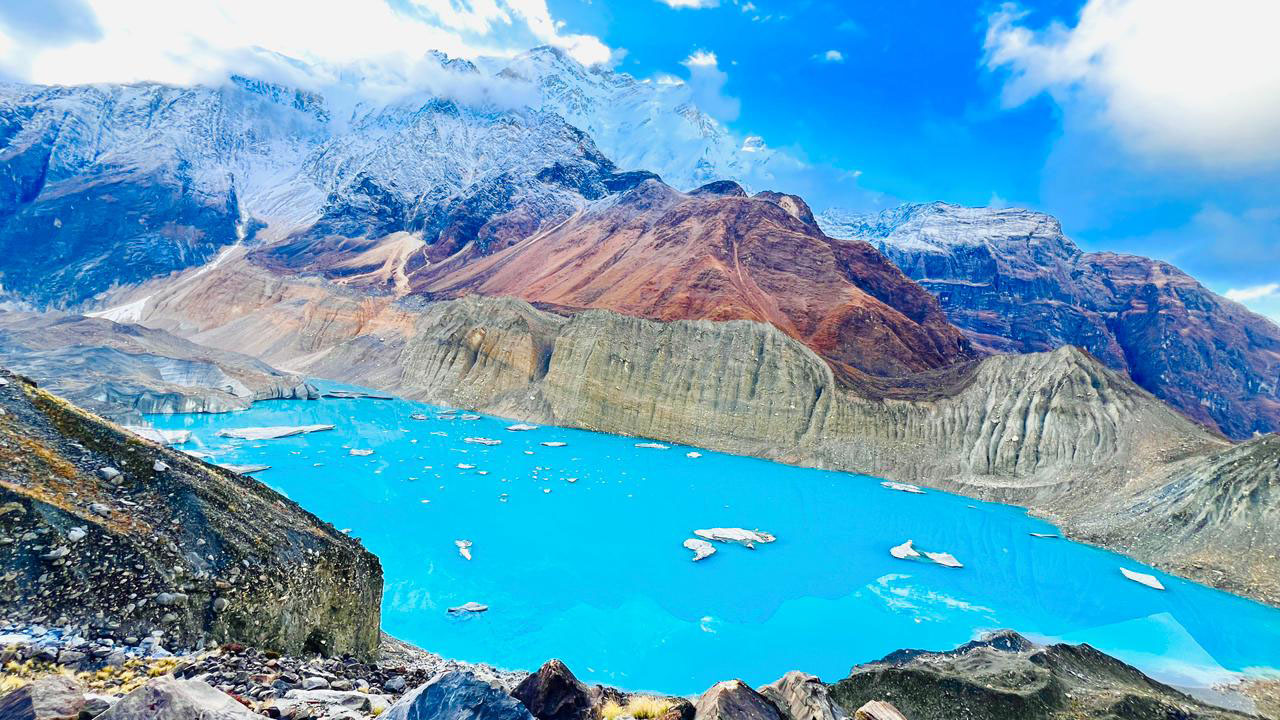
But the Himalayas are changing rapidly, with retreating glaciers, shrinking ice cover and expanding glacial lakes increasing the risks to downstream communities and infrastructure.
The consequences of these changes are not a distant concern for Nepal, and the country has repeatedly warned that it cannot face the risks alone.
The international community has also acknowledged the scale of the threat. During his address to Nepal’s Parliament in October 2023, UN Secretary-General Antonio Guterres warned that the climate crisis was already having devastating consequences for Nepal and said that, without timely global action, the future of the country and other mountain communities would become increasingly precarious.
The warning is becoming increasingly harder to dismiss. A recent study by the International Centre for Integrated Mountain Development (ICIMOD) found that glaciers across the Hindu Kush Himalaya could lose up to 80 percent of their current ice by the end of this century if melting continues at present rates.
That would further aggravate the risk of floods and landslides in the mountains and expose downstream infrastructures to greater damage. For Nepal, the consequences could be enormous.
Settlements have spread along river valleys and banks, while generations of Nepalis have relied on rivers for agriculture, water and livelihoods. That dependence now leaves many communities increasingly vulnerable to shifts in rainfall, river flows and mountain stability.
Climate change will not simply produce more spectacular disasters. It threatens the basic conditions of life. As climate shocks intensify, food, healthcare, education, housing, sanitation and access to water will become harder to secure.
The warning signs are already clear: Nepal is among the countries suffering the greatest economic and physical losses from climate-related disasters, despite contributing negligibly to global greenhouse gas emissions.
Glaciers will continue to retreat, glacial lakes may burst, and extreme rainfall, drought, untimely floods, landslides and soil erosion are likely to become more frequent and severe.
Yet Nepal faces a fundamental injustice: it did little to cause the crisis, but is paying an increasingly heavy price for it.
The countries that drove global warming through decades of fossil-fuel-powered industrialisation are now leaving Nepal to pay part of the bill. Climate change may be a global crisis, but its costs are far from evenly shared.
Mountainous least-developed countries such as Nepal, along with small island states, face some of the greatest risks despite contributing little to global emissions.
Nepal’s farmers are already at the receiving end of such disaster. Yields are declining, rainfall is becoming erratic and untimely, and excessive rain is damaging crops.
Traditional varieties are disappearing, while pest and disease outbreaks are increasing. Many farmers are being forced to spend more on pesticides and other inputs simply to maintain production.
The consequences are already visible in communities across the country. The deadly flash flood in Pokhara’s Seti River in 2012 and the glacial lake outburst in Thame, Solukhumbu in 2024 were earlier warnings of the dangers facing communities in Nepal’s mountain valleys.
The Bhotekoshi disaster has now added another chilling chapter to the growing list of climate-related disasters. The latest flood has struck with such force that Nepal is still struggling even to calculate the full extent of the damage.
But the devastation is about more than the immediate loss of lives, homes and infrastructure. The climate crisis is also reshaping Nepal’s economy and society.
As farming becomes less viable, young people are leaving rural areas for cities or going abroad in search of work. Environmental degradation and growing uncertainty are contributing to unemployment and psychological stress.
Some families are being forced to abandon their homes altogether, with the close-knit families ripped apart by the disaster.
As fewer young people see a future in agriculture, the country risks becoming more dependent on imported food. Food insecurity and hunger, once considered problems of poorer and more remote communities, could become much more widespread.
This is why Nepal must change the way it talks about climate change. It should no longer approach the international community primarily for sympathy and emergency assistance.
Nepal needs to frame its vulnerability as a question of justice and responsibility. A country that has contributed so little to global warming should not be left to bear such a disproportionate share of its consequences.
That argument should become a central pillar of Nepal’s climate diplomacy. Previous advocacy Nepal has already begun making that case internationally.
Two years ago, it appeared before the International Court of Justice in The Hague in proceedings on states’ obligations in relation to climate change.
Then Foreign Minister Dr Arzu Rana Deuba argued that countries such as Nepal, which have contributed little to climate change but are suffering heavily from its consequences, deserve climate justice. She also pressed for greater protection and support for mountain and Himalayan countries.
Nepal has continued to make the same argument at UN climate conferences and other international forums. It has called for international climate finance, including money from the Loss and Damage Fund, to reach vulnerable countries such as Nepal as grants rather than loans.
But making the argument is not enough. Nepal needs stronger climate diplomacy capable of turning its vulnerability into political leverage.
PM’s participation in UNGA Prime Minister Balendra Shah’s planned participation in the UN General Assembly in New York this month offers a timely opportunity to do so.
He should tell the international community about Nepal’s double burden: the country is repeatedly exposed to climate-related disasters while lacking the resources to adequately prepare for, respond to or recover from them.
The world cannot expect vulnerable countries to keep rebuilding with inadequate resources after every disaster and then call that resilience. There will, of course, be sympathy for Nepal after the Bhotekoshi disaster.
Donor countries and international agencies may provide more assistance. Such help is welcome. But Nepal should no longer frame this simply as a question of aid. From charity to rights The country needs to move from charity to rights, from sympathy to justice.
Nepal’s vulnerability should not be treated as a reason for occasional humanitarian assistance, but as the consequence of an unequal climate burden that demands a fairer international response.
The people suffering these disasters had little role in producing the emissions that helped drive the climate crisis, nor did they reap the economic benefits of the industrialisation that produced most of them. Yet they are being left to bear the consequences. That is the injustice Nepal must take to the world.
Climate justice should therefore become a national objective, not a slogan reserved for international conferences.
When PM Shah addresses the UN General Assembly in New York this month, he should make that case clearly and forcefully.
Nepal does not need the world’s pity. It needs the world to recognise responsibility.